
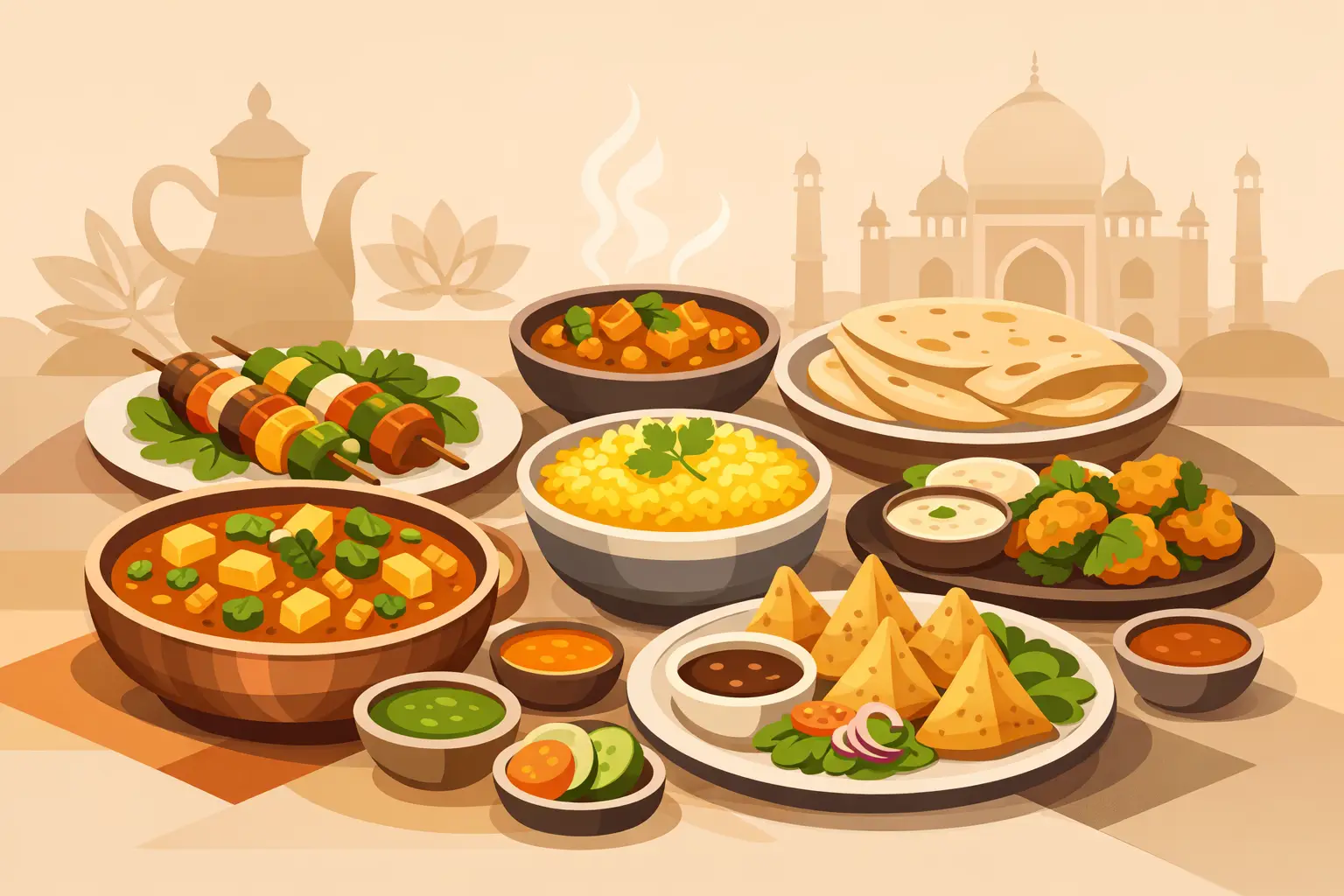
When you are choosing from a vegan Indian restaurant menu, the difference between a good meal and a disappointing one usually comes down to more than a vegan label. You want proper flavour, clear options, and dishes that still feel true to Indian cooking rather than an afterthought. For families, workmates and groups ordering together, that matters even more.
Indian food can be one of the most naturally vegan-friendly cuisines to order, but it still helps to know what to look for. Some dishes are traditionally plant-based, while others need small adjustments such as removing cream, butter, yoghurt or ghee. A well-planned menu makes those choices simple, so you can order with confidence whether you are dining in, collecting takeaway or arranging food for a larger gathering.
Why a vegan Indian restaurant menu works so well
Indian cooking has always made generous use of vegetables, lentils, chickpeas, beans, herbs and spices. That means vegan diners are not limited to one token curry tucked away at the bottom of the menu. In a restaurant that cooks with care, vegan dishes can sit naturally alongside the rest of the range.
That is part of what makes Indian food practical for mixed groups. One table can order meat curries, vegetarian favourites and vegan dishes together without anyone feeling they have compromised. The spices, sauces and cooking methods still give the meal a shared character, even when different dietary preferences are involved.
There is a trade-off, of course. Not every Indian dish is automatically vegan just because it is vegetable-based. Paneer, cream, butter and ghee appear in many familiar recipes. So the best menu is not simply broad. It is clear, consistent and easy to understand.
The dishes people usually look for first
For many diners, the heart of a vegan Indian restaurant menu is the curry section. This is where variety matters. A vegan curry should be satisfying in its own right, with enough depth from spices, onions, tomatoes, garlic, ginger and slow cooking to carry the dish without dairy.
Chana masala is often one of the most reliable choices. Chickpeas hold flavour well and give the sauce body, making it ideal for a substantial dinner rather than a light side. Aloo gobi is another classic, built around potato and cauliflower with dry spices that bring warmth and comfort without unnecessary richness.
Dahl is equally important. A good lentil dish can be simple, but simple does not mean plain. When cooked properly, dahl has a soft, full texture and a depth that comes from time, seasoning and a proper tempering of spices. It is often one of the most dependable options on the menu because it does not need dairy to feel complete.
Vegetable curries can vary more from one restaurant to another. At their best, they are balanced and generous, with vegetables cooked so they keep structure instead of turning soft and watery. At their worst, they can feel like a catch-all. That is why consistency matters so much. If a restaurant treats vegan dishes as part of its core offering rather than a special request, the result is usually far better.
Rice, bread and sides can make or break the meal
A satisfying order is rarely just one curry on its own. Rice, breads and sides shape the whole experience, especially if you are sharing.
Steamed rice and pilau rice are usually easy choices, though it is always worth checking how they are prepared. The same goes for biryani-style vegetable rice dishes. A vegetable biryani can work very well for vegan diners if it is cooked without yoghurt, butter or ghee, and when done properly it gives you a full meal rather than an add-on.
Bread needs a little more attention. Not every flatbread is vegan. Naan, for example, is often made with yoghurt or brushed with butter. Roti can be a better option, but that depends on the recipe. A restaurant with a thoughtful vegan menu will make these differences clear instead of leaving customers to guess.
Sides matter too. Samosas, pakoras and other starters can round out the meal well, but their suitability depends on the pastry, batter and cooking method. Chutneys also vary. Mint sauce may include yoghurt, while tamarind chutney is more likely to be plant-based. These details are small on paper, but they make ordering much easier when they are handled properly.
What makes a menu genuinely easy to order from
A useful vegan menu does not rely on customers asking a long list of questions at the counter. Clear descriptions, straightforward labelling and staff who understand the dishes make a real difference.
That matters most during busy dinner service or when ordering online. If you are placing a quick family order after work, you want to know which dishes suit vegan diners without having to second-guess every sauce and garnish. The same applies to group meals. Clear menu structure helps everyone decide faster and reduces the chance of mistakes.
It also builds trust. People ordering vegan food regularly are used to checking ingredients carefully. When a restaurant presents those choices clearly and consistently, customers are far more likely to order again.
Vegan options should still feel traditional
There is sometimes a mistaken idea that accommodating vegan diners means moving away from authentic Indian food. In practice, that is not usually the case. Many Indian dishes are naturally aligned with plant-based eating, especially those built around pulses, vegetables and spice-led sauces.
The key is preparation. A vegan curry should not feel stripped back or improvised. It should taste as though it belongs on the menu because it does. Traditional cooking methods, fresh ingredients and careful seasoning matter far more than trying to imitate dairy-heavy dishes.
That is why simpler dishes often perform best. A well-made dahl, chana masala or vegetable curry can be more satisfying than a dish overloaded with substitutions. There is nothing wrong with adaptation, but the best results usually come from recipes that already have strong roots in everyday Indian cooking.
Ordering for families and groups
Vegan dining becomes especially relevant when meals are shared. One person may be vegan, another vegetarian, another happy with chicken or lamb. Indian food suits that kind of table naturally because dishes are made for sharing across rice, breads and sides.
For families, that means less pressure to find a restaurant where every person needs a separate style of cuisine. For workplace dinners and casual celebrations, it means dietary preferences can be included without changing the whole meal plan.
The practical point is portion choice. If you are ordering for a group, it helps to mix a few dependable vegan dishes with broad appeal. A lentil curry, a chickpea dish, a vegetable curry, rice and suitable breads will usually satisfy a range of tastes. If spice levels vary across the group, keeping one dish milder and one more full-bodied is often the safest approach.
For catering, clarity becomes even more important. Guests want to know what they can eat quickly and confidently. A well-structured vegan Indian restaurant menu is particularly useful here because it allows hosts to cater for different needs without making the event food feel complicated.
Online ordering and takeaway need clear vegan choices
The move from table service to online ordering changes how menus are read. In a restaurant, staff can answer questions in the moment. Online, the menu has to do that work itself.
That means vegan options should be easy to spot, easy to understand and easy to customise where needed. If a dish can be made vegan by removing dairy, that should be stated plainly. If it cannot, that should be clear too. Ambiguity slows people down and often leads them to abandon the order.
For takeaway, dishes also need to travel well. Lentil curries, chickpea dishes, vegetable masalas and rice-based meals generally hold up better than items that depend on last-minute garnishes or delicate textures. This is another reason why classic, carefully prepared vegan Indian dishes work so well for everyday ordering.
What diners should look for before ordering
If you are scanning a vegan Indian restaurant menu for the first time, look beyond the number of choices. A shorter menu with well-made vegan dishes is often better than a long one with vague descriptions.
Pay attention to whether the menu explains breads, sides and sauces as clearly as mains. Check whether dishes sound established and balanced rather than generic. And if you are ordering for a group, think about how the meal fits together – one hearty lentil dish, one chickpea or vegetable curry, rice, and clearly vegan sides is often a better order than too many similar mains.
Restaurants that do this well make vegan dining feel normal, not complicated. That is exactly what most people want on a weeknight, over a family dinner, or when planning food for a celebration. Good Indian food has always been about flavour, comfort and sharing, and a well-considered vegan menu should offer all three without fuss.
A dependable meal is one you can order again with confidence, and that is what makes the best vegan choices worth returning to.