
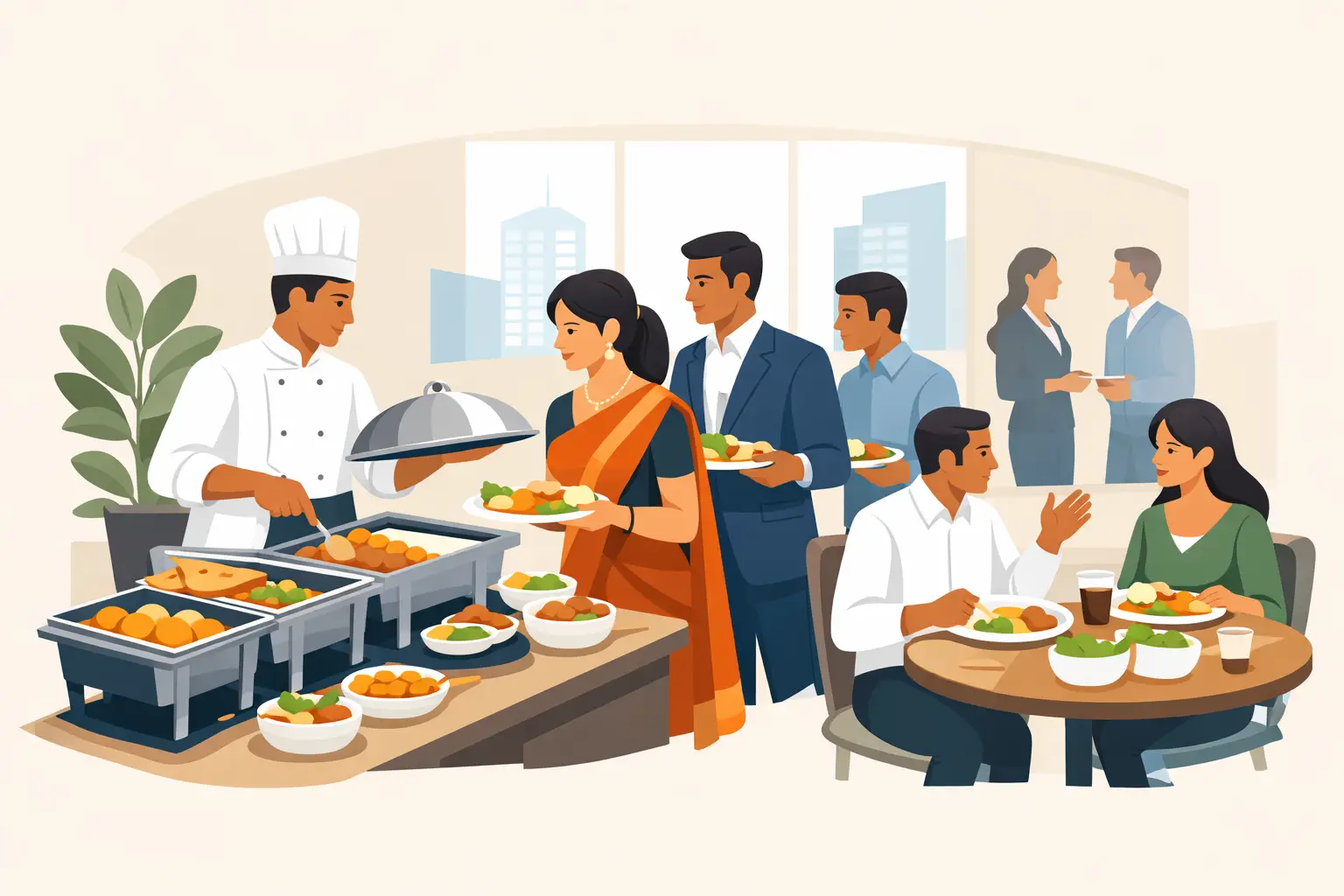
A working lunch can go flat quickly when the food feels like an afterthought. People pick at dry sandwiches, someone quietly asks if there is anything vegetarian, and the room loses energy before the meeting has properly started. Indian corporate catering tends to work better because it offers proper meals, clear variety and the kind of comfort food people genuinely look forward to.
For offices, team events and client gatherings, the right catering does more than fill a table. It keeps the day moving, suits different dietary needs and takes pressure off the person doing the organising. When food arrives on time, is easy to serve and gives everyone a real choice, the event simply runs better.
Why indian corporate catering suits workplace events
Office catering needs to be practical first. The food has to travel well, stay appealing over service time and be easy for groups to enjoy without too much fuss. Indian food is especially well suited to this because many dishes are designed for shared meals. Curries, biryanis, tandoori dishes and fresh breads are satisfying, easy to portion and familiar to a wide range of guests.
There is also genuine flexibility in the menu. A mixed group can include meat eaters, vegetarians, vegans and people who prefer milder flavours. With Indian catering, that does not mean ordering completely separate menus for everyone. A balanced spread can naturally include several options that suit different preferences without making anybody feel like an afterthought.
That matters in workplaces. Team lunches, training days and staff celebrations often bring together people with very different tastes. Food should help people settle in, not create awkwardness around what they can and cannot eat.
What makes corporate catering reliable
Not every catering option that looks good on paper works well in practice. Corporate organisers usually care about a few simple things. They want food that arrives when promised, portions that make sense for the group, and ordering that does not become a long chain of follow-up calls.
Reliability also comes from consistency. If you are feeding a boardroom one week and a larger office gathering the next, you need to know the standard will hold. Established restaurants with experience in both regular service and event orders are often better placed to deliver that consistency than operators who only cater occasionally.
There is a trade-off here. Highly customised catering can sound attractive, but too much complexity can create room for mistakes, especially with larger groups. In many cases, a well-chosen menu built around proven dishes is the safer option. It keeps quality steady and makes service easier on the day.
Menu balance matters more than novelty
For corporate events, the best menu is usually not the most adventurous one. It is the one that gives people enough variety to build a meal they enjoy. A good spread might include a mild curry, a richer meat dish, a vegetarian favourite, rice, naan and a side or two that rounds everything out.
This approach works because it feels generous without becoming difficult to manage. People can serve themselves according to appetite, and the meal suits both quick lunches and more relaxed office functions. Familiar dishes often perform best, especially when the goal is to keep a mixed group happy.
Timing can make or break the event
Even excellent food loses its value if it arrives late. Corporate catering has to fit around schedules, not disrupt them. Morning meetings, lunch presentations and evening functions all have different pressures, and delivery timing needs to reflect that.
That is why experience counts. Caterers who regularly handle workplace orders understand access points, setup timing and the practical details that matter in offices and shared venues. Those details are not glamorous, but they are often the difference between a smooth event and a stressful one.
Choosing the right indian corporate catering menu
The best menu depends on the type of event. A staff lunch usually needs broad appeal and easy sharing. A client meeting may call for a slightly more structured selection with tidy serving and lighter portions. A larger office celebration can handle a fuller spread with more variety.
It helps to think in terms of the occasion rather than trying to include everything. For shorter daytime events, balanced mains with rice and breads are usually enough. For longer functions, adding starters or extra sides can make the meal feel more complete. The aim is to match the food to the flow of the day.
Spice level is another practical consideration. Many people enjoy Indian food, but not everyone wants high heat during a work function. That does not mean the meal has to be bland. Well-made Indian dishes can carry plenty of flavour without being overly hot, and a sensible menu includes a range of milder and fuller-flavoured options.
Dietary needs should be simple to manage
This is one of the strongest reasons businesses choose Indian food. Vegetarian and vegan dishes are not token additions in Indian cuisine. They are part of the tradition. That makes it easier to build a menu where plant-based options feel just as considered and satisfying as the rest of the spread.
For organisers, that is a practical advantage. You are less likely to end up with one separate meal that looks noticeably less appealing than everyone else’s. Instead, different dishes can sit together naturally, giving all guests proper choice.
If your group includes allergy considerations or specific dietary requests, it is always worth discussing them early. The sooner numbers and requirements are clear, the easier it is to plan a menu that works for everyone.
When indian corporate catering works best
Some foods are ideal for formal plated service. Indian corporate catering is often strongest when the event calls for generous, shared dining that still feels professional. Team lunches, office milestones, training sessions, community workplace events and end-of-year gatherings are all a natural fit.
It can also work very well for meetings where you want the food to leave a better impression than the standard office platter. A proper hot meal changes the atmosphere. People tend to relax, stay engaged and feel looked after.
That said, it depends on the setting. For very short stand-up networking sessions, simpler finger food may be easier than a full buffet-style meal. For longer seated events, a more substantial menu often makes better sense. The important thing is choosing a format that fits how guests will actually eat.
What to look for in a catering partner
A good corporate caterer should make the process feel straightforward. Clear communication matters as much as the food itself. You should be able to understand what is included, how portions are planned and what the delivery arrangement will be.
It is also worth choosing a business with a strong local reputation and a clear track record. Restaurants that have served their communities for years usually understand the value of dependable service. They know that one successful order often leads to the next.
For many workplaces, consistency is more valuable than fashion. A trusted local group such as Indian Brothers appeals for that reason. Familiar flavours, careful preparation and reliable service are what most organisers actually need when they are feeding a team or hosting guests.
Making office catering easier to organise
The simplest way to get a better result is to plan a little earlier than you think you need to. Final guest numbers, dietary details, delivery instructions and the event time all affect how smoothly catering comes together. Leaving everything until the last minute narrows your options and makes mistakes more likely.
It also helps to be realistic about portion size. Under-ordering is rarely worth the risk at work events. People notice when food runs short, and it can shift the mood of the whole occasion. A sensible quantity, with enough variety for different appetites, usually gives the best value.
When the menu is chosen well, the serving is simple and the food arrives as promised, catering stops being a worry. It becomes one of the easiest parts of the event.
Good office food does not need to be complicated. It needs to be dependable, generous and easy for people to enjoy together – and that is exactly where Indian catering earns its place.