
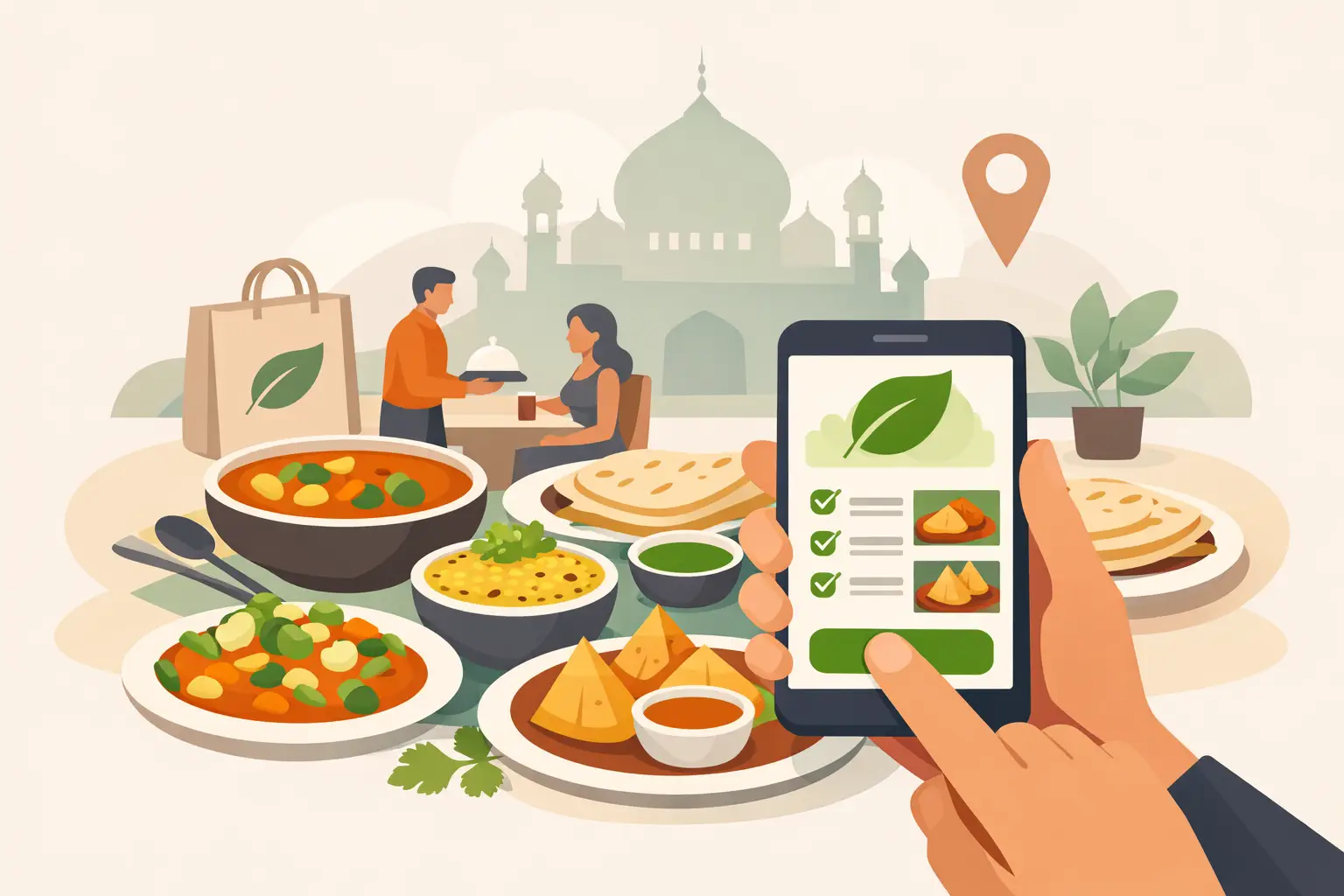
Ordering dinner for a group is easy until one person says they are vegan and everyone pauses at the menu. The good news is that if you know how to order vegan Indian food, you usually have plenty of choice. Indian cooking naturally uses vegetables, lentils, chickpeas, rice and spices in a way that gives vegan diners real meals, not just a side dish and hope for the best.
That said, not every vegetarian Indian dish is vegan, and not every bread, curry or side is made the same way in every kitchen. A little confidence goes a long way. Once you know what to look for and what to ask, ordering becomes straightforward whether you are dining in, collecting takeaway or organising food for a family gathering.
How to order vegan Indian food without guessing
The easiest place to start is by separating vegan from vegetarian. Many Indian dishes are meat-free, but that does not automatically make them vegan. Ghee, cream, yoghurt and paneer are all common in traditional cooking, and they can appear in dishes that sound like they should be plant-based.
When you are reading a menu, focus first on dishes built around lentils, chickpeas, vegetables and tomato or onion-based sauces. These are often the most promising options. Then check whether dairy is used in the curry base or finishing. If the menu is not clear, ask directly. A good restaurant should be able to tell you whether a dish contains milk, cream, butter, ghee, yoghurt or paneer.
It also helps to be specific. Instead of asking, “Is this vegan?” ask, “Does this dish contain cream, butter, ghee, yoghurt or paneer?” That gives staff something clear to answer and reduces the chance of confusion.
Start with the dishes that are often vegan
Some of the best vegan-friendly Indian meals are also some of the most satisfying. Lentil curries are often a strong choice, especially when they are cooked with oil rather than ghee. Chickpea-based dishes can also work well, and many mixed vegetable curries are naturally suitable or easy to adapt.
Rice is usually a safe foundation, especially plain basmati or vegetable rice, although it is still worth checking whether butter or ghee is used during cooking. A good vegan order often comes together by pairing one or two hearty curries with rice, then adding a suitable bread and a side or two.
Dry-style vegetable dishes can be a smart option as well. Because they are less dependent on cream or yoghurt-based sauces, they are often simpler to assess. Potato, cauliflower, okra, aubergine and spinach dishes regularly appear on Indian menus and can offer plenty of flavour without needing dairy.
The trade-off is that “often vegan” does not mean “always vegan”. Every kitchen has its own recipes, so the dish name alone is not enough.
Watch for the ingredients that catch people out
Dairy is the big one, but it shows up in different ways. Ghee is a traditional cooking fat and is used for flavour in some curries, rice dishes and breads. Cream may be stirred into a sauce to soften the spice and add richness. Yoghurt is common in marinades and some curry bases. Paneer is easy to spot because it is a cheese, but butter can be added at the end of a dish even if it is not listed clearly.
Bread needs extra attention. Naan is popular, but many naans contain yoghurt or milk, and some are brushed with butter or ghee after baking. Roti can be a better option, though that still depends on how it is made. Poppadoms are often vegan, but dips served with them may not be.
Side sauces can also cause confusion. Mint sauce, raita and some chutneys may contain yoghurt. If you are building a meal for several people, it is worth checking every extra instead of just the mains.
What to ask when ordering vegan Indian food
If you want a smooth order, clear questions matter. You do not need to make it complicated. A simple conversation usually does the job.
Ask whether the dish contains any milk products. Ask whether the bread is made with dairy. Ask whether the rice is cooked with butter or ghee. If a dish is vegetarian but not vegan, ask whether it can be prepared without dairy.
That last point matters because some dishes are easy to adapt and some are not. A vegetable curry finished with cream may be simple to adjust. A paneer-based dish is not. A sauce built around yoghurt may also be harder to change without affecting the final result. It depends on the recipe and the kitchen.
If you are ordering online, use the notes section carefully. Keep your request direct and polite: “Vegan please – no cream, butter, ghee, yoghurt or paneer.” If you are unsure whether the request will be seen in time, placing the order by phone can give you more confidence.
Vegan Indian food for takeaway, dine-in and group orders
The way you order can change what makes sense. For takeaway, choose dishes that travel well and stay satisfying by the time you get home. Lentil curries, chickpea dishes, vegetable curries and rice are all reliable choices. Bread is best collected fresh and eaten soon after.
For dine-in meals, you have a little more flexibility because staff can guide you and explain what can be adapted. This is often the easiest option if you are new to vegan Indian food or ordering with a mixed group.
For family dinners or larger gatherings, aim for a spread rather than one “safe” dish. Vegan diners should have a proper meal, not just a portion of rice and salad while everyone else gets the mains. A balanced group order might include two vegan curries, plain rice, a confirmed vegan bread and a vegetable side, alongside non-vegan dishes for others if needed.
That approach works especially well in restaurants that regularly serve families and groups, because mixed dietary needs are common and easier to accommodate when the menu is broad.
How to read the menu with more confidence
A menu can look unfamiliar if you do not order Indian food often, but the pattern becomes clear quickly. Dishes centred on vegetables, beans and lentils are usually your first stop. Creamier house specials, butter-based dishes and anything built around paneer are less likely to suit a vegan order.
Words that suggest a richer, smoother sauce can be a clue that dairy may be involved, though not always. Tomato-forward, onion-based and dry-spiced dishes are often more promising. Even then, it is still worth checking the recipe.
If you enjoy mild food, do not assume dairy-free means very hot. Plenty of vegan-friendly Indian dishes are full of flavour without being overly spicy. Restaurants can often help you choose something that suits your taste as well as your dietary needs.
A simple way to build a satisfying vegan order
If you are unsure where to begin, think in parts. Start with one substantial curry based on lentils, chickpeas or mixed vegetables. Add rice. Then choose a second dish for contrast, perhaps something drier or more spice-led. Finish with a bread if there is a confirmed vegan option.
This matters because a good vegan order should feel complete. You want enough texture and variety that the meal feels generous, especially if others at the table are ordering freely from across the menu.
At Indian Brothers, that practical, welcoming approach is part of what makes ordering easier for families and groups. When the food is prepared with care and the menu offers genuine variety, vegan choices can sit naturally alongside the rest of the table rather than feeling like an afterthought.
Common mistakes to avoid
The most common mistake is assuming vegetarian means vegan. The second is forgetting to check the bread, rice and sauces. The third is leaving dietary requests too vague.
Another easy misstep is over-ordering one style of dish. If everything on the table is soft, saucy and similar, the meal can feel repetitive. Mixing lentils, vegetables, rice and a suitable bread usually gives a better result.
Finally, if you are ordering for an event or workplace lunch, do not leave vegan meals unidentified. Make sure everyone knows which dishes are suitable. It sounds obvious, but it saves awkward moments when food is shared.
Knowing how to order vegan Indian food is mostly about asking a few clear questions and choosing dishes with confidence. Once you get familiar with the menu, it becomes one of the easiest cuisines to enjoy as a vegan – full of proper flavour, generous portions and options that suit the whole table.