
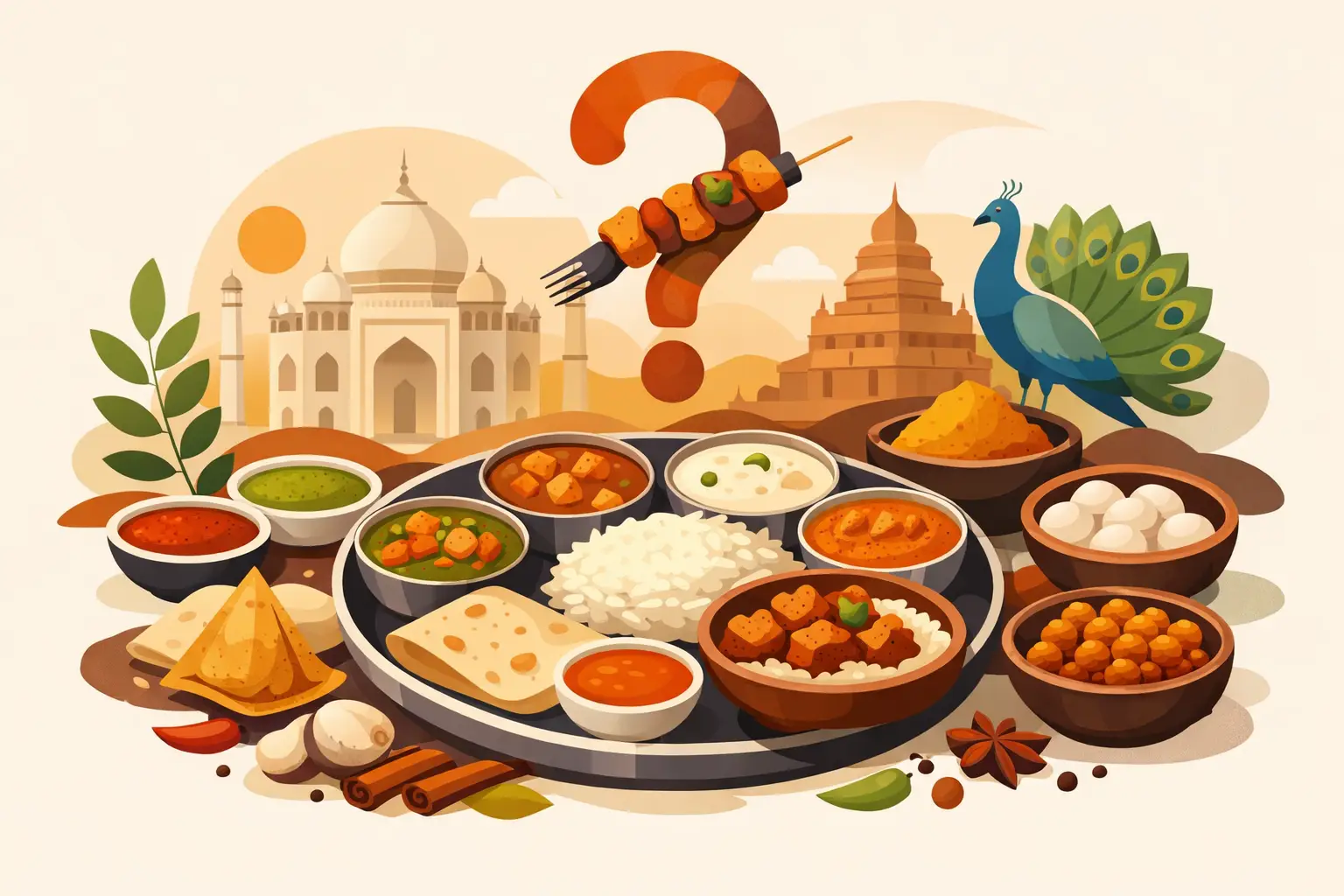
Ask three people what is original Indian food and you will probably hear three different answers. One might say butter chicken and naan. Another will think of dosas, coconut chutney and sambar. A third may picture a slow-cooked lamb curry with basmati rice. The truth is that original Indian food is not one single dish or one fixed menu. It is a broad, deeply regional way of cooking built on tradition, balance, fresh ingredients and methods passed down over generations.
That matters because many people only meet Indian food through a small takeaway menu. Those dishes can be delicious, but they are only one part of a much bigger food culture. If you want to understand authentic Indian cooking, it helps to look at how food is made, where it comes from and why the same country can produce such different meals.
What is original Indian food?
Original Indian food is traditional Indian cooking shaped by region, community, season, religion and family practice. It includes slow-cooked curries, tandoori meats, lentil dishes, rice preparations, breads, pickles, chutneys and vegetable dishes, but not every Indian household or region cooks them in the same way.
In practical terms, authenticity in Indian food is less about one exact recipe and more about staying true to the character of a dish. That means using the right base ingredients, proper spice layering, traditional cooking methods and the balance of flavours the dish is known for. A proper biryani should taste different from a homestyle curry, and a Punjabi-style tandoori dish should not be mistaken for a South Indian coconut-based stew.
This is why authentic Indian food often feels both familiar and varied. You may recognise spices such as cumin, coriander, turmeric, cardamom and garam masala, yet each dish uses them differently. Good Indian cooking is not about making everything hot. It is about building warmth, depth, fragrance and balance.
India does not have one single cuisine
One of the biggest misconceptions is that there is one national Indian menu. There is not. India is vast, and its food changes from north to south, east to west. Climate, religion, local farming and history all shape what people eat.
In North India, you are more likely to find wheat-based breads such as naan, roti and paratha, along with richer curries, tandoori cooking, paneer dishes and kebabs. In South India, rice plays a bigger role, and flavours often include coconut, curry leaves, mustard seeds, tamarind and lentils. In the west, there are strong vegetarian traditions as well as distinctive spice blends and snack foods. In the east, mustard oil, fish, rice and subtle seasoning appear more often.
So when someone asks what is original Indian food, the honest answer is that it depends on which part of India you mean. A dish can be completely authentic in one region and almost unknown in another.
North Indian food and the dishes many people know best
For many diners in Australia, North Indian food is the most familiar style. This includes tandoori chicken, butter chicken, rogan josh, korma, dal makhani, samosas, biryani and oven-baked breads.
These dishes are popular for a reason. They are full of flavour, satisfying to share and well suited to family meals. Many also reflect classic restaurant cooking traditions, where sauces are simmered carefully and meats are marinated before being cooked in the tandoor or over high heat.
South Indian food brings a different balance
South Indian cooking often feels lighter, sharper and more rice-based. Dosas, idli, sambar, rasam, lemon rice, coconut chutney and a wide range of seafood and vegetable dishes show a different side of Indian food altogether.
If you have only tried creamy curries with naan, South Indian food can be a surprise. Tamarind adds tang, coconut brings softness, and lentils do far more than fill out a side dish. It is still unmistakably Indian, just built on a different foundation.
What makes Indian food authentic?
Authenticity is a word people use loosely, but in food it usually comes down to a few things. The first is method. Proper Indian cooking often starts with tempering whole spices in oil or ghee, browning onions slowly, preparing ginger and garlic fresh, and cooking sauces long enough for flavours to settle.
The second is balance. Indian dishes are not meant to taste like one note of chilli. Even a spicy curry should have structure. You should notice savoury depth, aromatic spice, acidity where needed, and richness that does not become heavy.
The third is context. Some dishes are restaurant classics, while others are everyday home food. Both are authentic. A simple dal with rice can be just as original as a celebratory biryani. In fact, some of the most traditional Indian meals are the plainest at first glance – lentils, vegetables, rice, flatbread and pickles prepared with care.
Original Indian food is not always fiery
This is one of the easiest myths to clear up. Authentic Indian food can be mild, medium or hot. Heat is only one part of the flavour. Many traditional dishes use spices for aroma and body rather than pure chilli strength.
Korma is a good example. It is often gentler, using yoghurt, nuts or cream for a rounded sauce. Dal can be deeply comforting without being hot at all. Tandoori dishes may have a bold red appearance yet taste more smoky and spiced than fiercely hot.
For families or groups, this matters. Indian food should be flexible enough to suit different preferences, with vegetarian, vegan and non-vegetarian options that still feel true to the cuisine.
Curry is only part of the story
Outside India, the word curry is often used as if it covers everything. It does not. Curry is a useful shorthand, but original Indian food includes much more than sauce-based dishes.
Rice dishes such as biryani and pulao have their own traditions. Tandoori cooking gives a distinct char and smokiness that cannot be copied by simply adding spices to a gravy. Breads such as naan, roti and kulcha are not extras in the background – they are part of the meal itself. Then there are street-style snacks, dry vegetable dishes, lentils, chutneys, raita and sweets.
A well-rounded Indian meal is often about contrast. You might have a rich curry, a dry tandoori dish, a lentil preparation, rice, bread and something cool on the side. That variety is part of what makes Indian food so satisfying for shared dining.
Why restaurant Indian food and home-style Indian food can differ
People sometimes assume that if a dish differs from what they ate in a family home, it is not authentic. That is not always fair. Indian home cooking and Indian restaurant cooking have different jobs.
Home-style food is often simpler, lighter and designed for everyday eating. Restaurant food is usually built for fuller flavour, consistency and sharing. Sauces may be cooked longer, meats may be marinated more heavily, and presentation may be broader in style. That does not make it fake. It simply means the setting is different.
The key question is whether the food respects the roots of the dish. If it does, it can still be authentic while being practical for dine-in, takeaway or catering. That balance is something long-established restaurants work hard to get right.
What to look for if you want a more original Indian meal
If you want a better sense of authentic Indian food, look beyond one familiar order. Try a lentil dish alongside your usual curry. Add a tandoori item rather than choosing only sauces. Compare a bread-based meal with a rice-based one. Notice how vegetarian dishes are treated as proper centrepieces rather than afterthoughts.
It also helps to pay attention to flavour rather than labels. Does the dish taste layered? Are the spices distinct without becoming muddy? Does the sauce feel cooked rather than rushed? Is the bread fresh and the rice properly fragrant? These are small signs of food made with care.
At places like Indian Brothers, this is often where trust is built – not through novelty, but through consistency, traditional preparation and meals that feel satisfying whether you are dining in, picking up takeaway or feeding a group.
So, what is original Indian food really?
It is regional, diverse and grounded in tradition. It is food shaped by everyday family cooking as much as by celebratory dishes. It includes curries, certainly, but also biryanis, breads, lentils, tandoori cooking, vegetables, chutneys and rice dishes that each bring something different to the table.
Most of all, original Indian food is about honest preparation. Fresh ingredients, proper spice use, patient cooking and respect for the dish matter more than chasing a single narrow definition. Once you see Indian food that way, the question becomes less about finding one “real” dish and more about enjoying the range of authentic flavours Indian cooking has always offered.
Next time you order, try one dish that is already your favourite and one that is new to you. That is often the simplest way to taste the real breadth of Indian food.