
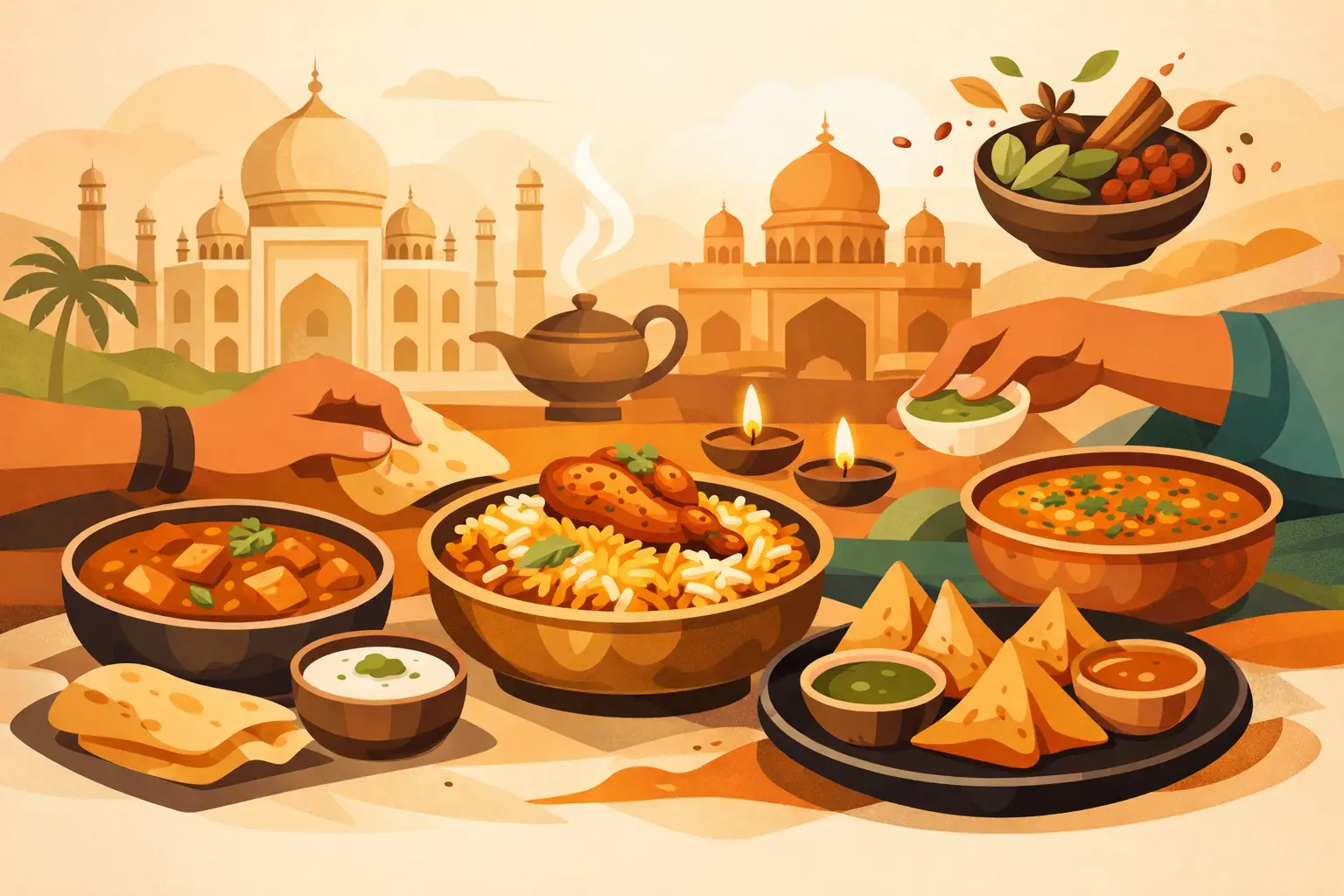
Ask two people what is authentic Indian cuisine, and you may get two very different answers. One might picture a smoky tandoor, rich butter chicken and warm naan. Another might think of coconut-based curries from the south, mustard oil from the east, or simple home-style dal and rice. That difference is exactly the point. Authentic Indian food is not one fixed menu. It is a wide, deeply regional way of cooking shaped by geography, community, tradition and everyday life.
That matters because authenticity is often misunderstood. Many people use the word to mean spicy, complicated or restaurant-style. In reality, authentic Indian cuisine is just as much about balance, technique and familiarity as it is about bold flavour. It includes celebration dishes, street food, slow-cooked curries and very plain meals made well. At its heart, it is food prepared with care, using methods and flavours that respect where a dish comes from.
What is authentic Indian cuisine really?
A good place to start is with what authenticity is not. It is not about making every dish fiery hot. It is not about using every spice in the cupboard at once. It is not about presenting food in the exact same way across every region, home or restaurant.
Authentic Indian cuisine is food that reflects real Indian cooking traditions. That can mean using a long-established recipe, following regional flavour profiles, cooking with traditional techniques, or serving dishes in the way families actually eat them. It can be rich and celebratory, but it can also be simple and everyday.
There is also room for variation. A lamb curry made in Punjab will differ from one made in Kerala. A chickpea dish prepared in Delhi may not taste the same as one cooked in a family kitchen elsewhere. Both can still be authentic. Indian cooking has always been diverse, and that diversity is part of its truth.
India is many cuisines, not one
One of the biggest misconceptions is that Indian cuisine is a single style of food. It is better understood as a collection of regional cuisines connected by shared traditions but shaped by local ingredients, climate and culture.
In the north, you often see wheat-based breads, tandoori cooking, paneer, lentils and richer gravies made with dairy, tomato, onion and warming spices. This is the style many Australians know best through dishes such as butter chicken, rogan josh, dal makhani and naan.
In the south, rice plays a larger role, along with coconut, curry leaves, tamarind and black pepper. Dishes can be lighter in texture but still full of depth. In the west, there is a strong contrast between coastal seafood traditions and inland vegetarian cooking. In the east, mustard oil, fish, lentils and subtly layered spice blends are common.
So when someone asks what is authentic Indian cuisine, the honest answer is that it depends on which part of India you are talking about. Authenticity lives in regional identity, not in a single catch-all formula.
Traditional methods matter
Ingredients are important, but technique is what gives Indian food much of its character. Authentic cooking often comes from how a dish is built rather than from one secret spice.
Many curries begin by slowly cooking onion, garlic, ginger and spices to create a proper base. This takes time and patience. If that stage is rushed, the flavour can feel flat no matter how many ingredients are added later. The same applies to dals that need gentle simmering, biryanis that rely on layering and steam, and tandoori dishes that gain their character from marination and high heat.
Freshness matters too. Ground spices lose their strength over time, while herbs, chillies and aromatics bring brightness when handled properly. A good authentic dish does not just taste strong. It tastes rounded, balanced and complete.
This is one reason home-style Indian food can be so memorable. It is not trying to impress through excess. It relies on sound cooking methods, familiar combinations and attention to detail.
Spice is about balance, not just heat
A common mistake is to treat Indian food as if spice means chilli alone. In authentic Indian cuisine, spice usually means a broader mix of flavour, aroma and warmth.
Cumin can add earthiness. Coriander can bring citrus-like freshness. Turmeric gives colour and gentle bitterness. Cardamom lifts a dish with sweetness and perfume. Cloves, cinnamon, mustard seeds, fenugreek and black pepper all play different roles depending on the recipe.
Chilli is only one part of that picture. Some authentic dishes are hot, but many are mild or medium and still deeply flavoured. A korma, a dal or a biryani can be authentic without overwhelming heat. For many families, good Indian cooking is judged by balance – whether the spices support the main ingredient rather than bury it.
That is also why restaurant menus often offer different heat levels. Adjusting chilli to suit diners does not automatically make a dish inauthentic. The real question is whether the essential flavour profile, ingredients and cooking style are still respected.
Authentic does not mean identical everywhere
Food changes when it travels. That is true of every cuisine, and Indian food is no exception. When Indian dishes are cooked in Australia, some adaptation is natural. Ingredients may differ, local preferences matter, and restaurants need to serve a broad community.
The key difference is between thoughtful adaptation and losing the character of the dish altogether. If a curry keeps its traditional spice base, cooking method and overall balance, it can still feel authentic even if the heat level is softened or a local ingredient is used. On the other hand, if a dish is reduced to a generic sauce with no regional identity, that sense of authenticity starts to fade.
This is where experience counts. Restaurants that stay grounded in traditional preparation tend to produce food that feels honest and recognisable, even when serving a mixed local audience. That balance matters for families, regular takeaway customers and group dining, because people want food that is both accessible and true to its roots.
The role of vegetarian food in authentic Indian cuisine
Any serious conversation about authenticity should include vegetarian cooking. Indian cuisine has one of the world’s richest vegetarian traditions, shaped by religion, region and everyday eating habits.
This is not an afterthought or a token option. Dishes built around lentils, chickpeas, paneer, potatoes, spinach, cauliflower and aubergine are central to Indian food. Chana masala, dal tadka, saag paneer, aloo gobi and vegetable biryani are not substitutes for meat dishes. They stand on their own.
That is one reason Indian food works so well for mixed groups. Authentic menus naturally include vegetarian, vegan and non-vegetarian choices without feeling forced. The variety is part of the cuisine itself.
How to recognise authentic Indian food
You do not need to be an expert to spot signs of authenticity. Usually, it comes through in the overall experience rather than one dramatic clue.
A menu with a clear range of classics, including curries, tandoori dishes, biryanis and breads, is a good start. So is food that tastes layered rather than one-note. The sauces should have body and depth, not just creaminess. Rice should be fragrant and properly cooked. Tandoori dishes should show the effect of marinade and char, not just food colouring.
You can often tell by consistency as well. Authentic cooking tends to feel settled and confident. It does not need gimmicks. It relies on recipes that have lasted because they work.
For many Queensland diners, that is exactly what makes a local restaurant worth returning to. Whether you are sitting down with family, picking up dinner after work or ordering for a celebration, you want food that feels dependable. That is where tradition and hospitality meet. Indian Brothers has built its reputation on that idea – authentic Indian meals prepared with care, served in a way that fits everyday life as well as special occasions.
Why authenticity matters to diners
For some people, authenticity is about cultural respect. For others, it is simply about flavour that feels real. Usually, it is both.
When food is prepared in an authentic way, it carries a sense of place and history. You can taste that a dish belongs to a tradition, even if it is new to you. That creates trust. It also makes the meal more satisfying, because the flavours feel considered rather than generic.
At the same time, authenticity should not be used as a gatekeeping term. People do not need specialist knowledge to enjoy Indian food properly. A welcoming restaurant should make traditional dishes approachable, whether someone orders the same curry every week or is trying biryani for the first time.
Authentic Indian cuisine is best understood as honest Indian cooking – regional, varied, carefully prepared and full of character. It can be celebratory or simple, mild or hot, familiar or new. What matters is that the food respects the methods, flavours and traditions that shaped it in the first place.
If you are ever unsure what authentic Indian cuisine means, start with the dish in front of you. Does it feel balanced, distinctive and made with care? Does it taste like something with a story behind it, not just a quick imitation? That is usually the clearest answer.