
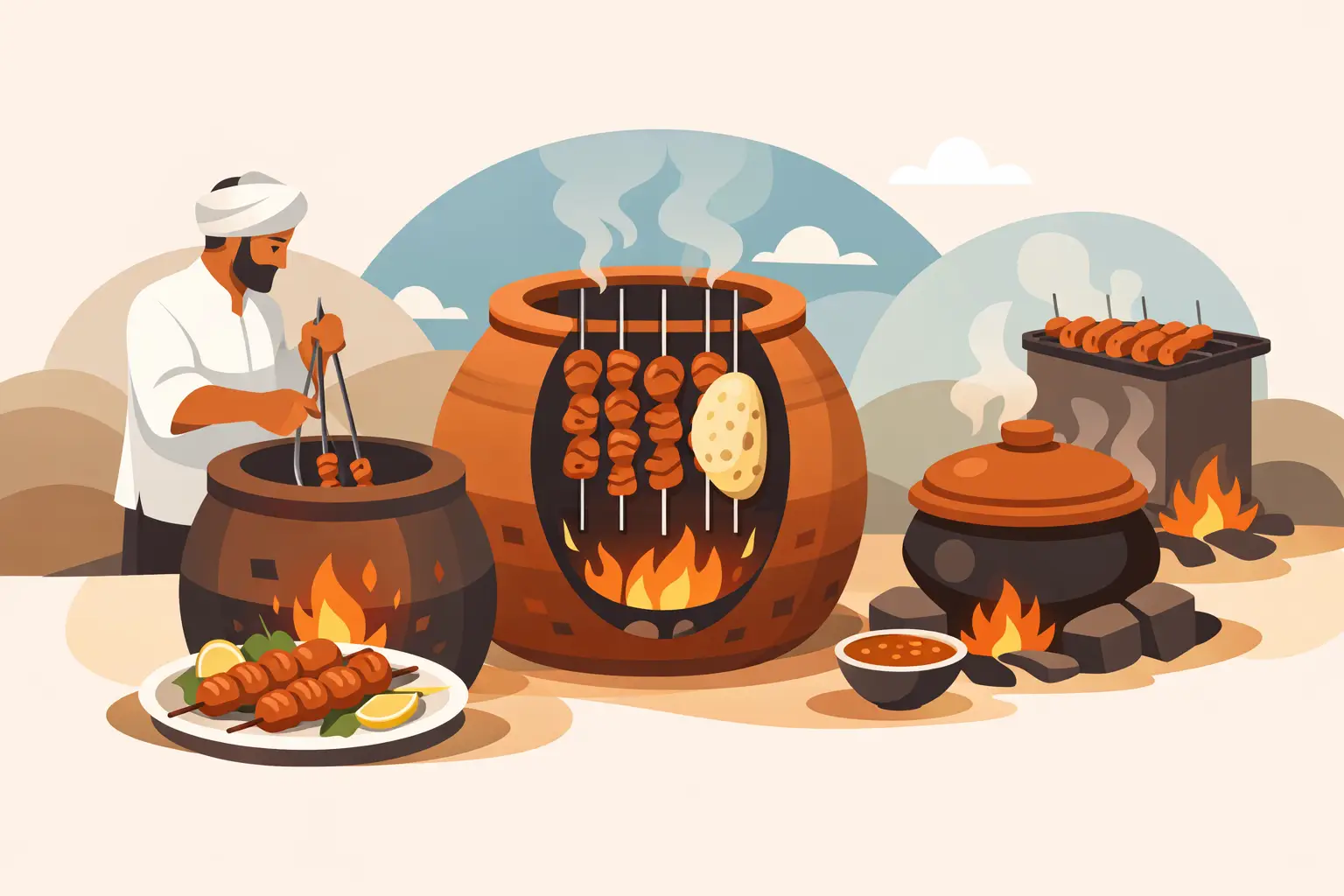
A tandoori dish is recognised before it reaches the table. The smoky aroma, lightly charred edges and warm spice tell their own story. Traditional tandoori cooking methods are not simply about putting marinated food into a very hot oven. They rely on a particular clay oven, fierce radiant heat, careful preparation and the judgement to know when food has taken on colour without losing its tenderness.
For families sharing a meal, a tandoori platter offers more than variety. It brings together chicken, seafood, paneer or vegetables with the unmistakable flavour that comes from cooking close to charcoal. Understanding how this method works helps explain why properly made tandoori food remains one of the most satisfying parts of Indian cuisine.
What makes a tandoor different?
A tandoor is a deep, round clay oven, traditionally fuelled by charcoal or wood. Its shape matters. Heat builds inside the chamber and rises from the base, while the clay walls absorb and hold that heat. Once fully heated, a tandoor can reach temperatures well above those of a domestic oven, often around 400°C or more.
Food cooks in several ways at once. The glowing charcoal produces direct radiant heat, the hot air circulates through the oven and the clay walls radiate stored heat back towards the food. This is why chicken tikka can develop a darkened exterior while staying moist inside, and why naan can puff and blister so quickly against the inner wall.
A conventional oven can produce good results, particularly with a hot grill, but it does not fully recreate this combination. It lacks the intense enclosed heat, the clay surface and the subtle smokiness of charcoal. That difference is not a fault in home cooking – it is simply a reason tandoori dishes have their own character when prepared in a working tandoor.
Traditional tandoori cooking methods begin with the marinade
The tandoor provides heat, but the marinade prepares food to withstand it. Yoghurt is central to many traditional tandoori marinades. Its gentle acidity helps tenderise proteins, while its thickness allows spices to cling to the surface rather than falling away during cooking.
Ginger, garlic, cumin, coriander, chilli, turmeric, garam masala and kasuri methi may all play a part, depending on the dish and regional style. Colour can come from spices such as Kashmiri chilli, which brings a rich red tone with moderate heat. The familiar bright appearance of some tandoori dishes should never be mistaken for the only sign of quality. The balance of spice, yoghurt, salt and smoke matters much more.
Time is an ingredient here. Small pieces of boneless chicken may need only a few hours to take on flavour, while larger pieces and bone-in cuts benefit from a longer rest. Marinating overnight can deepen the seasoning, but too much acid for too long can affect texture. A good cook adjusts the marinade to the ingredient: firm paneer needs a lighter touch than chicken, while delicate fish needs less time again.
Before cooking, excess marinade is usually allowed to drip away. A thick, wet coating can burn before the centre is ready. The aim is a well-seasoned layer that will caramelise and char in places, not a heavy blanket that masks the ingredient beneath it.
Skewers, spacing and steady attention
Meat, paneer and vegetables are generally threaded onto long metal skewers before being lowered into the tandoor. The placement is deliberate. Food may be positioned closer to the charcoal for a stronger sear or held higher in the oven to cook more gently. Different items can be moved as they cook, especially when a mixed order includes ingredients with different cooking times.
Spacing on the skewer is equally practical. Pieces packed too tightly steam rather than roast, while pieces set with a little room between them allow heat to reach all sides. Onion, capsicum and tomato are often included for flavour and colour, though they must be watched carefully because they soften and blacken faster than meat.
There is no single timer that replaces experience. The cook reads the surface of the food, checks how the marinade has set and listens for the lively sizzle as fat meets heat. Skewers are turned or repositioned when needed. This attention is what separates a pleasing char from an overcooked, dry result.
Char is flavour, not a burnt finish
Tandoori cooking is meant to produce charred spots, crisp edges and a little smoke. These are signs that the intense heat has worked on the marinade and natural sugars. They bring a savoury, slightly bitter note that balances the richness of yoghurt and the warmth of spice.
But char has a limit. If food is left too close to the fuel for too long, the outside can become bitter while the inside dries out. Lean chicken breast, prawns and vegetables require particular care. Bone-in chicken can handle more heat and time, which is one reason it often delivers especially deep tandoori flavour.
The best results come from contrast: a browned surface, tender centre and clean spice flavour. A final brush of butter or ghee may add richness to some dishes, while lemon and fresh coriander brighten the plate after the intensity of the oven. Neither should hide food that has been cooked poorly.
Tandoori breads use the oven in another way
The same clay oven that cooks skewers also gives Indian breads their distinctive texture. Naan dough is soft and elastic, often enriched with yoghurt or milk. A skilled cook presses the shaped dough onto the hot inner wall of the tandoor, where it adheres long enough to balloon and bake.
The heat creates dark blisters and a soft, chewy interior within minutes. The bread is then lifted away with long tools before it becomes too crisp. Garlic naan, cheese naan and other variations are popular, but the technique remains rooted in the same essentials: hot clay, fast cooking and close attention.
Not every bread belongs in a tandoor. Roti and chapati are commonly cooked on a flat tawa, while paratha is usually cooked with fat on a griddle. Each method produces a different texture, which is why a good Indian meal can offer several breads rather than treating them as interchangeable.
Bringing tandoori flavour to the home kitchen
A domestic kitchen does not need a clay oven to enjoy tandoori-inspired food. A very hot oven, grill or barbecue can create useful heat and a little charring. Cooking on a barbecue over charcoal comes closest to the smoky notes of a tandoor, although the heat surrounds the food differently.
For home cooking, smaller pieces are easier to manage. Use metal skewers where possible, leave room between ingredients and cook on a preheated tray or grill rack. Turning food once or twice helps it colour evenly. Most importantly, check that chicken is cooked through rather than relying on surface colour alone, as a deeply spiced marinade can make this difficult to judge.
It is also worth accepting the trade-off. A grill may give stronger flames and smoke, while an oven offers steadier, more predictable cooking. Both can make a very good meal when the marinade is balanced and the food is not overcooked.
Why the method still matters
Traditional tandoori cooking has lasted because it is practical as well as flavourful. A hot tandoor can cook skewers quickly, bake breads to order and produce food designed for sharing. It suits a busy restaurant kitchen, but it also reflects the generous style of Indian dining: colourful plates placed in the middle of the table, warm bread passed around and enough choice for everyone.
At Indian Brothers, tandoori dishes are prepared with the familiar flavours people return for – carefully marinated ingredients, classic spices and the satisfying finish that high heat provides. Whether the table includes meat, vegetarian options or both, the aim is the same: food that feels honest, generous and reliably well made.
The next time a tandoori dish arrives with a smoky edge and tender centre, take a moment before the first bite. That flavour comes from more than spice. It comes from heat, timing and a cooking tradition built to bring people together.