
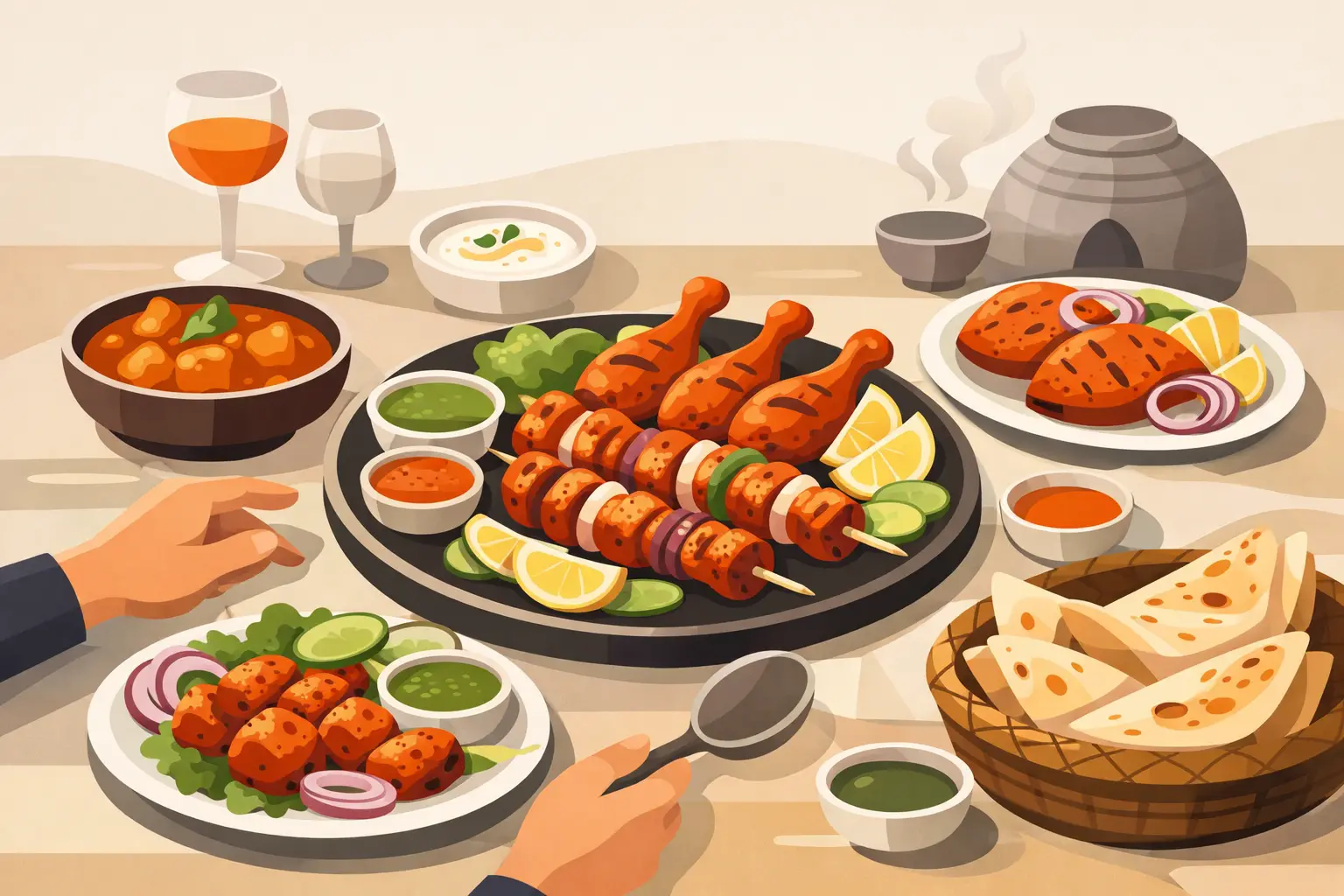
A tandoori order can be the part of an Indian meal everyone reaches for first: smoky edges, tender centres and the warmth of spices cooked in a traditional clay oven. Knowing how to choose tandoori dishes means looking beyond whether you prefer chicken or lamb. The best choice depends on your appetite, spice comfort, dietary needs and what else is going on the table.
Tandoori dishes work well for a quick weeknight meal, a relaxed family dinner or a larger shared occasion. They bring a charred, savoury contrast to slow-cooked curries, fragrant biryani and fresh oven-baked breads. A little planning helps everyone enjoy the meal without ordering too much of one flavour or leaving out the people who prefer vegetarian or milder choices.
What makes a dish tandoori?
Tandoori cooking takes its name from the tandoor, a traditional clay oven heated to a very high temperature. Meat, seafood, paneer or vegetables are usually marinated with yoghurt, ginger, garlic and a blend of spices before being cooked quickly in the oven. The heat seals in moisture while giving the outside its lightly charred finish.
The result is not the same as a curry. Tandoori dishes are generally drier, grilled rather than simmered, and often served with salad, mint sauce, lemon and onion. They can be enjoyed as a starter, a lighter main or a centrepiece for sharing.
Marinades vary from dish to dish, but they often combine earthy cumin and coriander with warming spices, tangy yoghurt and a little chilli. The colour may be vibrant, yet colour alone does not tell you how hot a dish will taste. Ask about the spice level if you are unsure, especially when ordering for children or guests with different tolerances.
How to choose tandoori dishes by protein
Start with the ingredient you enjoy most, then think about texture and richness. Chicken is a familiar, versatile option and suits most tables. Boneless chicken pieces are easy to share, while chicken on the bone tends to offer deeper flavour and a more traditional eating experience. If you want something satisfying without feeling too heavy, chicken tikka is often a dependable choice.
Lamb has a fuller, richer character. Tandoori lamb dishes can be especially good when you want a more substantial main meal or are serving fewer sides. Because lamb has a stronger natural flavour than chicken, it stands up well to bold marinades and smoky cooking. It may not be the first choice for someone who prefers mild flavours, but it is a rewarding option for guests who enjoy a heartier dish.
Seafood is ideal when you would like something lighter and quicker to eat. Tandoori fish or prawns can have a delicate texture, so they are best balanced with simple accompaniments that do not overwhelm their flavour. A fresh salad, lemon and a plain naan often work better here than several very rich curries.
For vegetarian diners, paneer is a classic tandoori choice. It is firm enough for the oven, gently creamy inside and carries the marinade well. Vegetable tandoori platters bring variety through ingredients such as capsicum, onion, mushroom and cauliflower. They are a practical shared option too, as they give non-meat eaters more than a side dish to choose from.
Consider flavour, not just heat
A good tandoori dish has layers of flavour: the slight tang of yoghurt, aromatic spice, smokiness from the oven and a fresh lift from lemon or herbs. Heat is only one part of that picture. If you enjoy spice but do not want an overly hot meal, choose dishes described as mildly or medium spiced and add a hotter curry, pickle or chilli accompaniment for those at the table who want more fire.
For a gentler meal, choose chicken, paneer or vegetables in a yoghurt-based marinade. Pair them with cooling raita and plain naan. This is also a sensible approach for a family meal, where different ages and preferences are being catered for.
If you prefer bolder flavours, lamb, tandoori chicken on the bone and more generously spiced kebabs can bring greater warmth and depth. Balance is still useful. One lively tandoori item alongside a milder curry, rice and bread gives people choices without making the whole meal feel too intense.
Do not assume that a dish with a red marinade will automatically be hot. Traditional spices are used for aroma and depth as much as heat. The most reliable approach is to ask the restaurant how the dish is prepared and whether it can be adjusted to suit your preference.
Match the dish to the occasion
For one person, a tandoori main with naan, rice or a small side can make a complete meal. If you are collecting takeaway after work, a boneless option is often the easiest to eat at home. Add a curry only if you want extra sauce or are sharing the order.
For two or three people, choose two contrasting tandoori dishes rather than doubling up on similar flavours. For example, a chicken option and a paneer or vegetable dish give the table more variety. Add one curry, rice and breads to create a meal with both grilled and saucy elements.
Larger groups benefit from a mixed tandoori platter or a selection of dishes that includes meat and vegetarian choices. This works particularly well as a starter before curries and biryani, or as part of a buffet-style meal. It gives guests something to share while the main dishes are served, and it keeps the menu welcoming for people with different preferences.
For celebrations and catered events, think about ease as well as flavour. Boneless chicken, vegetable tandoori and paneer are straightforward for guests to serve and eat. Include clearly identified vegetarian and vegan options, and check dietary requirements in advance. A well-planned spread should never leave guests wondering what they can enjoy.
Build a balanced Indian meal around tandoori dishes
Tandoori food is at its best when the rest of the order supports it. Since the dishes have a dry, charred finish, a curry with a rich or tomato-based sauce can provide contrast. Dal is another comforting accompaniment, particularly for a vegetarian-friendly table.
Rice and breads serve different purposes. Basmati rice makes the meal feel lighter and is useful with curries or kebabs. Naan is excellent for scooping sauces and enjoying the last of the marinade, while roti offers a simpler, less rich bread choice. If you are ordering several tandoori dishes, avoid choosing too many heavy breads at once unless you have a larger group.
Fresh elements matter too. Raita cools spice and adds creaminess, while salad and lemon cut through richer flavours. Mint sauce is a natural match for kebabs and grilled meats. These small additions can make a shared meal feel more complete without adding another large dish.
A simple rule is to include one grilled dish, one curry or dal, one rice or bread option, and a cooling side. For bigger tables, build from there rather than ordering several dishes that all have the same texture and level of spice.
Check dietary needs before ordering
Tandoori does not automatically mean gluten-free, dairy-free or vegan. Many marinades use yoghurt, and cross-contact can be a consideration for guests with allergies. Paneer is vegetarian but contains dairy. Some breads also contain dairy or gluten, while sauces and sides can vary.
When dietary requirements are involved, it is worth speaking to the restaurant before placing the order. Ask which dishes are suitable, whether a marinade contains yoghurt or nuts, and how the kitchen manages allergy requests. Clear communication is the best way to make a shared meal comfortable for everyone.
Vegetarian guests should have a proper choice rather than just an extra salad. Paneer and vegetable tandoori dishes, paired with dal, vegetable curry and rice, can create a generous meal that feels every bit as considered as the meat selection.
Look for care in the cooking
The quality of a tandoori dish comes down to the marinade, the heat of the oven and timing. It should smell fragrant and lightly smoky, not burnt. Chicken and lamb should be tender rather than dry, while paneer should remain soft inside with a little colour around the edges. Vegetables should have some bite, not be overcooked.
At Indian Brothers, traditional cooking methods and freshly prepared ingredients help keep these familiar dishes consistent whether you are dining in, collecting takeaway or ordering for a group. If you have not tried a tandoori dish before, chicken tikka or paneer tikka are approachable places to start.
Choose one dish that feels familiar, then add one that gives the table a little variety. That is often all it takes to turn an ordinary dinner into a warm, satisfying meal worth sharing.