
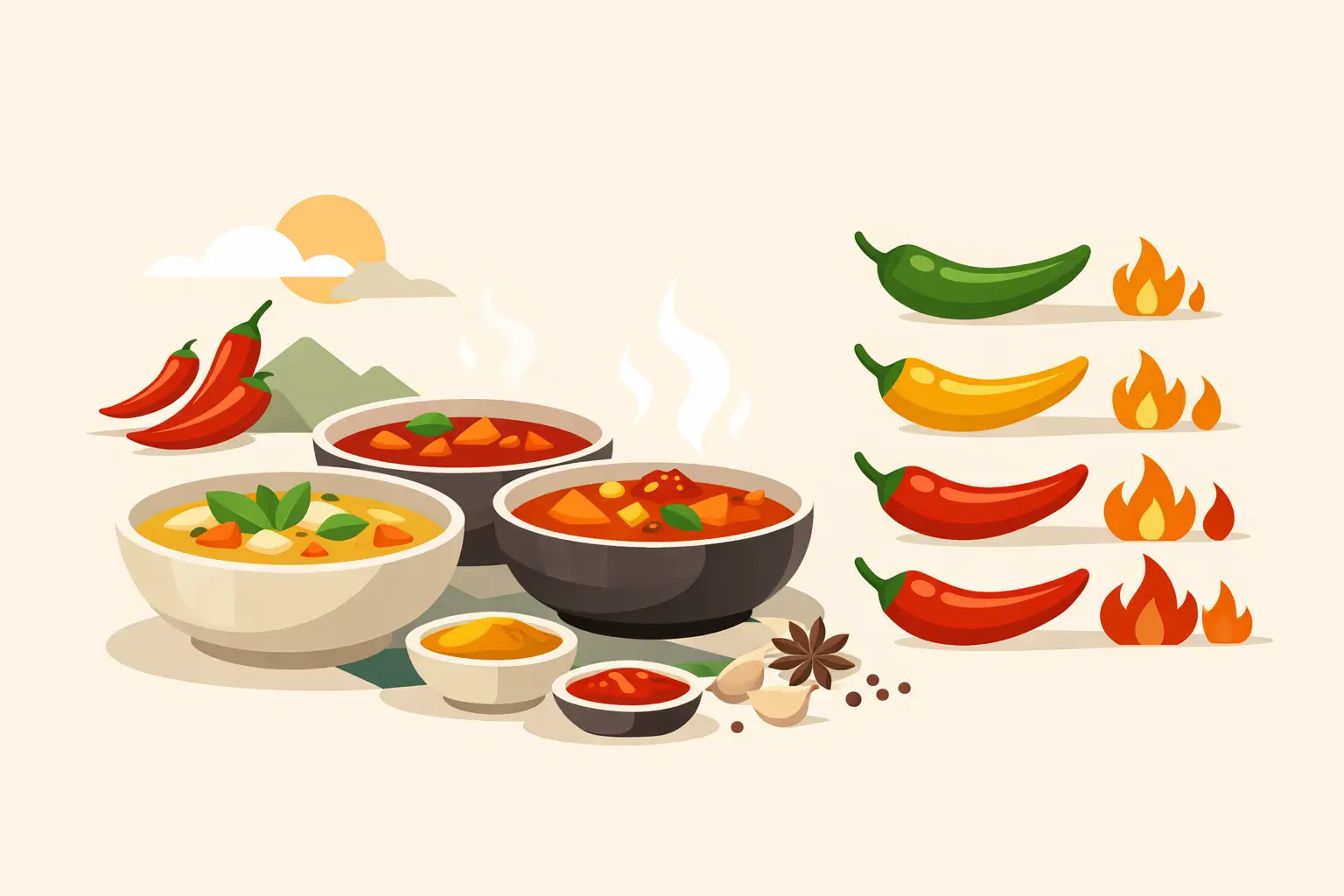
A good curry should leave you satisfied, not reaching for the water jug before you have tasted the sauce. This spice level curry guide is here to help you choose with confidence, whether you enjoy gentle warmth, a proper chilli kick, or something in between. Indian food is full of rich, layered flavour, and heat is only one part of the experience.
The right choice depends on the dish, the ingredients and, most of all, your own appetite for spice. A creamy curry can carry chilli differently from a tomato-based dish, while tandoori cooking and biryani bring their own balance of spice, fragrance and warmth. Knowing what to expect makes ordering for yourself, your family or a group much easier.
What spice level really means in a curry
When people describe a curry as mild, medium or hot, they are usually referring to chilli heat. But spice is broader than heat alone. Indian cooking uses ingredients such as cumin, coriander, turmeric, cardamom, cloves, ginger and black pepper to create aroma, depth and character. A dish can be highly spiced without being very hot.
Chilli brings the warming sensation that builds on the tongue and lips. Some curries use fresh green chilli for a sharper heat, while dried red chilli can add a deeper, rounder warmth. The amount used matters, but so does the way it is cooked into the sauce.
That is why two medium curries may not feel identical. A medium vindaloo-style sauce may seem hotter than a medium korma-style dish, even if both are prepared to the same requested level. The natural acidity, creaminess and richness of the dish all affect how the heat comes through.
A practical spice level curry guide
Mild: flavour first, gentle warmth
Mild curries are ideal for diners who prefer fragrant spices without noticeable chilli heat. They are also a reliable starting point for children, first-time Indian food diners and shared family meals where everyone needs to enjoy the same order.
Creamy curries, coconut-based sauces and dishes made with cashew or almond often sit comfortably at this end of the scale. Their richness softens the heat and gives the sauce a smooth, comforting finish. Mild does not mean plain. You can still expect the warmth of ginger, the sweetness of onion, and the aroma of carefully blended spices.
Choose mild if you want to notice every ingredient, if you are unsure of your tolerance, or if you are pairing the curry with other dishes that may already bring some heat. It is often the best choice for a relaxed weeknight meal.
Medium: balanced warmth for most diners
Medium is where many regular curry lovers feel at home. It offers a clear chilli presence while allowing the flavour of the sauce, meat, vegetables or paneer to remain at the front. You may feel a pleasant warmth building as you eat, but it should not overpower the meal.
This level suits classic tomato-based curries, many masala dishes and a wide range of slow-cooked curries. It is a useful option when a group has mixed preferences, particularly when served with rice, naan and cooling accompaniments.
If you usually enjoy a little heat in your food but do not want the meal to become a challenge, medium is a sensible choice. It also gives you room to add a little extra chilli next time if you find it gentler than expected.
Hot: chilli with purpose
A hot curry is for diners who genuinely enjoy chilli heat and want it to play a strong role in the dish. The flavour should still be there, but the warmth will be more immediate and longer lasting. Hot curries can be especially satisfying with rich meat dishes, tangy sauces or lentil-based recipes that stand up well to bold spice.
It is worth remembering that hot does not always mean better. If the chilli masks the sauce entirely, you may miss the careful balance that makes a curry memorable. Choose hot because you enjoy the taste and sensation of chilli, not simply because you want the hottest option on the table.
For a group meal, consider ordering one hot dish alongside milder options. This gives chilli lovers something they will enjoy while keeping the table comfortable for everyone else.
Very hot: for experienced chilli lovers
Very hot curries are best approached with a clear idea of your own tolerance. They can be enjoyable, lively and deeply flavoursome, but they are not the right choice for every occasion. If you have not tried a particular dish before, starting at hot rather than very hot can be the wiser call.
Very hot is also not always consistent from one curry style to another. A sharp, vinegar-led curry may feel more intense than a rich, creamy one at the same heat level. If you are ordering takeaway for the first time or trying a new dish, asking for guidance is always welcome.
The dish changes how heat feels
The same spice request can taste quite different depending on what is in the bowl. Cream, yoghurt, coconut and ground nuts can soften chilli, making a curry feel rounder and less aggressive. Tomato, tamarind, lemon and vinegar bring acidity, which can make heat feel brighter and stronger.
Chicken and vegetables tend to take on the sauce quickly, while lamb and goat curries often have a fuller, slower-cooked richness that carries spice in another way. Chickpeas, lentils and paneer are excellent with spice, but their texture and richness can make a medium dish feel different from a medium meat curry.
Rice, naan and roti matter too. Steamed rice gives a clean contrast to a spicy sauce, while naan can soften each mouthful and help you enjoy the curry at a steadier pace. A yoghurt-based side or raita is useful when you want cooling relief without losing the dish’s flavour.
How to order for a mixed group
Ordering for families, colleagues or friends does not mean settling for bland food. The simplest approach is to build a table with different levels of warmth. Choose a mild curry for the least spice-tolerant diner, one or two medium options for the majority, and a hot dish for those who enjoy chilli.
Variety in sauce styles helps as well. A creamy mild dish, a medium tomato-based curry and a hotter, more tangy option give everyone a choice without making the order complicated. Add rice and freshly baked breads so people can balance their plate as they like.
For catering and larger celebrations, this approach is particularly useful. Guests have different preferences, ages and dietary needs, and a thoughtful mix helps everyone feel included. Vegetarian and vegan curries can be just as satisfying and flavourful as meat dishes, so they should be chosen as favourites in their own right, not simply as an afterthought.
When to ask for a different level
Many curries can be adjusted, but it depends on the recipe. Some dishes are traditionally mild because their character comes from cream, nuts or delicate spices. Others are known for their punchy warmth. Asking for a hotter version of a gentle dish may add chilli, but it may not create the same balance as choosing a naturally hotter curry.
If you are unsure, tell the team what you normally enjoy. For example, you might say that you like the warmth of medium salsa, that you enjoy chilli but avoid very hot food, or that you are ordering for children. That gives useful context and makes a suitable recommendation easier.
At Indian Brothers, the aim is always a meal that feels welcoming from the first bite to the last. A curry should suit your table, not test it.
The best way to find your favourite heat level is to stay curious. Start where you are comfortable, notice how different sauces carry spice, and make small changes each time you order. Before long, choosing a curry will feel less like a guess and more like choosing exactly the kind of evening meal you were hoping for.