
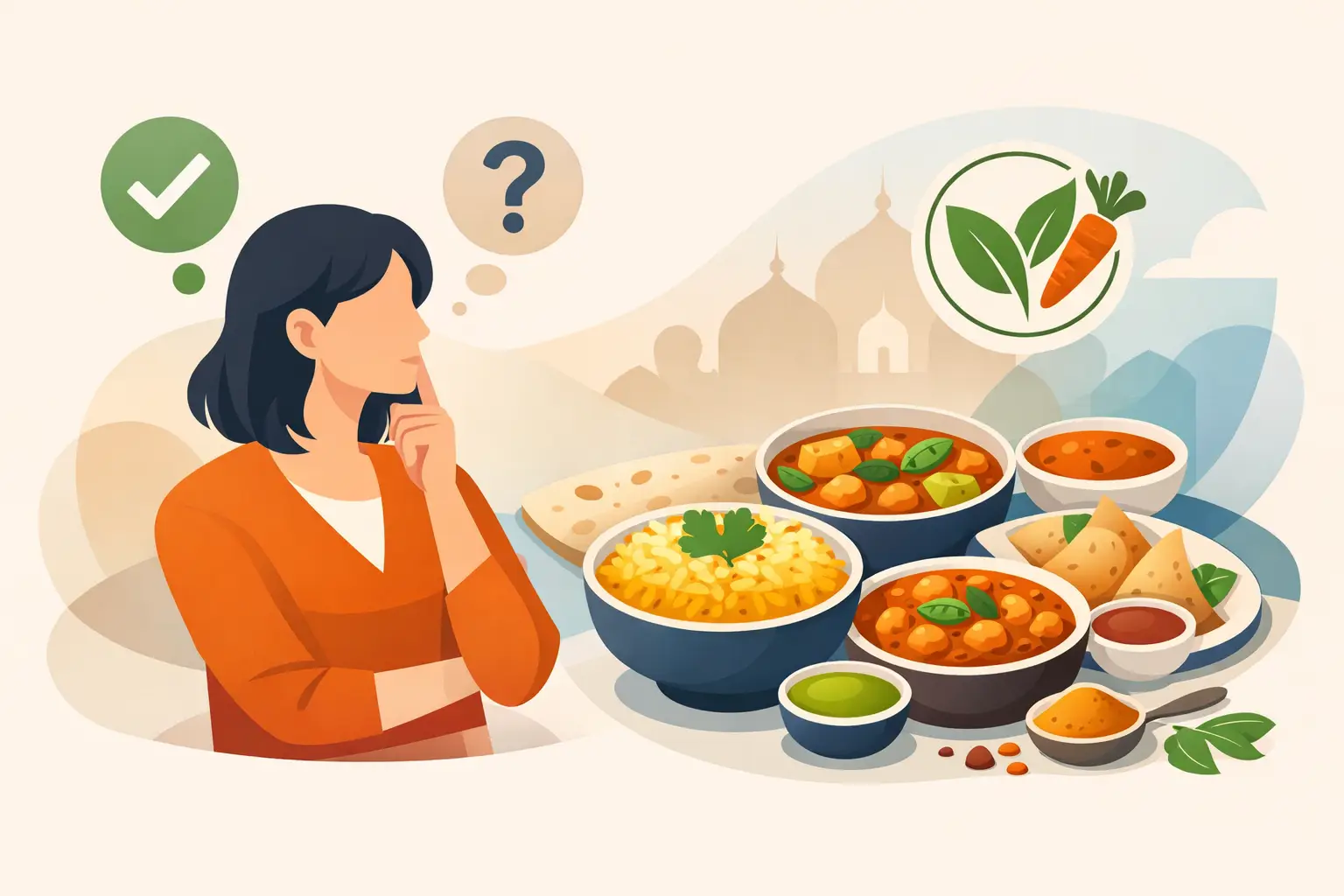
A vegan Indian meal can be full of warming spices, slow-cooked sauces, fragrant rice and satisfying vegetables – but choosing it is not always as simple as ordering anything labelled vegetarian. Knowing how to choose vegan Indian dishes means looking beyond the main ingredient and asking how each dish is prepared, particularly where ghee, yoghurt, cream and paneer may be used.
Indian cooking has a long tradition of plant-based food, with pulses, vegetables, chickpeas, lentils and grains forming the heart of many much-loved dishes. With a few practical questions, vegan diners can enjoy a generous, flavourful meal while sharing the table comfortably with family and friends.
Start with naturally plant-based Indian favourites
The easiest place to begin is with dishes built around vegetables, lentils or chickpeas rather than dishes designed around dairy. A well-made chana masala, for example, centres on chickpeas cooked with tomato, onion and spices. Aloo gobi combines potato and cauliflower, while bhindi dishes highlight okra’s distinctive texture and flavour. Baingan bharta, made with smoky roasted aubergine, can also be a good choice when prepared without butter or cream.
Dal is another dependable starting point. Lentils are a staple of Indian home cooking and can be deeply satisfying alongside rice. However, the final tempering of spices is often made with ghee, so it is still worth checking. The dish may be suitable with vegetable oil instead, but this depends on the kitchen’s recipe.
Vegetable curries can vary more than their names suggest. One restaurant’s mixed vegetable curry may be a tomato-based, vegan-friendly dish, while another may finish it with cream. Treat a dish name as a useful clue, not a guarantee.
How to choose vegan Indian dishes by checking preparation
A short, clear conversation with the restaurant is the best way to order with confidence. Rather than asking only whether a dish is vegetarian, explain that you need it to be fully vegan and ask whether it contains dairy, ghee, butter, yoghurt or paneer. This helps the team check the recipe and identify any changes that may be possible.
The main ingredients to ask about are familiar once you know where they appear:
- Ghee is clarified butter and is commonly used for frying spices, finishing lentils and cooking rice.
- Paneer is Indian cottage cheese, often used in curries that may otherwise look vegetable-based.
- Cream and butter can soften and enrich sauces, especially in mild or restaurant-style curries.
- Yoghurt may be used in marinades, gravies and some rice dishes.
- Milk can appear in desserts, chai and occasionally in sauces.
This does not mean vegan diners need to avoid every curry with a rich-looking sauce. It simply means the preparation matters. A kitchen that cooks fresh food can often advise whether a dish is already vegan or whether it can be made without a dairy element. Always allow the restaurant to guide you, particularly if you have an allergy as well as a vegan preference.
Be careful with mild, creamy curries
Creamy curries are usually the ones that need the closest attention. Korma, malai-style dishes, butter sauces and many paneer curries are generally unsuitable for a vegan order because dairy is central to their character. Removing one ingredient may not create the same dish, and it is better to choose a curry with a naturally tomato, onion or vegetable-based gravy.
That said, spice level and vegan suitability are separate questions. A vegan curry does not have to be hot. Ask for guidance on a mild plant-based option if you prefer gentler flavours, or choose a more aromatic dish if you enjoy chilli and warming spices.
Build a complete vegan Indian meal
A satisfying order is about balance rather than selecting one large curry. Pair a lentil or chickpea dish with a vegetable curry, then add rice or suitable bread. This gives the meal different textures and makes it easier to share around the table.
Steamed basmati rice is often a straightforward choice, though flavoured rice and biryani should be checked for ghee, yoghurt or meat stock. Plain rice can be the simplest option when you are unsure. For breads, do not assume naan is vegan. Naan commonly contains yoghurt, milk or butter, and it may be brushed with ghee after baking. A chapati or roti may be suitable, but the dough and cooking method should still be confirmed.
Pickles, chutneys and salads can bring brightness to the meal, although yoghurt-based raita is not vegan. Papadums may also be suitable, but recipes and frying methods differ. When ordering takeaway for a group, ask for vegan items to be clearly identified. It makes serving easier and avoids any confusion once the food reaches the table.
Choose flavour, not just a substitute
The best vegan Indian dishes do not feel like a compromise. Lentils can be earthy and comforting, chickpeas can carry bold spice beautifully, and vegetables take on remarkable depth when cooked slowly with onion, ginger, garlic and whole spices.
If you are new to Indian food, start with a familiar ingredient. Chickpeas, potatoes, spinach, cauliflower and lentils are easy entry points. If you already enjoy stronger flavours, consider dishes with aubergine, okra or a more pronounced spice blend. The goal is not to find the closest version of a dairy-based favourite, but to choose dishes that are at their best as they are.
Ordering for mixed groups and family meals
Indian food works particularly well for shared meals because the table can include choices for everyone. A family may order a vegan lentil dish, a vegetable curry, rice, breads and separate meat or dairy-based dishes for other diners. The key is making dietary requirements clear at the time of ordering, not after the food is served.
For larger gatherings, it helps to choose a few dishes that are naturally vegan rather than relying on one altered dish. This gives vegan guests real variety and gives everyone else the chance to enjoy the same food. Make sure serving spoons are kept separate where needed, especially if vegan food must not come into contact with dairy or meat dishes.
At Indian Brothers, the team can help diners identify suitable menu choices and plan an order that works for varied dietary requirements. Whether you are sitting down for a relaxed meal or arranging a takeaway dinner, a quick question before ordering brings useful reassurance.
Questions worth asking before you order
You do not need to know every cooking method to order well. A few direct questions will usually give you the answer: is this dish made with ghee or butter; does the sauce contain cream, milk or yoghurt; can it be prepared without dairy; and which rice or bread is suitable for a vegan meal?
For strict vegans, it is also sensible to ask about shared cooking surfaces, fryers or utensils. Restaurants will vary in what they can accommodate, and a clear answer lets you decide what feels right for you. If you are ordering online, add a concise dietary note and consider calling if the requirement is essential or complex.
Choosing vegan Indian food should feel enjoyable, not uncertain. Begin with lentils, chickpeas and vegetable dishes, check the cooking fats and dairy ingredients, then build your meal around flavours you genuinely enjoy. A good restaurant will welcome the question and help make sure there is something comforting, generous and suitable on the table.