
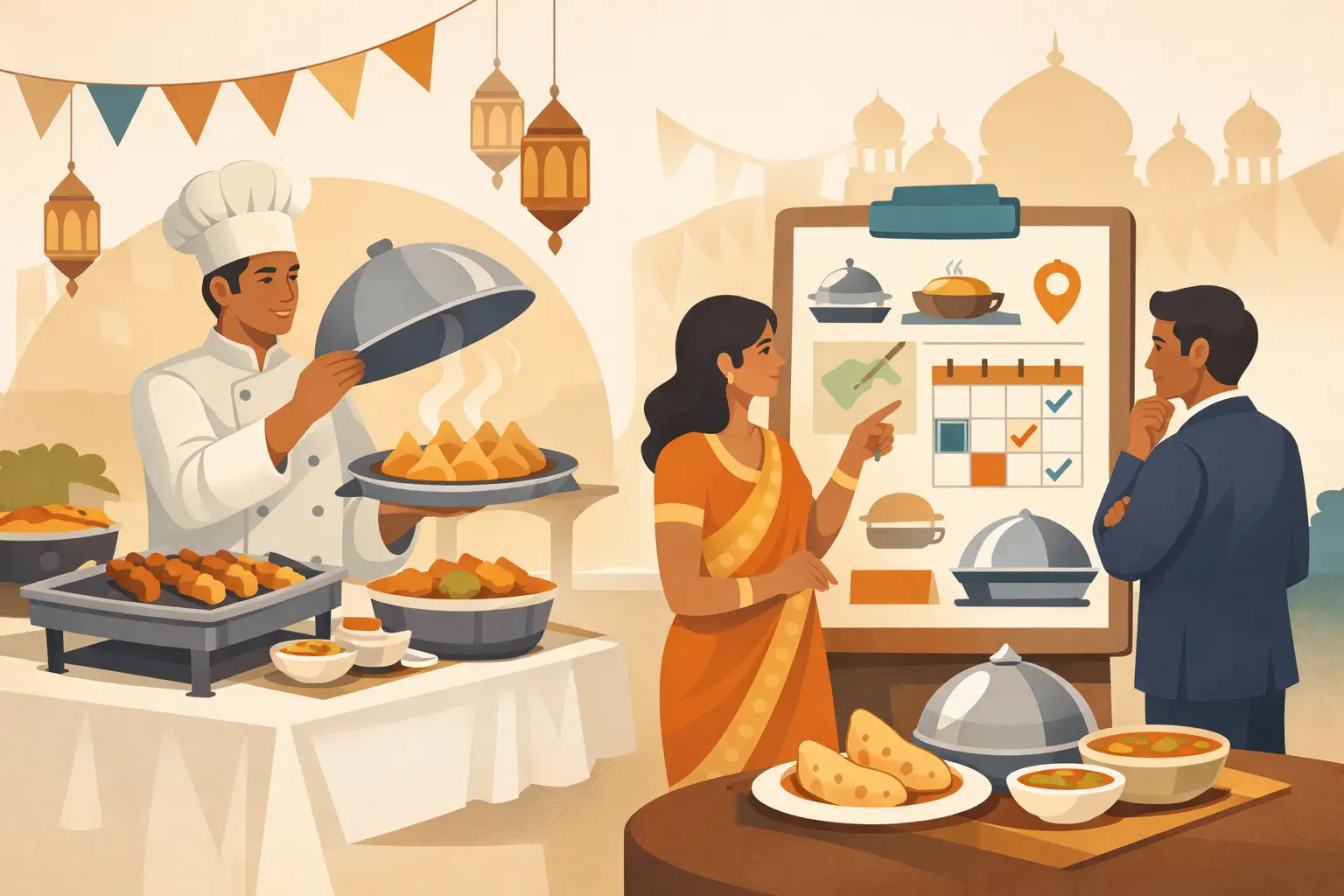
When you are feeding a room full of people, the food needs to do more than taste good. It has to arrive on time, suit different diets, stay enjoyable across the whole service, and leave guests feeling looked after. That is exactly where an Indian event catering guide helps – not with grand promises, but with practical decisions that make the day run smoothly.
Indian food suits events particularly well because it is built for sharing, variety and generous service. A well-planned menu can cover vegetarian, vegan and non-vegetarian preferences without making anyone feel like an afterthought. It can work just as comfortably for a family birthday as it does for a corporate lunch, engagement party or community gathering. The key is choosing the right menu and service style for the occasion, not simply ordering as much food as possible.
What this Indian event catering guide should help you decide
Most catering issues start before the food is cooked. Hosts often know how many people are coming, but not how hungry they will be, what balance of dishes works best, or whether a buffet, shared trays or individually packed meals will suit the event better. Those choices affect budget, timing and guest experience.
A good starting point is to think about the event itself. A lunchtime office function usually calls for straightforward service and easy portioning. A birthday or family celebration may allow for a slower meal with a broader spread. Weddings and large community events often need a menu that feels generous while still being practical to serve at scale. The right caterer should help you match the food to the format rather than pushing a one-size-fits-all package.
Start with the event type, not just the menu
It is tempting to begin by picking favourite dishes, but event catering works better when you first consider the setting. If guests are standing and mingling, saucy mains that need a knife and fork may not be ideal. If everyone is seated for a full meal, then richer curries, rice dishes and breads become much easier to enjoy.
For corporate events, reliability matters most. Food should be familiar, well-portioned and easy to serve without long delays. For private celebrations, people often expect more choice and a sense of occasion, so a mix of curries, rice, naan and starters usually works well. For weddings or milestone events, consistency is essential. Every guest should receive the same quality, whether they are first in line or last.
That is one reason established local caterers are often a safer choice than providers who only cater occasionally. Experience shows in timing, portion planning and the ability to handle changes without fuss.
Building a menu that pleases a mixed crowd
Indian catering is strongest when it offers balance. A menu with only heavy dishes can feel repetitive, while one that tries to include too many options can become difficult to manage. In most cases, a smaller menu chosen carefully will serve guests better than an oversized one.
A dependable combination often includes one chicken dish, one meat or seafood option, one or two vegetarian curries, rice, naan and a few starters. This gives variety without creating confusion. Biryani can also be a strong centrepiece, especially for larger events, because it is hearty, easy to portion and widely enjoyed.
Vegetarian dishes are not simply backup choices in Indian catering. They are often among the most popular items on the table. Dhal, paneer dishes, vegetable curries and chana-based options appeal to vegetarians and meat-eaters alike when they are cooked properly. Vegan guests can also be catered for comfortably, but it helps to confirm ingredients in advance, especially for breads, dairy-based curries and desserts.
Spice level needs some thought too. Hosts sometimes assume hotter means more authentic, but event food usually works best at a mild to medium heat, with stronger options available if the group specifically wants them. That approach keeps the menu welcoming for children, older guests and anyone who enjoys flavour without too much chilli.
Portions matter more than most hosts expect
One of the most common catering mistakes is underestimating how people eat at events. Guests do not all eat the same way. Some will sample everything lightly, while others will return for seconds of the dishes they know and enjoy. Time of day also changes appetite. A dinner function generally needs more food than a mid-morning work meeting.
Rice, breads and starters all affect how much curry is required. If your event includes substantial entrées, guests may eat less of the mains. If there is alcohol being served, people often stay longer and eat more. Children can reduce average portion size, but only slightly if there are many adults in attendance.
This is where speaking plainly with your caterer makes a difference. Give them realistic numbers, the age range of guests, the event duration and whether the meal is the main feature or part of a broader programme. Good catering is not only about cooking. It is about judging volume sensibly so you are not left short, or paying for far more than you need.
Service style changes the whole experience
Indian event catering guide to choosing service
The same menu can feel very different depending on how it is served. Buffet service is often the most practical choice for medium to large gatherings. It gives guests flexibility, suits mixed dietary needs and keeps the event moving. Shared trays can work well for family-style occasions where guests are seated together and the meal is part of the social atmosphere.
Individually packed meals are useful for training days, school functions or workplaces where time is limited and portion control matters. They are not as warm or communal as a buffet, but they are efficient and tidy. For some corporate settings, that matters more.
There are trade-offs. Buffets need enough space and a sensible flow so queues do not become the main event. Shared service feels generous, but may not suit formal venues. Packed meals solve some logistical issues, though they naturally reduce the variety guests can try. The best option depends on the room, the schedule and the tone you want to create.
Dietary needs should be handled early
Most groups now include a mix of dietary requirements, and hosts are better off treating that as standard rather than exceptional. Vegetarian and vegan choices are usually straightforward with Indian food, but allergies and intolerances need more careful attention. Nut use, dairy, gluten and onion or garlic restrictions can affect what is suitable.
The easiest approach is to ask guests about dietary needs early, then pass that information on clearly. Last-minute requests are harder to manage well. It also helps to label dishes properly at the event, especially for buffets. Guests should not have to guess what they can eat.
A reliable caterer will be honest about what can be adapted and what cannot. That honesty matters. It is better to offer a smaller range that is clearly suitable than to promise too much and create uncertainty on the day.
Timing, delivery and setup are part of the meal
Even excellent food can disappoint if it arrives late or is awkward to serve. When comparing catering options, ask how delivery, setup and collection will work. Find out when the food will arrive, what equipment is included, and whether the dishes are designed to hold their quality over the serving period.
This matters especially for breads, fried starters and rice dishes. Some items are best enjoyed fresh and may need careful timing. Others hold well and are ideal for larger functions. There is no need for every dish to do the same job. A practical menu often mixes items that travel well with a few favourites that add warmth and freshness.
Hosts in Queensland often choose established restaurant caterers for that reason. They are used to preparing food consistently at volume and handling logistics across different locations. For events where reliability matters more than novelty, that experience counts.
Budgeting without cutting the wrong corners
Catering budgets are real, and most hosts have to make choices. The trick is knowing where value sits. Reducing the number of dishes slightly is usually less noticeable than reducing portions too far. Choosing a balanced menu with familiar crowd-pleasers often gives better results than paying extra for complexity that guests may not particularly want.
Starter selection, premium proteins and service format all affect price. So does guest count. Larger events can sometimes achieve better value per head, but only if the menu is planned sensibly. If you are working within a firm budget, say so early. A trustworthy caterer should be able to suggest options that still feel generous and well considered.
Indian Brothers has built its reputation on authentic food and dependable service, and that same straightforward approach is what event hosts tend to value most. People remember whether the meal was satisfying, whether everyone found something they could enjoy, and whether the host looked calm rather than stressed.
The best catering plans are rarely the most complicated. They are the ones that suit the event, respect the guest list and leave enough room for everyone to relax. If you start with that in mind, the food becomes one of the easiest parts of bringing people together.