
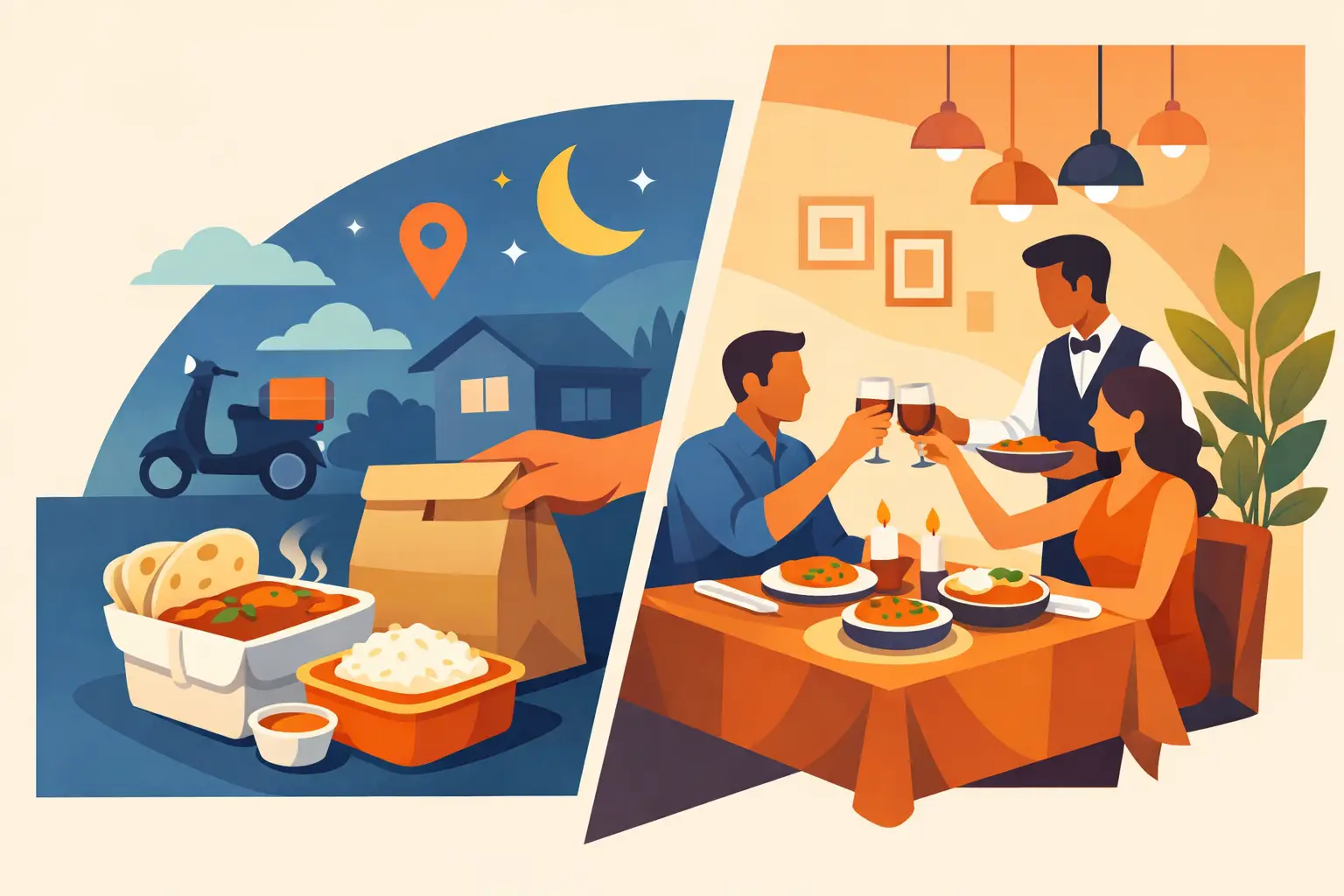
A Friday evening can call for two very different kinds of dinner. Sometimes the best plan is collecting a warm bag of curries, rice and naan on the way home. Other times, sitting around a table while dishes arrive fresh from the kitchen is exactly what the family needs. When considering indian takeaway versus dine in, there is no single right choice – only the option that suits your evening, your group and your appetite.
Both formats offer the comfort of traditional Indian cooking: fragrant curries, tandoori dishes cooked with care, filling biryanis and breads made for sharing. The difference lies in how you want the meal to fit into your day.
Indian takeaway versus dine in: what changes?
The food matters most, but the setting changes the experience. Takeaway is built around convenience and flexibility. You choose the time, eat where you are comfortable and can settle in at home without watching the clock. It is particularly useful after a long working day, when cooking feels like one task too many, or when everyone in the household wants something different.
Dine in offers the chance to make dinner an occasion, even if it is a simple midweek one. A restaurant table removes the shopping, preparation, washing up and decision of who will serve. It creates space for a proper catch-up, a family celebration or an easy meal with friends. For many people, the welcome and the shared atmosphere are as valuable as the food itself.
Neither is automatically better. A quiet night at home may call for takeaway, while a birthday, reunion or meal with visiting relatives may be more enjoyable around a restaurant table.
When takeaway is the better choice
Takeaway works well when time is short but you still want a satisfying, freshly prepared dinner. Ordering ahead means you can plan around work, school pick-ups, sport or an evening at home. There is no need to rush to a booking or get everyone out of the house.
It is also a practical choice for households with mixed schedules. One person may arrive home later, children may need to eat earlier, or you may simply want to serve dinner when it suits you. Indian dishes are naturally generous for sharing, so a selection of curries, rice, breads and sides can turn an ordinary sofa supper into a relaxed family meal.
The comfort of eating at home
At home, you set the pace. Put on a film, open the table for a casual dinner or enjoy a quieter evening after a busy week. Takeaway can be especially appealing for families with younger children, people who would rather not travel after work, or anyone who wants a favourite meal without the effort of cooking.
There is also more freedom to save part of the order for later. A leftover curry and rice can make an easy lunch the next day, provided it is cooled, stored and reheated safely. If you are ordering for a smaller household, choosing a few dishes that keep well can offer good value as well as convenience.
Getting the best from an Indian takeaway
A little planning helps the meal arrive as you want it. Order enough variety for the table: perhaps a mild option, a richer curry, a vegetable dish, rice and fresh naan. This gives everyone something to enjoy and makes it easier to accommodate different spice preferences.
If someone follows a vegetarian or vegan diet, check that their dishes are clearly separated when serving. It is worth considering texture too. Saucy curries travel particularly well, while breads and crisp starters are best enjoyed soon after collection. Set plates out before you collect the food, and dinner can be ready within minutes of arriving home.
Why dine in can feel more special
Dine in is not only for formal occasions. It is a simple way to make a regular meal feel more generous. Fresh naan can come straight to the table, tandoori dishes retain their heat and aroma, and a meal can unfold course by course rather than all at once from containers.
For groups, eating at the restaurant makes sharing easier. Instead of one person managing plates, drinks and serving spoons at home, everyone can focus on the conversation. That matters when friends have not seen each other for a while, grandparents are joining dinner or a family is marking a milestone.
A table for every kind of group
Indian food suits groups because it invites people to share while still allowing individual choices. One guest might prefer a gentle butter chicken, another a spicier lamb curry, while vegetarian and vegan diners can choose dishes that are every bit as substantial. Rice, breads and sides bring the meal together.
A restaurant setting can make these choices feel easier, particularly for a larger party. Staff can help with menu questions and spice preferences, while the kitchen prepares each dish for service. Booking a table also gives your group a clear plan, which is useful for weekend evenings and celebrations when coordinating several people can otherwise become difficult.
The value of being looked after
The biggest difference with dine in is often not on the plate. It is the feeling that the evening has been taken care of. You can arrive, choose your meal and enjoy the company around you, without thinking about cooking timings or clearing the kitchen afterwards.
For busy parents, couples fitting in time together and groups catching up after work, that small break from routine can be meaningful. Dependable hospitality is not about fuss. It is about a warm welcome, food prepared properly and an environment where people can settle in comfortably.
Consider freshness, timing and travel
Some dishes are equally enjoyable in either format, particularly slow-cooked curries, dal, biryanis and rice dishes. Their flavours develop beautifully, and they are well suited to a journey home. Other choices shine brightest at the table. Freshly baked naan, sizzling tandoori dishes and crisp starters are at their best when served immediately.
Distance is worth considering too. If home is nearby and collection is simple, takeaway can feel almost as immediate as dining out. If travel will take longer, dine in may offer the better experience for dishes that depend on heat and texture. Conversely, if the weather is poor, children are tired or you have had an exhausting day, the ease of taking dinner home may outweigh the appeal of going out.
The timing of your meal matters as well. A quick early dinner may be ideal for collection. A slower Saturday evening, with time to linger and talk, may deserve a table. The occasion should guide the choice, rather than a rule about how Indian food ought to be enjoyed.
Choosing for celebrations and everyday meals
For a casual Tuesday, takeaway often wins on simplicity. It brings variety to the table without adding another task to the evening. For a larger birthday meal, a family gathering or a long-overdue catch-up, dine in gives the occasion a natural sense of togetherness.
There are exceptions. Hosting relatives at home may make a generous takeaway spread the most comfortable option, especially if children need familiar surroundings. A small anniversary dinner, meanwhile, can be made more memorable by stepping out for the evening. Think about the people involved as much as the menu.
Indian Brothers has welcomed Queensland diners since 2003 with both options in mind: traditional food for people who need a reliable dinner at home, and a welcoming table for those who want to share the meal in person. The same care in preparation should carry through whichever way you choose to enjoy it.
Let the evening decide
The most useful question is not whether takeaway or dine in is superior. Ask what would make tonight easier, warmer or more enjoyable. Choose takeaway when home is where you want to be. Choose a table when the people you are with deserve your full attention. A good Indian meal has room for both.