
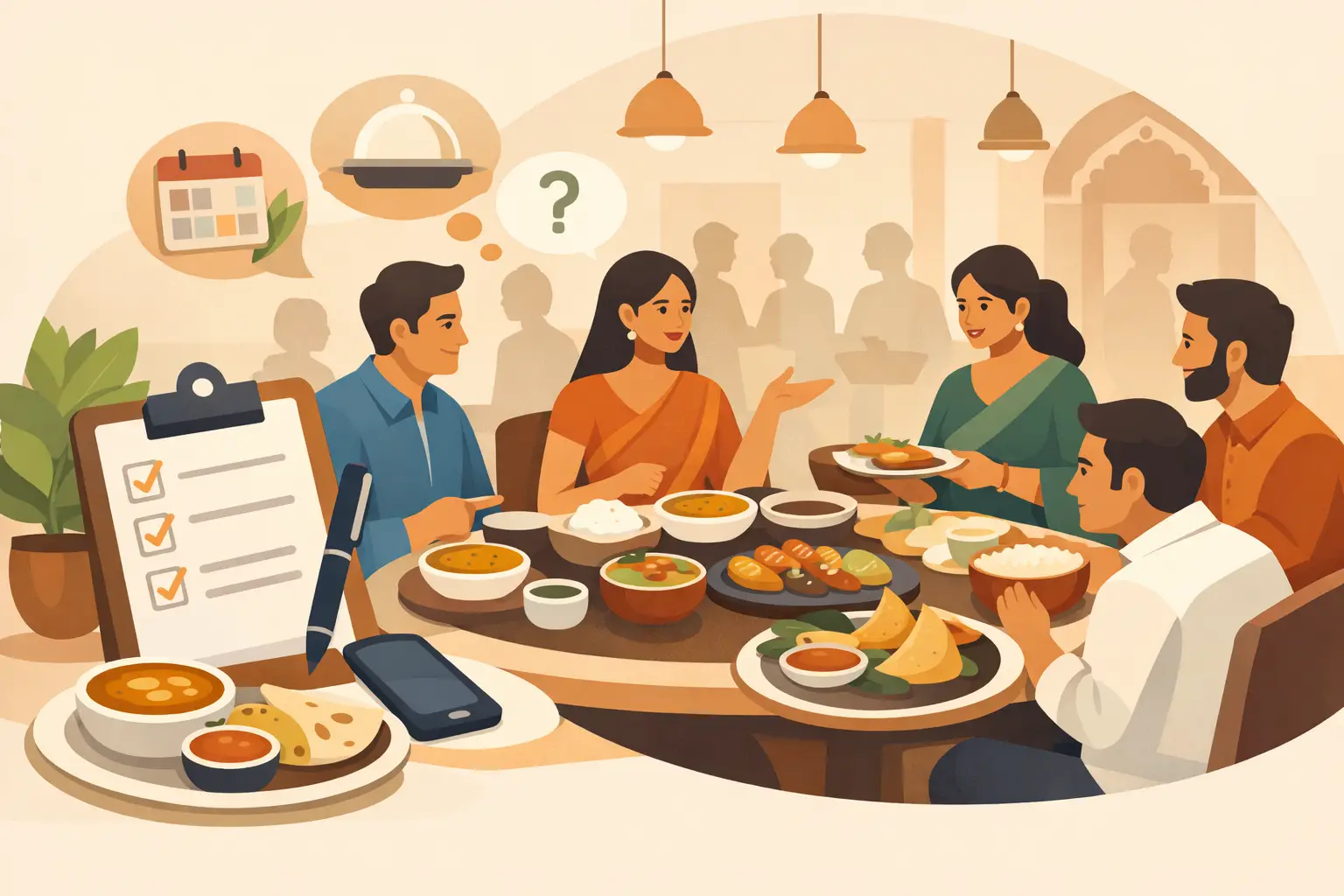
A good group meal is rarely about finding one dish everybody likes. It is about making sure nobody is left scanning the menu for an option, waiting too long for food, or wondering how the bill will work. Knowing how to plan Indian group dining makes the occasion easier from the first booking to the final shared naan.
Indian food is particularly well suited to gatherings because it is made for the middle of the table. Curries, rice, breads, tandoori dishes and sides give guests choice without turning dinner into a complicated set of individual orders. A little planning means your birthday, work dinner, family catch-up or community celebration can feel generous, relaxed and properly looked after.
Start with the occasion and your guest numbers
The size and purpose of your gathering will shape every other decision. A casual dinner for six colleagues needs a different approach from a 30-person birthday party or a family celebration with children and grandparents. Confirm the likely number of guests early, then allow for a few changes before finalising the booking.
It also helps to decide what sort of meal you want. For a smaller group, ordering a range of dishes to share often creates the most enjoyable experience. Guests can try familiar favourites alongside something new, and the table feels naturally sociable. For a larger party, a planned selection of shared dishes or a set arrangement can keep service smooth and help everyone eat at a similar time.
Think about the practical details before you contact the restaurant. Do you need a quieter table for conversation? Are children attending? Is the meal before a show, meeting or sporting event? Would guests be more comfortable with an early dinner? Sharing these details when you book helps the team prepare for the kind of occasion you are hosting.
How to plan Indian group dining around the menu
The simplest rule is to order for variety, not for every possible preference. A balanced Indian group meal usually includes a few curries, one or two dry or tandoori dishes, rice, breads and refreshing sides. This gives the table different textures and spice levels while keeping the meal satisfying.
Begin with dishes that most people recognise. A mild, creamy curry and a tomato-based favourite are dependable choices for guests who prefer familiar flavours. Add a richer, more deeply spiced option for those who enjoy heat, along with a tandoori dish for smoky flavour and a different style of protein. If your group includes vegetarians or vegans, choose those dishes as part of the main spread rather than treating them as an afterthought. Well-made lentil, chickpea, vegetable and paneer dishes are substantial enough for everybody to enjoy.
For groups with mixed diets, aim for a table where each guest has more than one suitable choice. A useful starting point is to include vegetarian dishes, at least one vegan-friendly option where needed, chicken or lamb choices for meat eaters, and enough rice and bread for sharing. The exact balance depends on your guests. A workplace group may have several dietary requirements, while a family meal may call for more mild dishes and extra naan for children.
Avoid ordering only rich curries. A lighter vegetable dish, a lentil dish or a fresh yoghurt side can bring balance to the table. Raita can be especially helpful when some guests enjoy more spice than others. Rice provides a simple base, while naan and roti make it easy to share sauces and enjoy the full meal together.
Choose spice levels thoughtfully
Spice is personal, and group dining is not the time to test everyone’s limits. Include mostly mild to medium dishes, then add one hotter option for guests who actively want it. This approach keeps the meal welcoming for those who are less familiar with Indian cuisine while still giving spice lovers something with real warmth.
If you are unsure, ask your guests in advance whether they have a preference. A quick message asking about dietary needs, vegetarian choices and spice tolerance can prevent awkwardness at the table. It is much easier to plan a varied order than to solve a problem once food has arrived.
Book early and give clear information
Restaurants can often accommodate groups more comfortably when they know what is coming. For weekend evenings, public holidays and busy celebration periods, book as early as you can. Larger groups should not leave it until the day before, particularly if you would like everyone seated together.
When making the reservation, provide the expected number of guests, the date and time, the nature of the occasion, and any essential dietary requirements. Let the restaurant know if the number may change, then confirm final attendance by the requested time. This is considerate for the venue and gives your group the best chance of a smooth service.
It is also sensible to ask about the best arrangement for your group size. Some gatherings work best with a shared menu chosen ahead of time. Others are happy ordering individually from the menu. Individual ordering offers more freedom, but it can slow down the process for a large table and make splitting the bill more difficult. Pre-planning a shared selection is often the easier choice when your priority is spending time with guests rather than comparing orders.
Make dietary needs part of the plan, not a last-minute question
Indian cuisine offers plenty of choice, but ingredients and preparation methods still matter. A guest who is vegetarian, vegan, gluten-sensitive, dairy-free or managing an allergy needs clear information before the meal. Ask guests privately for their requirements when you send the invitation, rather than putting them on the spot at the table.
Share those requirements with the restaurant when you book and again when confirming your order. Be specific. Saying that someone has a nut allergy or cannot eat dairy is more useful than simply saying they are ‘fussy’. If an allergy is severe, the guest should speak directly with the restaurant team so they can make an informed decision about suitable options and preparation.
For a mixed group, avoid assuming that vegetable dishes are automatically vegan or that every bread is suitable for every diet. Clarifying in advance protects your guests and allows the kitchen to guide you towards dishes that fit their needs.
Plan quantities without over-ordering
Group dining should feel abundant, but too much food can become wasteful. The right quantity depends on the group, the time of day and whether you are having starters or dessert. A group arriving after work and ordering drinks may eat differently from a family coming for an early meal.
As a general approach, order enough mains to create choice across the table, then support them with rice and breads. Larger groups do not need one curry per person if the dishes are designed to share. On the other hand, do not rely on just two mains for a table with several different dietary requirements. Each group needs enough suitable food for everyone, not just a token serving.
Starters can be a good fit for a celebratory table, especially while late guests arrive. For a straightforward work dinner, you may prefer to go directly to mains so the evening stays within time. Dessert is worth considering for birthdays and family occasions, but it depends on how substantial the main meal has been and whether guests want a long, leisurely finish.
Decide how you will handle drinks and payment
A little clarity avoids a lot of end-of-night confusion. If you are hosting, tell guests whether you are covering the meal, contributing a set amount or asking everyone to pay for themselves. For a group of friends, a shared arrangement may work well. For a work meal, check any spending limit before ordering and keep invoices or receipts where required.
The same applies to drinks. Some hosts prefer to offer a first round or set drinks on the table, while others ask guests to order their own. Neither option is wrong. What matters is that expectations are clear and nobody feels caught out when the bill arrives.
Give the evening room to breathe
The best group dinners are not tightly scheduled. Encourage guests to arrive a little before the booking time, particularly for a larger party. Once everyone is seated, share the plan for ordering so people know whether dishes will be chosen together or individually.
Then let the meal do its job. Pass the breads, recommend a dish you enjoy, and make room for guests to try something different. Indian dining is at its best when the table is active, generous and unhurried.
For a Queensland gathering that needs authentic food, inclusive choices and dependable hospitality, Indian Brothers can help make the practical details feel straightforward. Plan the essentials early, choose food with the whole table in mind, and leave enough space for the conversations that brought everyone together.