
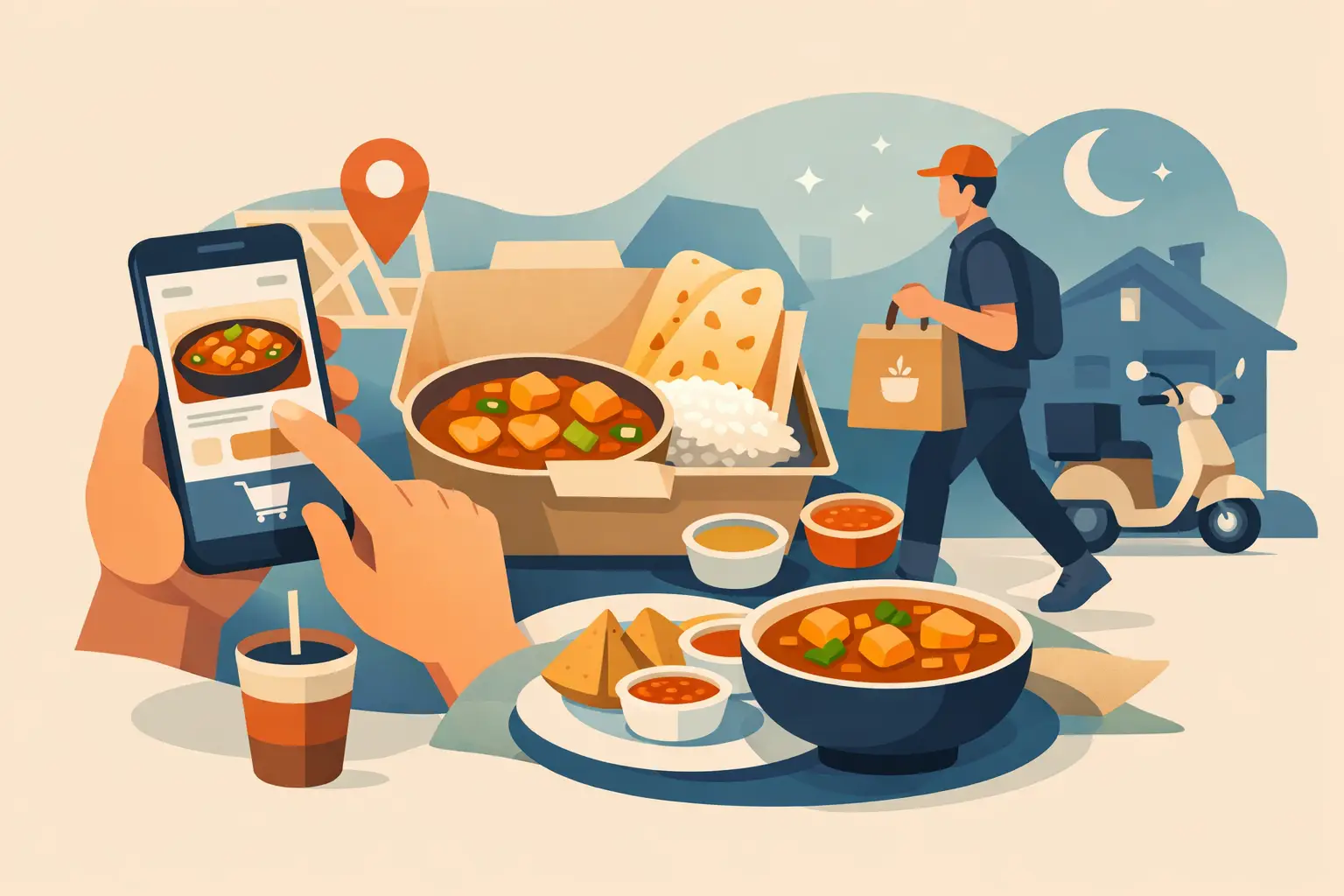
A good curry takeaway can turn a busy weeknight into a proper shared meal. Knowing how to order curry takeaway means choosing dishes that suit everyone at the table, getting the balance of heat and flavour right, and making sure there is enough food to enjoy without ordering far more than you need.
Whether you are collecting dinner after work, feeding the family, or organising food for friends, a little planning helps. Indian food is made for sharing, but the best order is not always one of everything. Start with the people you are feeding, then build a meal around a few familiar favourites, a rice dish or bread, and sides that bring contrast.
Start with who you are feeding
Before looking through the menu, think about the number of adults and children eating, their appetite, and any dietary requirements. A meal for two people who enjoy a relaxed dinner will look different from a family order where some diners prefer mild dishes and others enjoy more spice.
For a smaller order, two curries with one rice and one bread can be a satisfying place to start. If you are feeding four or more people, it is usually better to choose a variety of curries rather than doubling up on one dish. That way, everyone can try a little of each, and there is less pressure for every person to agree on the same sauce.
It also helps to choose at least one dish that feels familiar to less adventurous eaters. Butter chicken, korma-style curries and mild vegetable dishes are often comfortable choices, while a hotter curry can sit alongside them for those who want more warmth and chilli.
Choose curries with different flavours
The most enjoyable takeaway orders have variety, not simply varying levels of heat. Indian curries can be creamy, tomato-based, earthy, tangy, slow-cooked or rich with warming spices. Ordering two very similar dishes may leave the meal feeling heavier than it needs to.
A practical combination might include a creamy curry, such as butter chicken or a mild paneer dish, alongside a deeper and more savoury option such as rogan josh, madras or a lentil-based curry. If your group includes vegetarians or vegans, vegetable curries, chickpea dishes and dhal can be substantial centrepieces, not just side options.
Tandoori dishes are another useful addition when you want contrast. Their charred, smoky flavour and drier finish work well beside saucy curries, rice and bread. A chicken tikka or tandoori platter can be especially helpful for groups, as it gives people another option without adding another rich sauce to the table.
Be realistic about spice levels
Spice is personal. A dish described as medium may be pleasantly warming for one person and too hot for another, particularly children or diners who do not eat chilli regularly. If you are ordering for a mixed group, keep most dishes mild to medium and add one hot option for those who enjoy it.
Do not assume that a hot curry has more flavour than a mild one. Traditional Indian cooking builds flavour through spices, herbs, onions, tomatoes and slow cooking, while chilli is only one part of the dish. If you are unsure, choosing a medium dish is often a sensible middle ground.
If the menu allows notes, mention a genuine dietary concern or ask for guidance on heat. It is better to be clear before the food is prepared than to find a favourite curry cannot be enjoyed once it arrives home.
Build the order with rice, bread and sides
Curries are only part of the meal. Rice and breads help bring everything together, soak up sauces and make portions go further. Fragrant basmati rice is a reliable choice with almost any curry, while biryani is more of a main dish in its own right, with spiced rice, herbs and usually vegetables or meat.
Naan is ideal for sharing and is often the first thing to disappear from the table. Plain naan lets the curry flavours lead, while garlic naan adds a richer savoury note. Roti can be a lighter option if you prefer a simpler wholemeal-style bread. For a group, it is often worth ordering more bread than you first expect, particularly if there are plenty of curries with sauce.
A few well-chosen sides can make the meal feel complete. Raita provides a cool, yoghurt-based contrast to spicy dishes. Poppadoms add crunch at the start of the meal, and chutneys or pickles can bring sweetness, tang or extra heat. You do not need every side on the menu, but one cooling accompaniment and one crisp element are usually enough.
A simple guide to portions
Portions depend on appetites and what else is on the table, but a shared order generally works best when there is a little flexibility. If everyone has a curry, rice and bread, the meal will go further than if each person relies on one main dish alone.
For two people, two mains, one rice and one or two breads is often suitable. For four people, consider three or four mains, two rice dishes or one rice and a biryani, plus several breads and a side or two. Add an extra curry when feeding hungry teenagers, ordering for a celebration, or planning for leftovers the next day.
Leftovers can be a bonus, but only if they are cooled and refrigerated promptly after the meal. Reheat thoroughly until piping hot, and avoid reheating food more than once.
How to order curry takeaway without surprises
The easiest way to order is to decide on your core dishes first, then check the details before you pay. Confirm whether your chosen dishes contain dairy, nuts, gluten or other ingredients that matter to your group. Vegetarian and vegan choices are widely available in Indian cuisine, but recipes vary, so it is always worth checking rather than guessing.
When ordering online, take a moment to review the basket. Make sure you have selected the right quantity, added rice and bread, and included any requested modifications. Check the collection time too. Ordering too early can mean food is waiting at home; ordering too late may make the evening unnecessarily rushed.
Collection is often the best way to enjoy curry at its freshest. Plan to arrive close to the stated time, especially on Friday and Saturday evenings when restaurants may be busier. Keep the food level on the journey home, and serve it soon after collecting. If you are travelling a longer distance, consider ordering dishes that hold their texture well, such as curries, dhal, biryani and tandoori items, rather than relying on crisp fried starters.
For dependable, traditional Indian food across Queensland, Indian Brothers offers a broad range of curries, tandoori dishes, biryanis, breads and inclusive vegetarian and vegan options for an easy collection meal.
Common curry takeaway questions
Should everyone order their own curry?
Not necessarily. Sharing two or three dishes gives everyone more variety and is often better value for families and groups. Individual orders can work well when dietary needs or spice preferences are very different.
What should I order if I do not like very spicy food?
Choose a mild curry or ask for a recommendation. Creamier dishes and many vegetable curries can be gentle without being plain. Pair them with raita if you would like a cooling side.
Is biryani enough on its own?
It can be, particularly for one person or a light meal for two. For a larger shared meal, biryani works well alongside a curry, raita and naan, giving the table both a fragrant rice dish and a saucy option.
The best curry takeaway is the one that suits your evening: comforting enough for a quiet dinner, generous enough to share, and chosen with care so every person around the table has something they genuinely look forward to eating.