
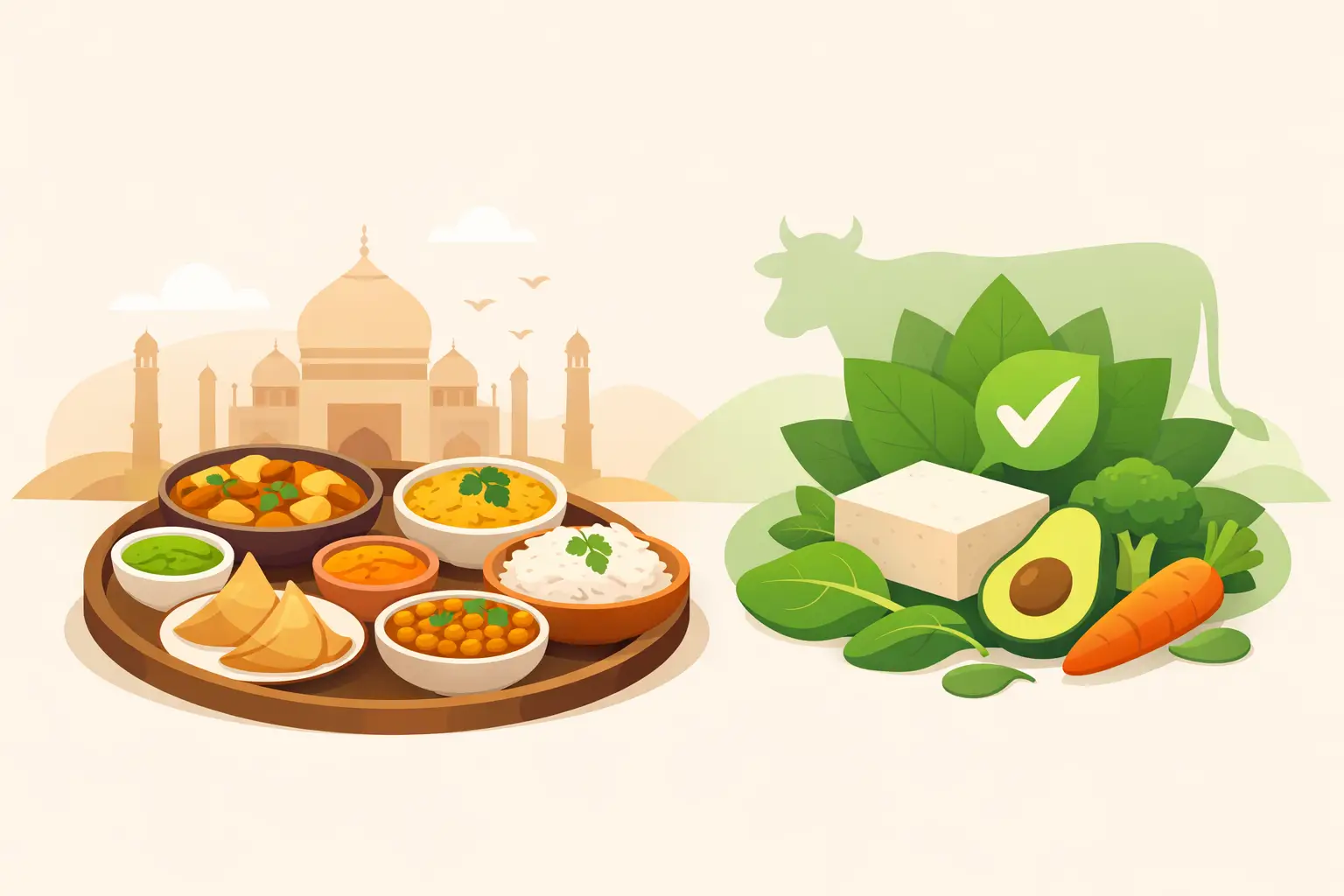
You are hungry, someone suggests Indian, and the first question comes up quickly – is Indian food vegan friendly? In many cases, yes. Indian cooking has a long tradition of plant-based meals, and that makes it one of the more accommodating cuisines for vegans. Still, not every dish is suitable, and the difference often comes down to a few key ingredients and how the food is prepared.
That is the good news and the caution at the same time. Indian food can be full of lentils, chickpeas, vegetables, rice and spice-led sauces, which naturally opens the door to plenty of vegan choices. But dairy is also deeply rooted in many traditional recipes, so ordering well matters.
Why Indian food is often vegan friendly
Indian cuisine did not become vegan friendly as a trend. Many of its most popular dishes were built around vegetables, legumes and grains long before modern dietary labels became common. Across different regions of India, home cooking has always made wide use of ingredients such as split lentils, potatoes, cauliflower, peas, spinach, aubergine and beans, along with rice and flatbreads.
This matters because it means vegan options are not usually an afterthought. A well-made dal, a chickpea curry or a vegetable-based dry dish can feel complete on its own, not like a compromise beside the rest of the menu. For diners who want a meal with real flavour and substance, that makes a big difference.
Spices also do a lot of the work. Indian food relies on layers of flavour from cumin, coriander, turmeric, ginger, garlic, chilli, mustard seeds and garam masala, rather than depending only on butter, cream or cheese for richness. That is one reason vegan Indian dishes can still taste generous and satisfying.
Is Indian food vegan friendly in every case?
Not always. The broad answer is yes, but the practical answer is it depends on the dish. Some Indian favourites are naturally vegan or easy to make vegan. Others are built around dairy and are not suitable unless the kitchen prepares a separate version.
The ingredients most likely to affect whether a dish is vegan are ghee, cream, yoghurt, paneer and butter. Ghee, which is clarified butter, is commonly used for cooking and finishing. Cream and yoghurt can be added to curries for body and mildness. Paneer is a fresh Indian cheese, and it appears in many vegetarian dishes that are vegetarian but not vegan.
That is why the word vegetarian is not enough on its own. Indian menus often have excellent vegetarian choice, but vegans still need to check how each dish is made.
Dishes that are often suitable for vegans
Some of the safest starting points are lentil curries, chickpea curries and vegetable-based dishes made without dairy. Dal is a classic example. Depending on the recipe, it may be entirely plant-based, with lentils simmered with onion, tomato, garlic, ginger and spices. Chana masala, made with chickpeas, is another dish that is often vegan by nature.
Aloo gobi, with potato and cauliflower, is frequently a good option as well. Vegetable curry, bhindi dishes made with okra, and aubergine-based dishes such as baingan bharta can also work well. Plain basmati rice is usually suitable, and so are many side dishes built around vegetables and pulses.
When these dishes are prepared traditionally with plant-based ingredients, they do not feel like a special request meal. They feel like proper Indian food, because they are.
The ingredients vegans should always check
A short conversation with the restaurant can save a lot of guesswork. Even dishes that sound vegan may be finished with butter or cooked in ghee. A tomato-based curry may still include cream. Spinach-based dishes may contain paneer or yoghurt. Some breads, especially naan, are commonly made with yoghurt or brushed with butter after baking.
Rice can also vary. Plain steamed rice is usually the safest choice, while pilau or flavoured rice may sometimes include ghee depending on the kitchen. Samosa pastry is often vegan, but not always. Even a simple side dish can change from one restaurant to another.
This is not a sign that Indian food is difficult for vegans. It simply means traditional cooking has range, and recipes differ between kitchens. If a restaurant is clear and confident about ingredients, ordering becomes much easier.
What about breads, starters and sides?
This is where people often get caught out. Many assume all Indian breads are suitable, but naan is often made with yoghurt or milk and may be finished with butter. Roti can be a better option, though it still depends on the recipe. Papadums are often vegan, but it is worth checking what they are served with, as some chutneys or yoghurt-based accompaniments may not be.
Among starters, vegetable samosas and onion bhajis are commonly vegan, but preparation matters. The batter, pastry and frying method can all vary. In a reliable restaurant setting, staff should be able to explain which options suit vegan diners without making it a complicated process.
How to order vegan Indian food with confidence
The easiest approach is to be direct and specific. Ask which dishes contain no meat, dairy, ghee or yoghurt, rather than asking only for vegetarian dishes. That helps avoid confusion and gives the kitchen a clearer guide.
It also helps to ask about the cooking fat and the finish. A curry may be vegan at base but topped with cream or butter before serving. A bread may be suitable until it is brushed with ghee. Small details like that can change the answer.
For families or groups, Indian food remains a practical choice because one table can often include vegan, vegetarian and non-vegetarian meals without anyone feeling limited. That flexibility is one reason it works so well for weeknight dinners, shared takeaway and larger gatherings.
Why Indian restaurants can be a good fit for mixed dietary groups
When one person is vegan and everyone else wants something different, some cuisines make the table feel divided. Indian food usually does the opposite. The menu often includes lentil dishes, vegetable curries, rice, breads, tandoori items and meat-based curries side by side, so everyone can order a meal that feels familiar and satisfying.
That matters for real life. Families do not always want separate venues for separate diets. Friends meeting after work want something easy. Event hosts need food that can please a mixed crowd. Indian cuisine tends to meet those needs well because its plant-based dishes are part of the tradition, not an add-on section at the bottom of the menu.
For that reason, restaurants with a broad and dependable menu, such as Indian Brothers, can make group ordering simpler. When the kitchen is used to serving different preferences, vegan diners are more likely to get clear answers and a meal prepared with care.
The trade-off to keep in mind
If you are asking is Indian food vegan friendly, the honest answer is that it is one of the friendlier options, but not one where you should assume every vegetable dish is safe. Dairy has a valued place in Indian cooking, and many beloved dishes use it for good reason. That tradition is part of the cuisine too.
So the trade-off is simple. You get a cuisine with plenty of naturally plant-based meals and big flavour, but you still need to check a few details. Once you know what to ask, the process becomes straightforward.
A good Indian meal should feel generous, comforting and easy to share. For vegan diners, that is entirely possible. Choose dishes built around lentils, chickpeas and vegetables, ask about ghee and dairy, and order from a restaurant that treats dietary needs with the same care as the food itself. When that happens, vegan dining does not feel like a workaround – it just feels like dinner done properly.