
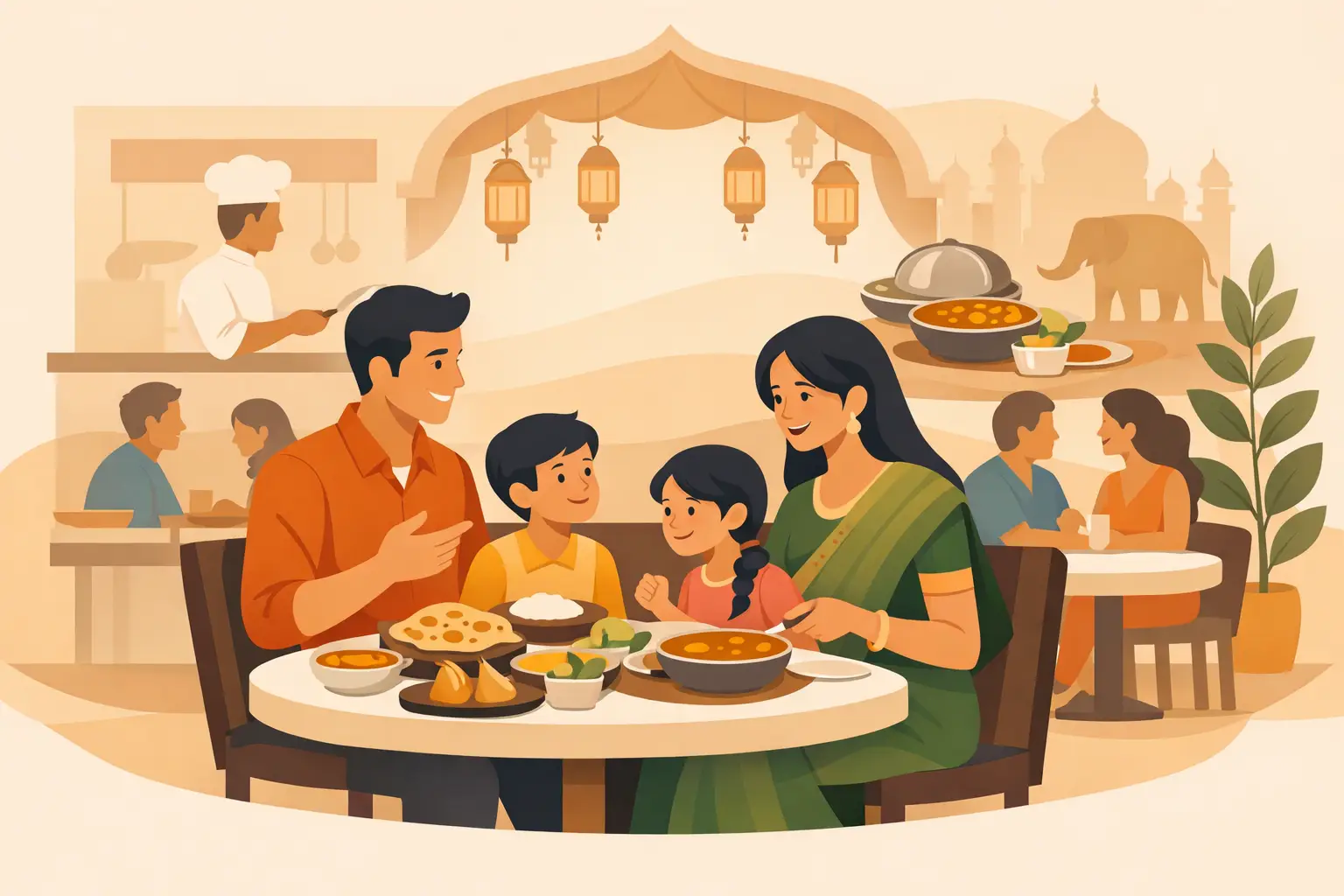
Friday evening usually tells you everything you need to know about a restaurant. If parents can settle in, children can find something they will actually eat, and everyone leaves satisfied rather than stressed, the place is doing its job properly. That is exactly what people are looking for in a family Indian restaurant – good food, warm service, and a meal that feels easy from the moment you arrive.
For most families, the decision is not only about flavour. It is also about comfort, choice, timing, and knowing the experience will be consistent. A restaurant might serve an excellent curry, but if the service feels rushed, the menu is hard to navigate, or there is little for different tastes and dietary needs, it stops being a practical option for regular visits. Family dining works best when the food is authentic and the whole experience feels welcoming.
Why a family Indian restaurant needs more than a good menu
Indian food naturally suits shared dining. Curries, rice dishes, breads and starters are made for the table, which makes them a strong fit for family meals. One person might want a mild butter chicken, another a rich lamb curry, another a vegetarian dish full of spice and depth. When the kitchen can meet all those preferences without compromising quality, the restaurant becomes a reliable choice for groups.
That said, variety on its own is not enough. Families need a place that understands different occasions. Sometimes it is a relaxed dine-in dinner after a long day. Sometimes it is takeaway on a weeknight when nobody wants to cook. Sometimes it is a birthday, a larger booking, or catering for a gathering where people expect generous food and straightforward service. A restaurant that can handle all of those moments well becomes part of local routine.
Consistency matters just as much as flavour. People return to neighbourhood restaurants because they know what to expect. They want the same care in preparation, the same familiar dishes, and the same dependable hospitality each time. That reassurance is especially valuable when you are ordering for several people and want a meal that simply works.
The signs of a dependable family Indian restaurant
A good family Indian restaurant usually gets the basics right without making a fuss about them. The welcome should be genuine. The menu should be broad enough to cover different tastes but clear enough that choosing does not become a chore. Portions should feel satisfying, and dishes should arrive prepared with the same attention whether they are eaten in the restaurant or taken home.
Authenticity matters here, but so does accessibility. Many diners want traditional Indian cooking methods, familiar curries, tandoori dishes, biryanis and freshly made breads. At the same time, they also want a menu that does not exclude someone at the table. Vegetarian and vegan options should feel like real meals, not afterthoughts, and spice levels should allow both confident and cautious diners to order comfortably.
This is where experience shows. Long-established restaurants tend to understand that hospitality is not about being flashy. It is about serving honest food with care and making customers feel comfortable enough to return. A family meal should feel straightforward, not like hard work.
Menu variety that suits real households
No two family tables look the same. Some include young children, some include grandparents, and some are groups of friends who want the ease of sharing several dishes. A restaurant that works for families needs range.
That usually means balancing classic favourites with broader choice. Creamy curries and mild tandoori dishes often keep things simple for less adventurous eaters, while richer regional flavours, slow-cooked meats and spicier options matter for those who want depth and character. Good rice, naan and sides tie the whole meal together and help everyone build a plate that suits them.
The practical side matters too. Flexible portions, shareable starters and dishes that travel well for takeaway make a noticeable difference. A family restaurant should not only serve a nice meal in-house. It should also make it easy to feed a household on busy evenings or at short notice.
Service that feels calm and welcoming
Families remember how they were treated just as much as what they ate. A warm greeting, patient staff and a steady pace of service all shape whether the meal feels enjoyable. People do not expect perfection, especially during busy periods, but they do value a team that remains attentive and approachable.
This is particularly important when a table has different needs. Some guests may need guidance with the menu. Others may want quick service because children are tired or because the booking is before an evening event. Good hospitality is often about reading the situation and responding with common sense.
Restaurants that build loyal local followings usually understand this well. They know that dependable service creates trust, and trust turns an occasional visit into a regular one.
Family Indian restaurant dining should be flexible
Modern family life is rarely predictable. That is why flexibility has become one of the most useful qualities in a family Indian restaurant. Dine-in still matters, especially for birthdays, weekend meals and catching up with relatives, but many customers also want the convenience of ordering online, collecting takeaway, or arranging catering without complication.
A restaurant that offers all of those options is easier to fit into everyday life. After work, a quick collection can solve dinner. On a Saturday, booking a table takes the pressure off planning. For larger gatherings, catering can remove a great deal of stress, provided the food is reliable and simple to organise.
This is where established restaurant groups often have an advantage. Multiple neighbourhood locations, familiar menus and consistent standards make it easier for customers to choose with confidence. If one branch has delivered a good experience, people are more likely to trust another nearby. That sense of reliability is valuable, especially for busy households.
Authentic food still needs to feel approachable
There can be a false choice between authenticity and accessibility, but a strong Indian restaurant should offer both. Traditional recipes, proper spice balance, careful slow cooking and fresh ingredients matter because they shape the depth and character of the meal. At the same time, the experience should never feel intimidating.
A good restaurant understands that not every guest knows every dish. Menus should be clear, staff should be able to guide people confidently, and there should be enough familiar options to help new diners feel at ease. That does not weaken authenticity. If anything, it shows respect for the customer.
Many people first build a lasting connection with Indian food in family settings. They remember sharing naan, passing curries around the table, and discovering which dishes become regular favourites. Restaurants that support those moments well tend to become part of the local community rather than just another place to eat.
When catering matters as much as dining in
For some customers, the best family Indian restaurant is not only the one they visit for dinner. It is also the one they call when they need food for a birthday, work function, anniversary or community event. Indian food is especially well suited to catering because it holds flavour, serves groups generously and offers broad appeal across dietary preferences.
Still, catering only works when the process is practical. Hosts need confidence that quantities will be right, ordering will be straightforward, and the food will arrive prepared to the same standard as it is in the restaurant. Clear communication matters here just as much as the cooking itself.
That is one reason brands like Indian Brothers have remained trusted over time. For many households and local organisers, dependability is the deciding factor. They want authentic food, of course, but they also want to know the order will be handled properly.
Choosing the right restaurant for your family
The best choice often comes down to what your household values most. If you want a quiet dine-in meal, atmosphere and service may matter more than speed. If you are ordering after work, convenience and consistency may take priority. If someone in your group is vegetarian or vegan, menu depth becomes more important than the number of dishes overall.
It also depends on how often you plan to visit. A special-occasion restaurant can get away with being less flexible. A true family favourite cannot. It needs to work on ordinary Tuesdays as well as celebratory Saturdays. That means quality you can count on, service that feels personal without being formal, and food that keeps people coming back.
A good local restaurant earns its place by making meals feel easier, warmer and more satisfying. When a family Indian restaurant can do that consistently, it becomes more than a convenient option. It becomes one of those places you recommend without hesitation when someone asks where to eat tonight.