
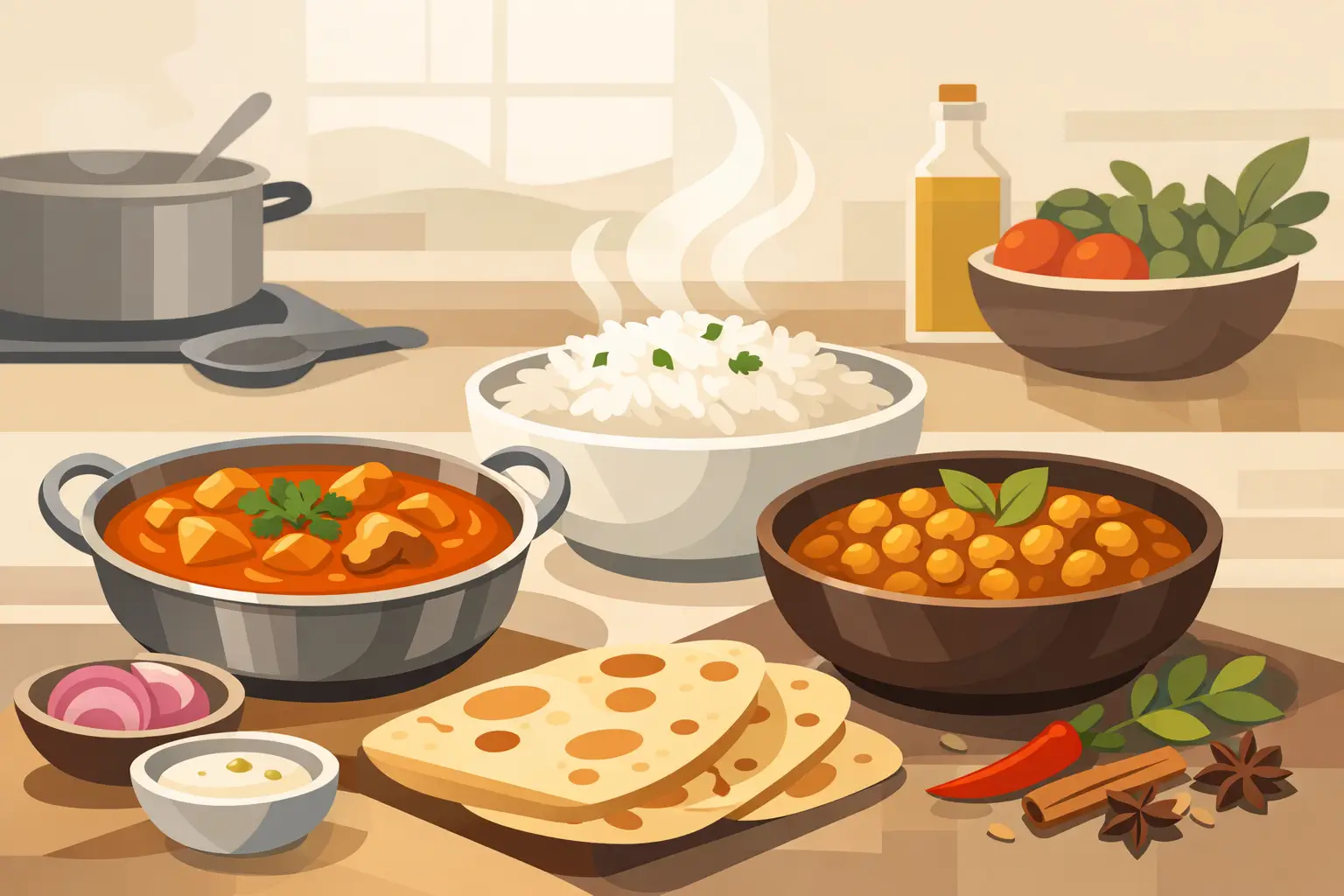
Some curries impress you in the first mouthful. Others keep bringing you back week after week. That is usually the difference with home style Indian curries. They are not built around novelty or excess. They are made to be satisfying, balanced and familiar, with the kind of flavour that feels just as right at a family table as it does in a takeaway container after a long day.
For many people, that is exactly what they want from Indian food. Not a dish designed to surprise for its own sake, but one cooked with patience, proper spice balance and a clear sense of tradition. Home-style cooking has always had that appeal. It feels generous, dependable and easy to return to, whether you are eating with family, catching up with friends or ordering dinner on a busy weeknight.
What home style Indian curries really mean
When people talk about home style Indian curries, they are usually talking about more than heat or richness. The phrase suggests a certain way of cooking. It means flavours that are developed steadily rather than pushed too hard. It means sauces that support the main ingredients instead of burying them. And it means food that is made to be eaten regularly, not just occasionally.
That matters because Indian cuisine is broad, regional and deeply varied. There is no single definition of a curry, and there is certainly no one version of home-style cooking. A North Indian chicken curry, a lentil-based dhal and a slow-cooked lamb dish may all sit under the same broad umbrella, but they do very different things on the plate. What connects them is balance, comfort and a sense that each ingredient has a purpose.
Home-style does not mean plain. It means thoughtful. You still get layers of spice, aromatics and richness, but they are handled with restraint. The result is food that tastes complete rather than overworked.
The difference is often in the cooking, not just the recipe
A lot of what gives a curry that home-style character comes from method. On paper, many recipes can look similar. Onion, garlic, ginger, tomatoes, spices, yoghurt or cream, fresh herbs. But small decisions in the kitchen change the final result.
Onions cooked long enough to sweeten naturally give a sauce body and depth. Whole spices added at the right stage bring warmth without harshness. Tomatoes need time to soften and lose their raw edge. Protein has to be cooked so it stays tender, not simply coated in sauce. Even vegetarian curries depend on timing, because potatoes, paneer, chickpeas and lentils all carry flavour differently.
This is where trade-offs come in. A richer curry can be deeply satisfying, but if everything is heavy, you lose the freshness that makes the meal enjoyable from first bite to last. A hotter curry may suit some diners, but too much chilli can flatten the more subtle spices. Good home-style cooking knows when to hold back.
Why these curries suit everyday dining
There is a reason familiar curries stay popular across so many tables. They work for ordinary life. You can order them for a quiet dinner at home, share them across a group, or build a larger meal around rice, naan and a few side dishes. They are flexible without feeling generic.
For families, that matters. One person may want a mild butter chicken, another may prefer a fuller, spicier lamb curry, and someone else may be after a vegetarian option. A home-style menu can hold all of that together because the dishes are rooted in the same kitchen approach – authentic flavours, steady preparation and ingredients treated with care.
That same flexibility is useful for group meals and celebrations. Indian food naturally lends itself to sharing, but not every dish travels equally well or pleases a mixed crowd. Home-style curries usually do both. They hold their quality in takeaway, they portion well, and they make it easier to cater for different tastes without making the meal feel disjointed.
Home style Indian curries and balanced flavour
The best home style Indian curries do not chase one-note intensity. They aim for balance. You should taste the spice, but also the sweetness of onion, the brightness of tomato, the warmth of garam masala, the richness of dairy where it is used, and the savoury depth that comes from slow cooking.
This is why some dishes remain favourites for years. Butter chicken, korma, rogan josh, saag dishes and dhal each offer something distinct, yet they share a common thread. They are built to feel rounded. Even when a curry is bold, it should still be easy to eat.
That balance also helps when matching curries with the rest of the meal. A creamy curry with naan can be deeply comforting. A tomato-based or medium-spiced dish can sit better alongside rice and lighter sides. If you are ordering for a table, a mix usually works best rather than several curries all built in the same style.
Traditional flavour does not mean one-size-fits-all
One of the strengths of Indian cooking is how well it adapts to different diners without losing its identity. Home-style food can still offer choice. In fact, it often should.
Some people want a mild curry with soft, familiar flavours. Others want more chilli, more warmth and a stronger spice presence. Some are after vegetarian or vegan dishes that feel just as complete as meat-based options. A dependable Indian menu makes room for all of that while keeping the cooking style consistent.
That is particularly important now because many groups dine with mixed dietary needs. If one person wants chicken, another prefers paneer and another needs a vegan option, the meal should still feel shared. Home-style curries make that easier because the focus is not on exclusivity. It is on feeding people well.
Why consistency matters as much as authenticity
Authenticity matters, but for most diners so does consistency. A curry you loved last month should be just as satisfying next time. That reliability is what turns a one-off meal into a regular habit.
There is real value in a local restaurant that understands this. When food is prepared with established methods and a clear standard across the menu, people order with confidence. They know what suits their taste, what works for the family and what to pick for guests.
That is one reason home-style Indian food has such lasting appeal. It feels honest. You are not being asked to decode the meal or take a risk on presentation over substance. You are choosing dishes that have earned trust because they are cooked properly and served with care. That dependable quality has long been part of what people appreciate about Indian Brothers.
Choosing the right curry depends on the occasion
Not every curry fits every moment, and that is part of the charm. A midweek dinner might call for something mild, comforting and easy to share with rice. A weekend meal with friends may suit a broader spread with contrasting flavours and breads from the tandoor. Catering for a birthday or work event usually needs crowd-pleasing dishes that travel well and suit a range of spice preferences.
There is no single right choice, only the right fit for the occasion. If you are ordering for a group, it usually helps to include a mix of mild, medium and vegetarian options. If you are dining in, you have more room to build the meal around sides and starters. If you want leftovers that will still taste excellent the next day, some slow-cooked curries are especially rewarding.
That practicality is part of what makes home-style food so useful. It is not only about flavour. It is also about how easily the meal fits real life.
A meal people come back to
Food does not have to be complicated to be memorable. Often, the meals people return to are the ones that feel generous, familiar and reliably good. Home style Indian curries have that staying power because they respect the basics – proper spice balance, careful cooking and food meant to be shared.
Whether you are planning a relaxed dinner, picking up takeaway after work or feeding a larger group, these curries make sense for the same reason they always have. They offer comfort without cutting corners. And when a meal is made that way, it never needs to shout for attention.