
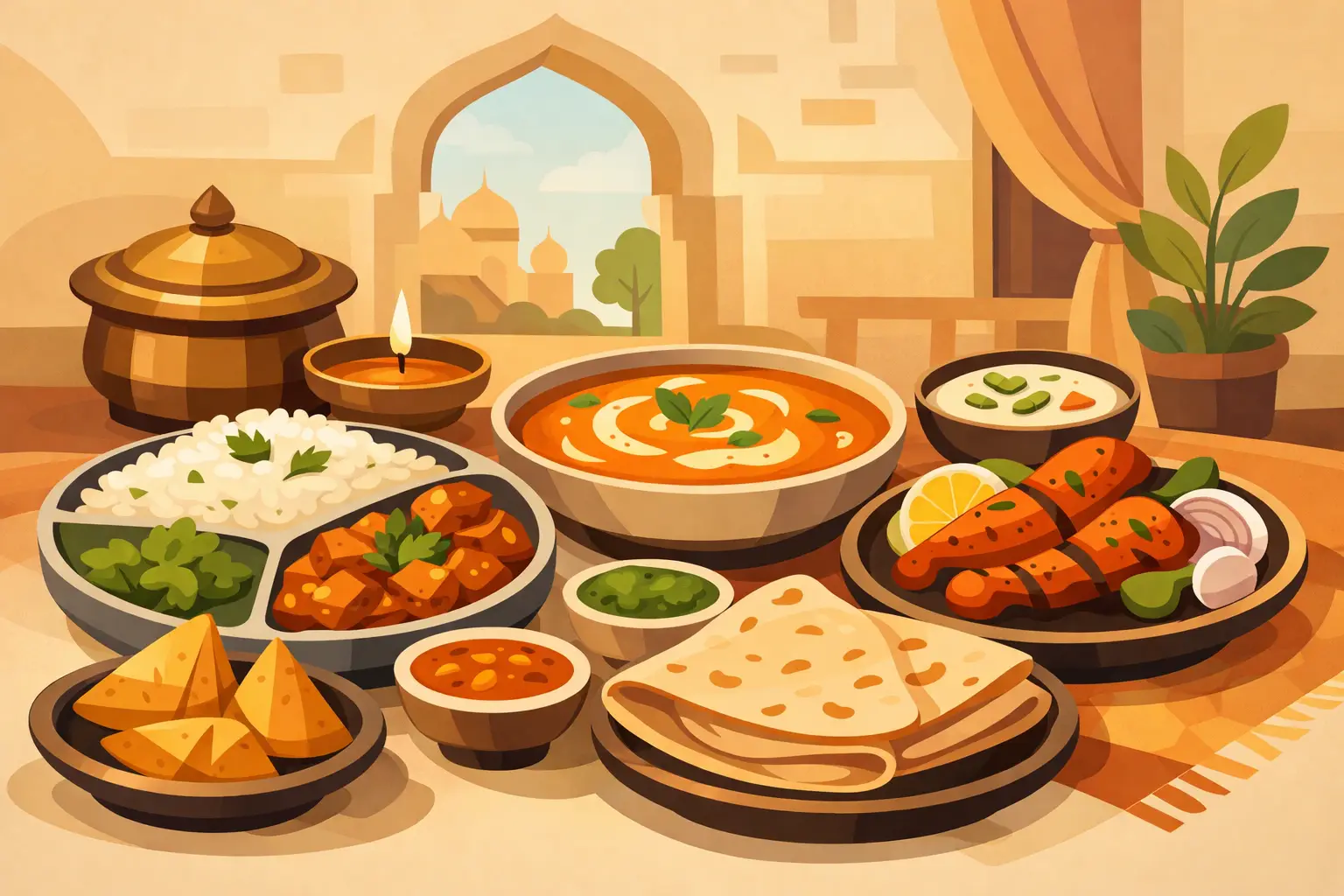
A good curry tells you a lot before you even take the first bite. The aroma of toasted spices, the warmth coming off fresh naan, the colour of a slow-cooked sauce – this is what draws people back to traditional Indian food time and again. It is satisfying, familiar and generous by nature, whether you are sitting down with family, picking up dinner after work or ordering enough for a table full of guests.
What makes Indian food so lasting is not just flavour. It is the way each dish is built with care. Many of the meals people know best have deep roots in home cooking and regional traditions, with recipes shaped over time rather than designed for fashion. That is why a well-made Indian meal feels comforting. It has balance, depth and a sense of honesty on the plate.
What traditional Indian food really means
Traditional Indian food is not one single style of cooking. India is a vast country with regional differences in ingredients, climate, staple grains and cooking methods. A dish that feels everyday in one part of India may be reserved for special occasions in another. Even so, there are common threads that connect the cuisine – careful spice use, patient cooking, and meals designed around variety rather than a single main item.
In practical terms, traditional food often means recipes prepared in the established way, with attention to base ingredients and cooking time. Curries are not simply made hot for the sake of heat. Spice blends are layered to create warmth, fragrance and complexity. Rice dishes such as biryani rely on texture and aroma as much as seasoning. Tandoori cooking brings smokiness and char without losing tenderness. Breads are there to scoop, share and make the meal feel complete.
This matters because many diners are not looking for novelty. They want food that tastes grounded and recognisable. They want to know that the butter chicken will be rich and balanced, the rogan josh will have proper depth, and the dal will taste as though it has been cooked with patience rather than rushed.
The foundations of traditional Indian food
At the heart of many Indian dishes is the masala base. This usually starts with ingredients such as onion, garlic, ginger and tomato, cooked down to create body and sweetness. From there, spices are added in combinations that vary by dish and region. Cumin, coriander, turmeric, garam masala, mustard seeds and chilli all play different roles. The result should never feel one-note.
That is one of the biggest misunderstandings about Indian cuisine. People sometimes reduce it to “spicy food”, when the real character comes from balance. Heat can be part of the experience, but so can creaminess, tang, earthiness or smoke. A korma, for example, is often mild and rich. A vindaloo is sharper and hotter. A saag dish leans into leafy freshness. None of these is better than the other – it depends on what you enjoy and what kind of meal you want.
Traditional cooking also makes good use of contrast. You might have a hearty curry alongside plain rice, crisp papadums, cooling raita and soft bread fresh from the tandoor. That combination is one reason Indian meals work so well for family tables and group dining. Everyone can build a plate that suits them.
The dishes people return to again and again
Some dishes have become favourites far beyond India because they offer exactly what many people want from a reliable meal: warmth, flavour and comfort. Butter chicken remains popular for good reason. When done properly, it is smooth, gently spiced and deeply savoury rather than overly sweet.
Rogan josh offers something fuller and more robust, with tender pieces of meat in a rich sauce. Lamb korma brings a softer, creamier profile. Beef vindaloo is chosen by those who enjoy extra heat and tang. Then there is chicken tikka masala, which has earned its place as a dependable choice for diners who want something familiar and crowd-pleasing.
Vegetarian dishes are just as central to traditional Indian food, not a side thought. Dal makhani, palak paneer, chana masala and mixed vegetable curries show how satisfying meat-free cooking can be when lentils, chickpeas, spinach and paneer are given the same care as any meat dish. For many families and groups, that range is part of the appeal. It is easier to order for everyone when the menu naturally includes vegetarian and vegan options that feel complete in their own right.
Why tandoori cooking still matters
Tandoori dishes hold a special place in traditional Indian menus because they offer a different kind of flavour from sauce-based curries. Cooked in a tandoor oven, meats and breads take on a distinctive char and smokiness that is difficult to recreate with quick modern methods. Chicken tikka, seekh kebabs and tandoori chicken all benefit from marinades that tenderise the meat while carrying spice deep into it.
This style of cooking also adds variety to the table. Not every Indian meal needs to centre on a heavy curry. Sometimes a plate of tandoori chicken with naan, salad and dips is exactly the right choice, especially if you want something filling without too much richness. It is another example of how traditional Indian food can be flexible while still staying true to its roots.
Biryani, bread and the details that complete the meal
A proper biryani is more than rice with curry mixed through it. It should have separate grains, aromatic spice, well-cooked meat or vegetables, and enough moisture to feel rich without turning heavy. That balance is what makes biryani such a dependable option for both individual meals and larger gatherings. It travels well, serves easily and suits a wide range of tastes.
Then there are the breads. Naan, roti and garlic naan are often treated as extras, but they shape the meal as much as the mains do. Fresh bread changes the rhythm of eating. It invites sharing, slows things down and makes a simple dinner feel more generous.
The same goes for sides and accompaniments. Rice, raita, pickles and chutneys can sharpen, cool or round out stronger flavours. These details may seem small, but they help explain why a traditional meal feels complete rather than pieced together.
Why traditional Indian food suits modern life so well
There is a reason traditional Indian food works for so many occasions. It suits a relaxed dine-in meal, but it is equally well suited to takeaway, online ordering and catering. Curries and rice dishes hold their flavour well, breads are easy to share, and menus usually offer enough choice to satisfy mixed groups.
For busy households, that practicality matters. One person might want a mild chicken dish, another might prefer lamb, and someone else may need a vegetarian or vegan option. Indian food makes that easy without anyone feeling like an afterthought. For work events and celebrations, it is a similarly sensible choice because it is familiar, filling and made for serving at scale.
That is part of why established local restaurants matter. Consistency counts just as much as variety. People come back when they know the meal will taste the way it should, whether they are dining in with family or ordering for a larger event. For many Queensland diners, that steady reliability is exactly what makes Indian Brothers a trusted choice.
Choosing well when you order
If you are new to Indian food, start with balance rather than trying to prove your tolerance for chilli. A mild or medium curry, a rice dish, one bread and perhaps a vegetarian side is often the best introduction. If you already know what you like, it can still be worth adding one different dish to the order – perhaps a tandoori item alongside your usual curry, or a lentil dish to round out the meal.
It also helps to order with the whole table in mind. Indian food is at its best when there is a little variety. A creamy dish, a tomato-based dish, a drier tandoori item and fresh bread create a more satisfying meal than repeating the same style several times.
Traditional food lasts because it does not need to chase attention. When it is prepared with care, served generously and shared in good company, it does exactly what a meal should do – it brings people back to the table.