
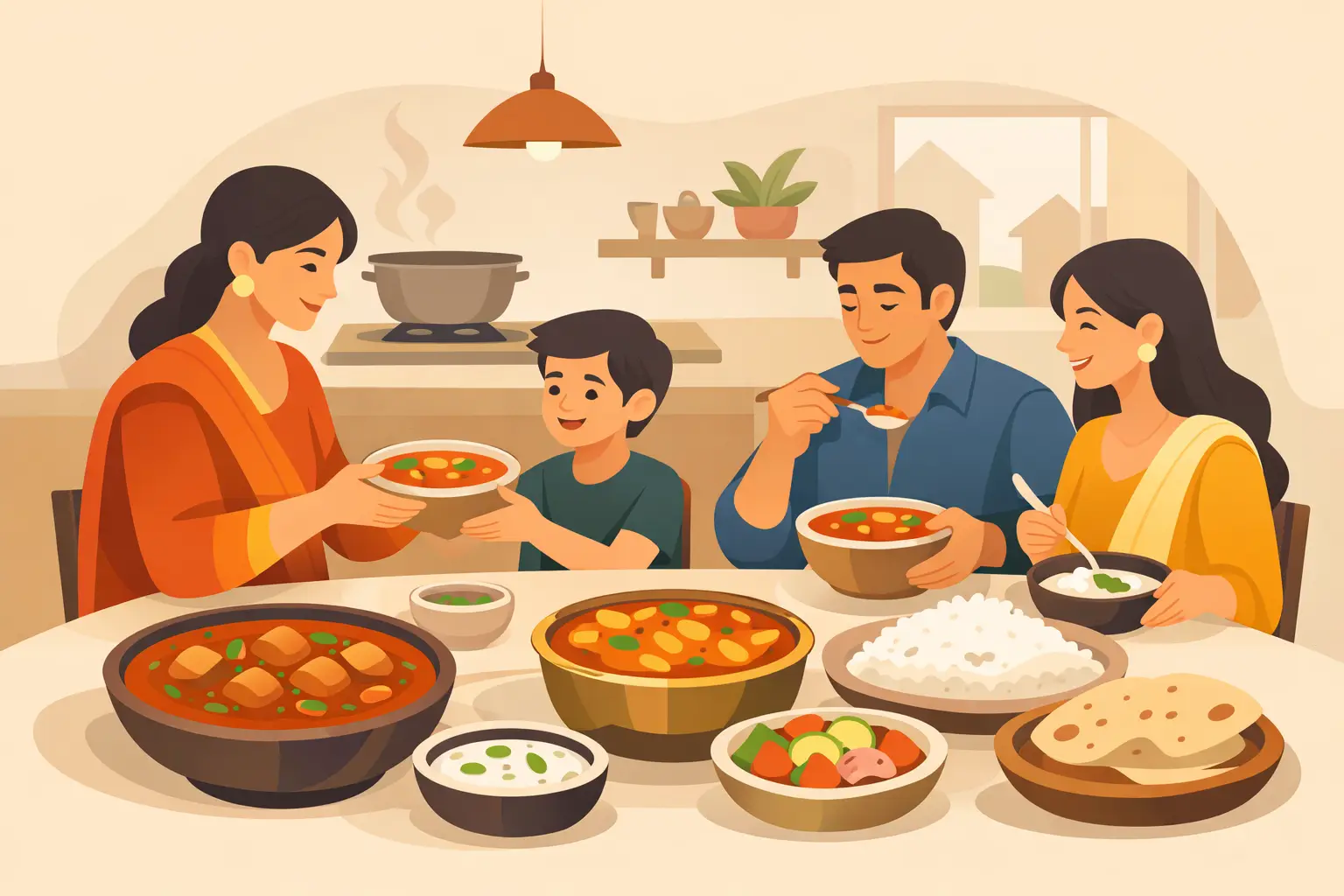
A good family dinner needs to do more than fill plates. It needs to suit different appetites, make room for conversation, and feel comforting at the end of a busy day. Traditional curries for family dinners do this particularly well: they bring familiar aromas, generous flavours and a choice of dishes that can be shared around the table.
Whether you are collecting takeaway after work, planning a relaxed meal out or organising food for a larger gathering, Indian curries offer an easy way to give everyone something they enjoy. The key is choosing a balanced selection rather than ordering several dishes that taste much the same.
Why traditional curries work for family meals
Traditional Indian cooking is made for sharing. A curry is rarely intended to stand alone. It is part of a meal with rice, breads, sides and accompaniments that let each person build a plate to their own taste. This makes it especially useful for families where one person prefers a mild, creamy sauce and another wants a little more heat.
Slow-cooked sauces also bring depth without needing complicated presentation. Tomatoes, onions, ginger, garlic and carefully balanced spices create flavour that feels satisfying rather than fussy. A well-made curry can be rich and warming, but it can also have brightness from tomato, yoghurt, herbs or a squeeze of lemon.
There is a practical benefit, too. Sharing several dishes gives a family more variety without requiring everyone to commit to a single meal. Children can try a spoonful of something new alongside familiar rice and naan, while adults can enjoy a broader mix of flavours.
Building a family curry dinner everyone can enjoy
The most reliable approach is to choose two or three curries with different styles, then add the essentials for sharing. For a smaller household, two curries and a vegetable side may be plenty. For six or more people, a wider range helps, particularly when dietary preferences differ.
Start with one mild crowd-pleaser
A mild chicken korma, butter chicken or creamy vegetable curry is often a safe place to begin. These dishes have rounded flavour and a gentler level of chilli, making them approachable for younger diners and anyone who does not enjoy very hot food. Their sauces also work beautifully with plain basmati rice and naan.
Mild does not mean bland. The best gentle curries still have layers of spice, with ingredients such as cardamom, fenugreek, cashew, tomato and butter bringing aroma and richness. If your family usually orders one familiar favourite, this is the dish to keep on the table.
Add a deeper, savoury curry
Balance the creamier choice with a curry that is more tomato-led, smoky or earthy. A chicken tikka masala, lamb rogan josh, beef vindaloo at a chosen heat level, or a traditional goat curry can bring a stronger savoury note to the meal. The right option depends on who is dining and how adventurous they feel.
Lamb and beef curries tend to feel particularly hearty for a weekend dinner or cooler evening. Chicken dishes are often lighter and easier for a midweek meal. If spice tolerance varies, ask for the hotter curry at a moderate level and serve extra chilli separately where possible. It is much easier to add heat than to take it away.
Make vegetarian dishes part of the main meal
A family table is more welcoming when vegetarian choices are treated as full dishes, not an afterthought. Dal, chana masala, palak paneer, aloo gobi and mixed vegetable curry each bring their own character, from creamy lentils to chickpeas in a warmly spiced sauce.
A vegetable curry also creates balance when the rest of the order includes richer meat dishes. Lentils and chickpeas are filling, economical and ideal for sharing, while spinach, cauliflower and potatoes add texture. For vegan diners, it is worth checking that the selected curry is prepared without dairy or ghee. Many traditional options can suit vegan diets, but recipes vary.
Choosing spice levels for a relaxed dinner
Spice should add warmth and flavour, not turn dinner into a challenge. For a mixed family group, keep most dishes mild to medium and choose one hotter option only if several people genuinely enjoy it. This gives everyone a comfortable place to start.
It also helps to understand that heat and flavour are not the same thing. A medium curry can still be full of fragrant spices, while a hot curry may use more chilli to create a sharper finish. If you are ordering for guests, medium is usually the most dependable compromise, with cooling raita or yoghurt on the side.
Children and first-time diners may prefer dishes with creamy or tomato-based sauces, plain rice and soft naan. They can then try small portions of other curries without pressure. Over time, this simple sharing style is often how family favourites are found.
Do not forget the rice, breads and sides
Curries become a proper family dinner when the accompaniments are planned as carefully as the mains. Plain basmati rice gives every sauce somewhere to go, while pilau rice adds gentle fragrance. If you are serving several bold curries, plain rice is often the better choice because it keeps the meal balanced.
Naan and roti offer a different way to enjoy the sauces and are particularly useful for children. One plain naan, one garlic naan and a few rotis can provide variety without overwhelming the table. If your group is larger, ordering extra bread is rarely a mistake. It is ideal for sharing and for making the most of every last spoonful of curry.
A fresh side can lift richer dishes. Cucumber raita cools the palate, onion salad adds crunch, and mango chutney brings sweetness. Poppadoms are a welcome start while everyone settles in, but they should not replace the more substantial sides that make the meal satisfying.
Portions depend on appetites, the number of sides and whether you would like leftovers for lunch. As a general rule, a varied spread with plenty of rice and bread goes further than individual mains. If you are unsure, it is sensible to order one extra vegetable dish or rice rather than too many heavy curries.
Traditional curries for family dinners, at home or out
The setting changes, but the appeal of a shared curry dinner stays the same. Dining in gives families time to settle around the table and enjoy dishes as they arrive, especially for birthdays, reunions or an unhurried Friday evening. Takeaway is often the practical answer after work, when a home-cooked feeling meal is wanted without the preparation and washing up.
For larger occasions, traditional curries are also a dependable catering choice. They travel well, can be prepared in quantities that suit the group, and offer straightforward options for vegetarian, vegan and meat-eating guests. A mix of mild and medium curries, rice, breads and a vegetable dish will suit most gatherings better than an overly complicated menu.
Indian Brothers has served Queensland communities since 2003 with the kind of familiar, carefully prepared Indian food that works for everyday dinners as well as celebrations. Choosing a local restaurant you trust takes some of the pressure out of feeding a group, particularly when people have different tastes.
Make the meal feel like an occasion
You do not need a special event to set out a shared curry dinner. Put the dishes in the middle of the table, warm the plates if you have time, and let everyone help themselves. Serve water, a cool drink and something sweet afterwards if the meal is a celebration.
The real pleasure is in the choice: a mild curry for comfort, a deeper curry for those who want more spice, a generous vegetarian dish and enough rice and bread to bring it together. That is the simple strength of a traditional family meal – good food, shared easily, with something welcoming on every plate.