
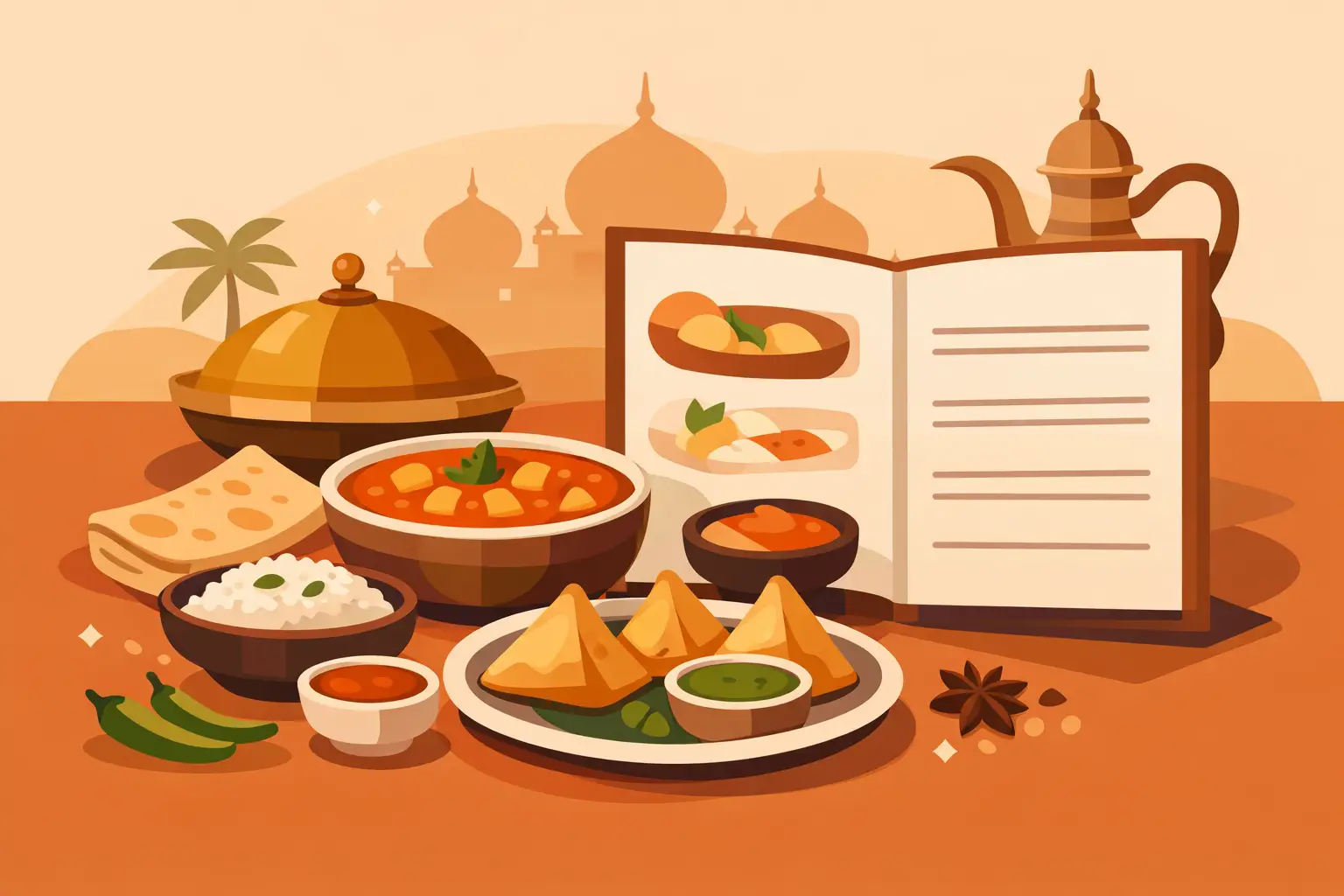
The first time you open an Indian restaurant menu, the choice can feel bigger than expected. An Indian restaurant menu for beginners becomes much easier once you know what each section is designed to offer. You do not need to recognise every dish to enjoy a satisfying meal – start with a few familiar formats, choose flavours that suit your taste, and build from there.
Indian food is not one single style of cooking. Recipes, spice blends and favourite dishes vary between regions, families and kitchens. That variety is part of the pleasure, but it also means there is no need to order everything at once. A good first meal is simply one that gives you a taste of a curry, something from the tandoor or a comforting rice dish, with bread or sides to share.
How to read an Indian restaurant menu for beginners
Most menus are arranged by cooking style or main ingredient. You may see starters, tandoori dishes, curries, vegetarian dishes, rice, breads and accompaniments. Rather than treating these as separate courses you must all order, think of them as pieces of a shared meal.
A curry is a dish with a sauce, but the word does not describe one fixed flavour. Some curries are creamy and mild, some are tomato-based and gently spiced, while others are rich with onions, garlic, ginger and warming whole spices. The menu description is usually your best guide to the character of the dish.
Tandoori dishes are cooked in a traditional clay oven at high heat. Chicken, lamb, fish, paneer or vegetables are generally marinated first, then roasted until lightly charred at the edges. They tend to be drier than curries and have a smoky, grilled flavour. They work well as a starter to share or as a main when you would rather avoid a sauce-heavy meal.
Biryani is a complete rice dish, not just plain rice beside a curry. Fragrant basmati rice is layered or cooked with spices and your choice of meat or vegetables. It is filling on its own, though raita – a cooling yoghurt accompaniment – is a welcome addition.
Start with the flavours you already enjoy
There is no prize for choosing the hottest dish on the menu. Spice level and flavour are different things: a meal can be beautifully aromatic without being fiery. If you usually prefer mild food, look for dishes described as creamy, nutty, yoghurt-based or gently spiced.
Butter chicken is a familiar first choice for many diners. It is usually made with tandoori chicken in a smooth tomato, butter and cream sauce, giving it a mild, rounded flavour. Korma is another gentle option, often prepared with cream, yoghurt, coconut or ground nuts. Recipes differ, so it is worth asking about ingredients if you have an allergy.
For something with more depth but manageable heat, try a tikka masala, rogan josh or a mild-to-medium tomato-based curry. These dishes often have a stronger spice profile than a korma without necessarily being hot. Saag dishes, made with spinach or other leafy greens, offer an earthy alternative and are often available with paneer, chicken or lamb.
If you enjoy chilli, a vindaloo, madras or jalfrezi may suit you, depending on the restaurant’s recipe. These are not interchangeable. A jalfrezi is often vibrant and peppery with onions and capsicum, while a vindaloo is typically sharper, tangier and hotter. Ask the team for an honest recommendation rather than guessing from the name alone.
Choose your main ingredient
Once you have a sauce or style in mind, selecting the main ingredient is straightforward. Chicken is a versatile starting point and appears in many popular curry and tandoori dishes. Lamb brings a deeper, richer flavour and is particularly good in slow-cooked curries. Seafood dishes can be lighter and often pair well with coconut, tomato or mustard-led sauces.
Vegetarian diners have far more to choose from than a single substitute. Paneer, a fresh Indian cheese, is firm enough for the tandoor or a richly spiced sauce. Lentils and chickpeas are hearty, affordable and full of flavour, while potato, cauliflower, okra, aubergine and spinach all feature in traditional dishes.
Vegan choices may include lentil dhal, chickpea curries, vegetable dishes and selected breads or rice preparations. However, ghee, butter, cream and yoghurt are common in Indian cooking, so it is always sensible to mention dietary needs when ordering. The same applies to nut allergies, as cashews and almonds can be used to thicken or enrich sauces.
Rice and bread are part of the meal
A curry is best enjoyed with something that carries the sauce. Steamed basmati rice is the simplest choice and lets the main dish do the talking. Pilau rice is cooked with aromatic spices and can add extra fragrance, while coconut rice brings a softer, slightly sweet note that works particularly well with spicier curries.
Indian breads are made for sharing. Plain naan is soft and versatile; garlic naan adds a savoury, familiar flavour; and cheese naan is more indulgent and filling. Roti or chapati is usually thinner and less rich than naan, making it a good choice when you want bread without feeling too full.
For a first visit, one rice and one or two breads between two people is often a sensible place to begin, depending on appetite and how many mains you choose. It is easier to add another naan than to order more than the table can comfortably finish.
Add a few balancing sides
The small dishes on an Indian menu are not an afterthought. They help balance richness, heat and texture. Raita provides a cool contrast to chilli, while cucumber, onion and yoghurt can freshen a meal that includes several warming curries. Mango chutney is sweet and tangy, and pickle is sharper and usually much hotter, so use it sparingly at first.
Papadums are crisp lentil wafers, often served before the meal with chutneys. They are easy to share and give the table something to enjoy while the mains are being prepared. If you are ordering a rich curry, a fresh salad or yoghurt side can make the meal feel more balanced.
A simple first order for two
For two people who enjoy mild-to-medium spice, choose one tandoori starter or a plate of papadums, then order two different mains. A butter chicken or paneer korma alongside a medium-spiced lamb, chicken or vegetable curry gives you contrast without making the meal complicated. Add basmati or pilau rice, a garlic naan, and raita if either dish has some heat.
For a vegetarian table, pair a paneer dish with dhal or chickpea curry, then add a vegetable side if you would like more variety. This combination offers different textures and avoids ordering several dishes with very similar sauces.
Groups can order more broadly, but variety matters more than quantity. One creamy curry, one tomato or onion-based curry, one tandoori dish, one vegetable dish, rice and a selection of breads is often enough to give everyone choices. This shared style of eating is one reason Indian food suits family dinners, relaxed catch-ups and celebrations so well.
Feel comfortable asking for guidance
A dependable restaurant should be happy to help you choose. Let the team know whether you prefer mild, medium or hot spice, whether you have dietary requirements, and whether you are ordering for one person, a couple or a group. They can point you towards dishes that match your taste rather than simply the most familiar names.
At Indian Brothers, the aim is to make traditional Indian food feel welcoming whether you are dining in, collecting dinner after work or ordering for the family at home. Familiar dishes are a good starting point, but returning to try a new regional flavour, bread or vegetable curry is where the menu starts to feel like your own.
Your first order does not need to be perfect. Choose a curry that sounds appealing, add rice or bread, share a side, and leave room for the next dish that catches your eye.