
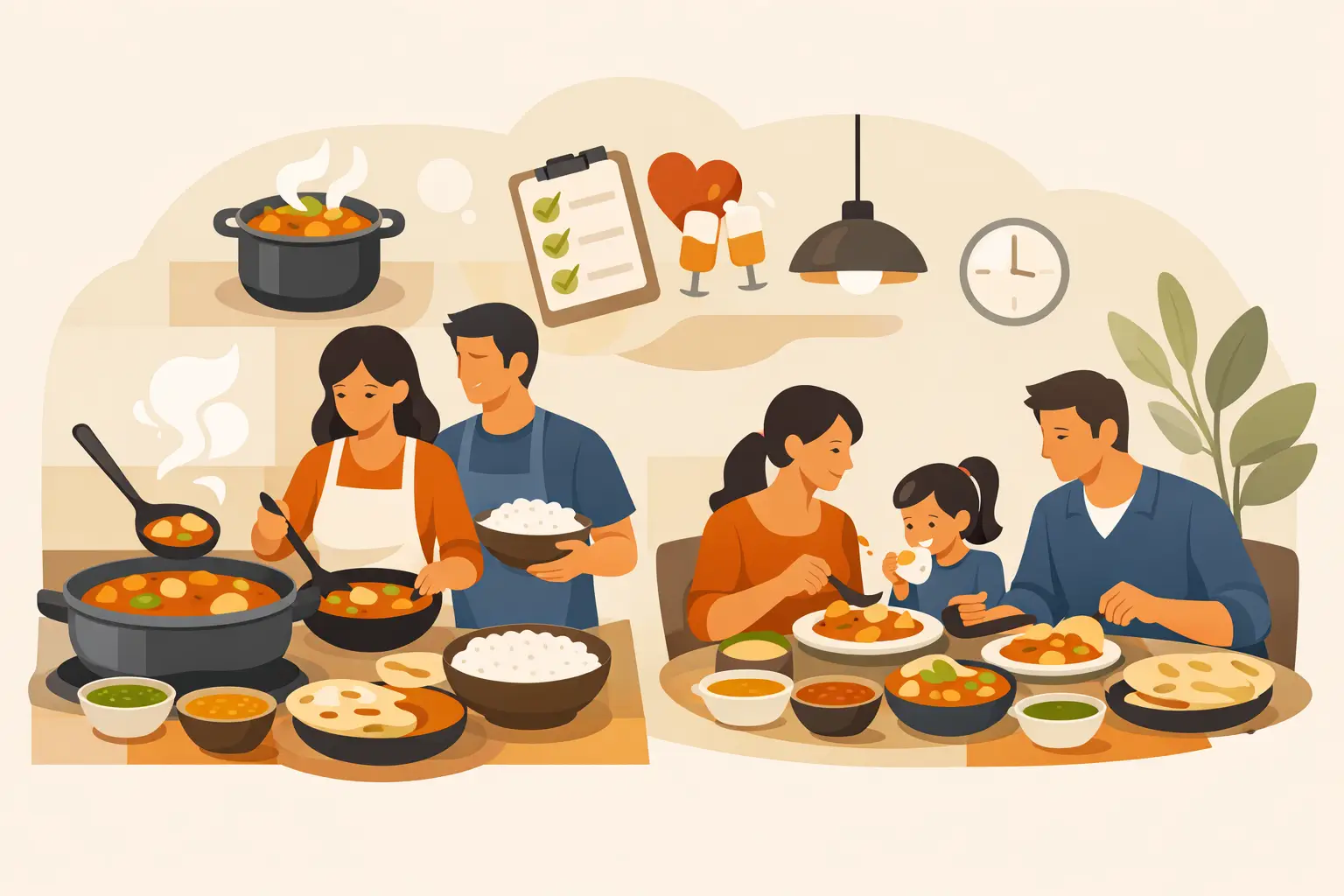
A good family meal should not leave one person stuck in the kitchen while everyone else is enjoying themselves. Knowing how to plan family curry night means choosing food that can be shared, allowing for different tastes, and keeping the evening relaxed from the first order to the last spoonful.
Curry night works particularly well because Indian food is naturally made for the table. A fragrant curry, warm naan, rice and a few sides give everyone something to pass around and try. The key is not ordering every dish on the menu. It is building a familiar, balanced meal with enough variety for children, adults, vegetarians and anyone who prefers their food on the milder side.
Start with the people around the table
Before deciding on dishes, think about who is coming. A weeknight meal with two adults and young children needs a different approach from a Saturday gathering with grandparents, teenagers and friends. Ask a few simple questions: how many people are eating, are there any dietary requirements, and does anyone avoid chilli?
This small bit of planning prevents the usual last-minute uncertainty. It also helps you order with confidence rather than choosing too much of one thing and not enough of another. For a mixed group, it is usually best to include one mild curry, one richer or spicier option, a vegetarian dish and plenty of rice and breads.
Remember that heat is only one part of flavour. Mild dishes can still be full of warmth from spices, tomatoes, onions, cream, coconut or cashews, depending on the recipe. For children or guests unfamiliar with Indian food, gentler choices create an easy place to start. Those who enjoy more heat can choose a hotter curry or add chilli to their own serving where available.
How to plan family curry night with a balanced menu
The most dependable curry nights have a clear structure: curries for the main event, rice and breads to share, plus a couple of sides for colour and contrast. Think of the menu as a meal that works together rather than a collection of separate favourites.
Choose two or three curries, not five
For a family of four to six, two curries plus a vegetarian option is often enough, especially when you are serving starters or sides. One chicken curry and one lamb, beef or seafood curry give meat-eaters choice, while a lentil, chickpea, paneer or vegetable dish makes sure everyone has a satisfying main meal.
A creamy, mild curry pairs well with something deeper and more aromatic. For example, a butter-style chicken dish can sit comfortably alongside a tomato-based lamb curry and a lentil dhal. The exact choice depends on your family. If everyone prefers chicken, choose two different chicken dishes rather than forcing variety that will go uneaten.
For larger gatherings, add dishes gradually. A useful rule is to increase the number of curries only when there are enough people to enjoy them. More choice is welcome, but too many tubs and bowls can create waste and make the meal feel less straightforward.
Add rice, naan and one supporting side
Steamed rice is the dependable foundation of a curry night. It is filling, familiar and useful for soaking up sauces. Biryani can be a good alternative for a celebration or a bigger meal, but because it is already richly seasoned, it is best paired with fewer curries and lighter sides.
Naan or roti brings the table together. A plain naan suits almost every dish, while garlic naan is a popular choice for guests who enjoy a little extra flavour. Allow enough bread for sharing, but do not rely on it alone. Rice, bread and curries work best as a team.
One fresh or cooling side can make the whole meal feel more complete. Raita, a crisp salad or cucumber-based accompaniment helps balance warming spices. Papadums are also useful if people will be talking and snacking before the main meal is served.
Make dietary needs part of the plan, not an afterthought
Family meals are easier when every guest has a proper choice, not just a side dish. Indian cuisine offers plenty of naturally satisfying vegetarian options, including vegetable curries, chickpeas, lentils and paneer dishes. Many menus can also accommodate vegan preferences, although it is always sensible to check ingredients where dairy, ghee or yoghurt may be used.
If someone has an allergy, tell the restaurant when ordering and avoid assumptions about sauces or garnishes. Nuts, dairy and gluten can appear in dishes that look straightforward, and cross-contact matters for serious allergies. Clear communication is more useful than trying to guess what will be suitable.
It is also worth considering the youngest diners. A mild curry, plain rice and naan can be more inviting than a separate meal. Let children try a small spoonful first, without pressure. Curry night is often how new family favourites begin.
Work out portions before you order
Portion planning does not need to be exact, but a rough plan avoids both hungry guests and a fridge full of leftovers nobody wants. If curries are the main meal, allow each adult a generous serving across the range of dishes, with children usually eating less depending on age and appetite.
Rice goes further than people expect once naan and starters are included. If you are serving biryani, reduce the amount of plain rice. If you know your family loves dipping breads into sauces, add an extra naan rather than ordering another full curry.
Leftovers are not a problem when planned for. A spare serving of dhal, curry and rice can make a welcome lunch the next day. The trade-off is that dishes containing seafood are best enjoyed promptly, while creamier curries and vegetarian dishes are often more forgiving for a next-day meal when stored safely and reheated thoroughly.
Decide whether home, dine-in or takeaway suits the occasion
The best setting depends on the night you want to have. Eating at home is ideal for pyjamas, board games, young children and an unhurried table. Set out plates, serving spoons, water and napkins before the food arrives so you can open everything and eat while it is warm.
A restaurant meal can be the better choice when nobody wants to cook, clear up or organise the house. It gives families a chance to sit together without the usual jobs waiting in the next room. For birthdays, visiting relatives or a larger group, booking ahead is a sensible way to make the evening easier.
Takeaway sits neatly between the two. You still have the comfort of home, but the cooking is taken care of. Indian Brothers has served Queensland families for years with traditional curries, tandoori dishes, biryanis and breads that make sharing simple, whether the occasion is an ordinary Tuesday or a family celebration.
Keep the table simple and welcoming
You do not need themed decorations or a complicated drinks plan. Put the curries in the centre of the table, keep rice and naan within reach, and let people help themselves. That is often the most comfortable way to eat Indian food, especially with a group.
Water is essential, and chilled soft drinks, sparkling water or a yoghurt-based drink can be welcome alongside spicy dishes. If you are serving alcohol, choose something refreshing rather than heavily sweet, so it does not compete with the food.
For dessert, keep it light if the meal has been generous. A scoop of ice cream, fresh fruit or a traditional Indian sweet can be enough. It depends on the group and the occasion. On a busy weeknight, there is nothing wrong with ending the meal with a cup of tea and a quiet chat.
Give the evening room to unfold
The point of curry night is not to produce a perfect spread or persuade everyone to eat the same thing. It is to bring people together over food with enough choice for each person to feel considered. Order familiar dishes, include one new option if the group is open to it, and leave time for second helpings and conversation.
When the food is warm, the table is shared and nobody has had to do all the work, a family curry night has done exactly what it should.