
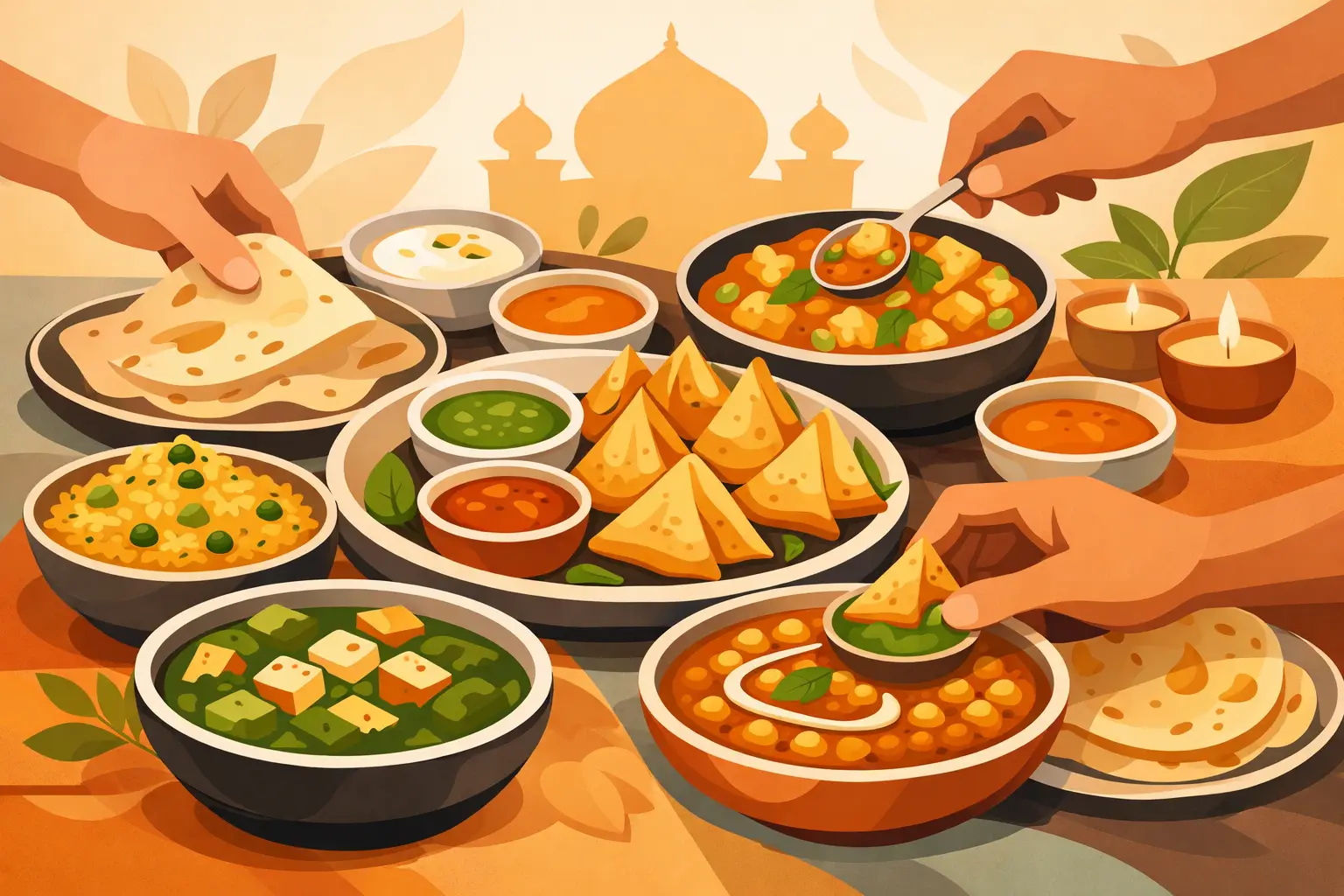
A good vegetarian dinner should never feel like the compromise on the table. The best vegetarian Indian dinner options are full meals in their own right: slow-cooked curries, fragrant rice, freshly baked breads and bright accompaniments made for sharing. Whether it is a quiet meal after work, a family dinner or a table of friends with different tastes, Indian food makes it easy to serve something generous and satisfying to everyone.
What makes a vegetarian Indian dinner feel complete?
Indian vegetarian cooking has always had range. Lentils bring depth, chickpeas add heartiness, paneer offers a rich and satisfying texture, and vegetables take on entirely different characters when cooked with roasted spices, tomatoes, onions, ginger and garlic. A vegetarian meal can be as comforting as a creamy curry or as lively as a tangy, lightly spiced vegetable dish.
The key is balance. Choose one substantial main dish, then add rice or bread and something fresh, cooling or crunchy alongside it. This creates a dinner that feels considered without making the order complicated. It also means non-vegetarian diners are unlikely to feel that they are missing out.
For a group, it is usually better to select two or three dishes with different textures and sauces rather than ordering several similar curries. A creamy paneer dish, a lentil-based curry and a dry vegetable preparation, for example, give everyone a proper choice at the table.
Best vegetarian Indian dinner options for every appetite
Paneer curries for a rich, comforting meal
Paneer is a favourite for good reason. This fresh Indian cheese holds its shape in a curry and has a mild flavour that carries spice beautifully. Paneer butter masala is often the choice for diners who enjoy a smooth tomato-based sauce with a gentle, rounded richness. It works especially well with naan or roti, which can be used to scoop up every last bit of gravy.
Palak paneer offers a different kind of comfort. Paneer is cooked in a spinach-based sauce, bringing an earthy flavour and a little more freshness to the meal. It is a strong option when you want something satisfying but not overly rich. If your group includes people who prefer mild dishes, paneer curries are a dependable place to start.
Dal for depth, warmth and everyday comfort
Dal is one of the most rewarding vegetarian choices on an Indian menu. It may be simple in appearance, but a well-made dal is built slowly, with lentils cooked until tender and finished with aromatic spices. Dal makhani, commonly made with black lentils and kidney beans, is especially hearty and creamy. It has the kind of deep, comforting flavour that suits a cool evening or a relaxed family meal.
A lighter yellow dal can be just as satisfying, particularly alongside a vegetable curry and rice. It brings warmth without taking over the plate. Dal is also a sensible choice for mixed groups because it is familiar, filling and easy to pair with almost anything else on the table.
Chickpea curries that satisfy a bigger hunger
Chana masala proves that chickpeas can carry a main meal with ease. Cooked in a spiced tomato and onion base, chickpeas bring a firm bite and a naturally hearty feel. This is a particularly good option for anyone looking for a vegetarian dinner that has real substance after a long day.
Chickpea curries pair well with fluffy basmati rice, but they are equally suited to naan, roti or paratha. The choice depends on how you like to eat. Rice keeps the meal lighter and lets the curry shine, while bread makes it feel more relaxed and shareable.
Vegetable curries with plenty of character
Mixed vegetable curry is often underestimated. When cooked properly, it is not simply a side dish made larger. Seasonal vegetables are simmered with spices so each bite has colour, texture and flavour. It is a useful choice for families because it adds variety to a shared meal and gives diners a break from richer sauces.
Vegetable korma is another welcoming option, especially for those who enjoy milder flavours. Its gentle, creamy sauce can be appealing to children and to anyone new to Indian food. On the other hand, dishes such as aloo gobi, made with potato and cauliflower, offer a drier texture and more pronounced spice. They are excellent beside a saucier curry such as dal or paneer butter masala.
The best choice depends on the rest of your meal. If you have chosen a rich paneer curry, balance it with a lighter vegetable dish. If your table is leaning towards drier preparations, add a dal or chickpea curry for plenty of sauce.
Rice, breads and the sides that bring it together
A vegetarian curry needs something alongside it, and this is where a good Indian dinner becomes a shared feast. Steamed basmati rice is clean, fragrant and easy to match with almost every curry. Jeera rice, gently seasoned with cumin, adds another layer of aroma without competing with the main dishes.
Freshly baked naan is ideal for creamy curries and thicker gravies. Plain naan keeps the flavours simple, while garlic naan adds extra savoury warmth. Roti is a lighter choice for diners who want bread without the richness of naan. If you are ordering for several people, one rice dish and a couple of breads often gives the table enough variety without leaving too much over.
Do not overlook the accompaniments. Raita can cool the palate beside a spicier curry, while pickles and chutneys bring sharpness and sweetness. A crisp papadum at the beginning adds texture and gives everyone something to enjoy while the main dishes are shared out.
How to order a vegetarian Indian dinner for a group
For two people, choose two mains with distinct styles, such as palak paneer and chana masala, plus one rice and one bread. This provides contrast without becoming too much food. If one person prefers mild spice and the other likes a little heat, ask for guidance on the dishes that can suit both preferences.
For a family or small group, start with three mains: one paneer curry, one dal or chickpea dish, and one vegetable curry. Add rice, naan or roti, then include raita if you are ordering anything with more spice. This approach gives guests choice while keeping the meal familiar and easy to serve.
Dietary needs deserve a little care. Many Indian vegetarian dishes are naturally suitable for vegetarians, but vegan diners should check whether a dish contains dairy, ghee, paneer, cream or yoghurt. It is also worth letting the restaurant know about allergies, as nuts, dairy and gluten can appear in sauces, breads and garnishes. Clear communication makes dinner more relaxed for everyone.
At Indian Brothers, vegetarian dishes are prepared with the same care given to every part of the menu. That matters when you are choosing dinner for a mixed table: familiar Indian flavours, dependable quality and enough variety for each person to find a dish they genuinely want.
Vegetarian Indian dinners for busy evenings and celebrations
A weekday vegetarian dinner does not need to be elaborate to feel special. A warming dal, a vegetable curry and basmati rice can be a complete, comforting meal to collect on the way home. For a larger occasion, add paneer, extra breads and a few accompaniments, and the same meal becomes something made for the centre of the table.
That flexibility is one of the pleasures of Indian food. You can keep it simple when time is short, or build a colourful spread when family and friends are coming together. Choose dishes with different flavours, order enough bread and rice to share, and leave room for the small moments around the table that make dinner worth gathering for.