
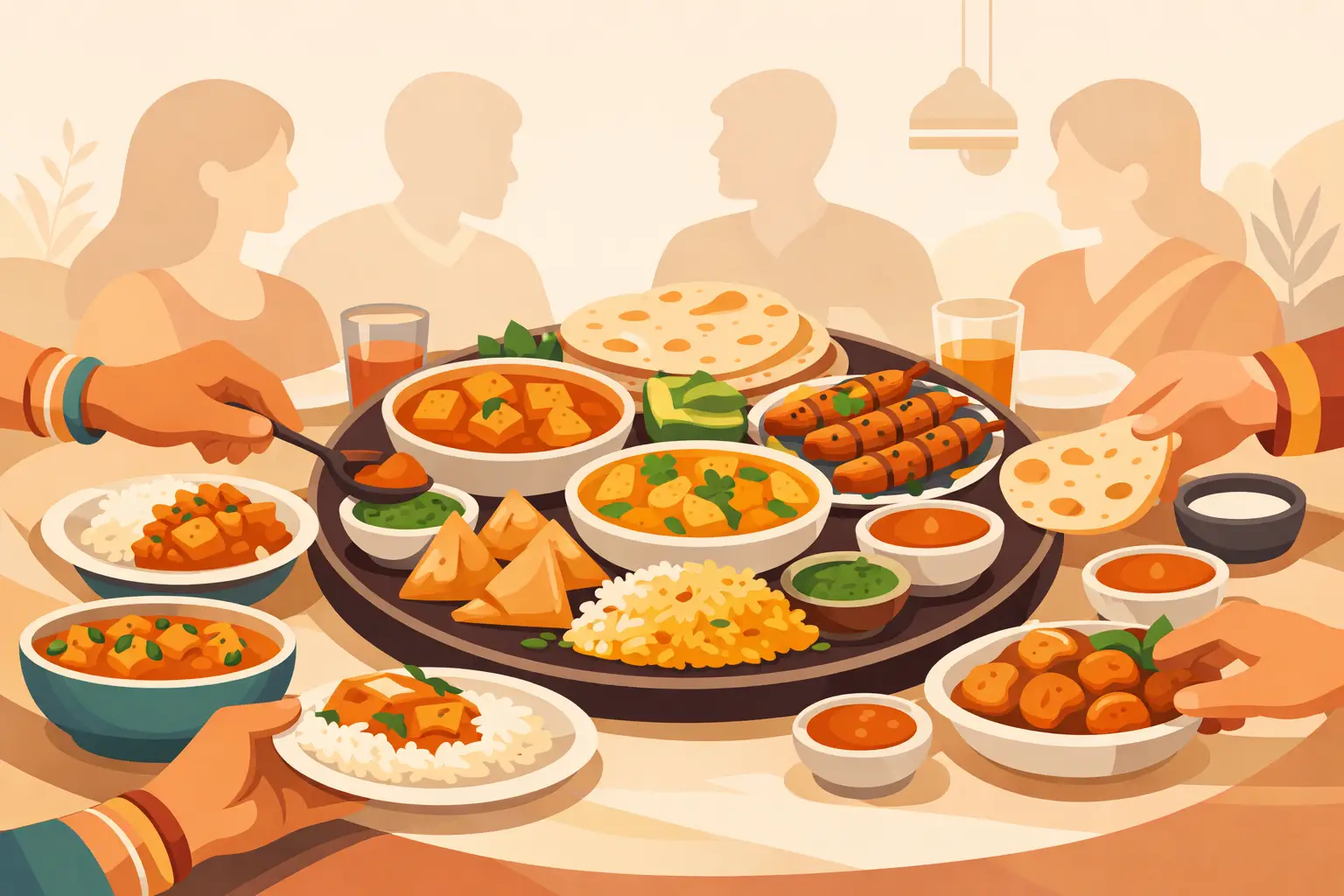
When a table is full of family, friends or workmates, ordering one main each can leave everyone wishing they had chosen differently. The best Indian meals for groups are made for sharing: fragrant curries in the middle, warm breads passed around, rice for every plate, and enough variety for each person to find a familiar favourite.
Indian food is especially well suited to relaxed group dining because it brings different flavours, spice levels and dietary choices together without making the meal feel complicated. The key is not ordering everything on the menu. It is choosing a balanced spread that gives the table plenty to enjoy, while keeping the order generous, practical and easy to serve.
What makes an Indian meal work for a group?
A good group meal has contrast. It needs a few rich, sauce-based dishes, something smoky from the tandoor, a rice dish or two, fresh breads and at least one option for guests who do not eat meat. This creates a meal with different textures and flavours rather than several versions of the same thing.
It also helps to think about how people actually eat when they are together. Some guests will want a mild, familiar curry; others will look for a dish with more heat. Some will build a plate around vegetables and lentils, while others will go straight for tender chicken or lamb. A shared order works best when those choices are already covered.
For smaller groups of four to six, a selection of three curries, rice, breads and one starter is often a comfortable place to begin. Larger tables can add another curry, a second rice dish and more tandoori options. Appetite matters, of course. A group arriving after work or celebrating a birthday may want more than a family sharing lunch.
Best Indian meals for groups: build the table around curries
Curries are the heart of a generous Indian meal. They are easy to share, pair well with rice and breads, and let guests taste more than one dish. Instead of choosing several heavy cream-based curries, aim for a mix of styles.
A tomato-based butter chicken is often a dependable choice for mixed groups. It is gently spiced, rich without being overwhelming and familiar to guests new to Indian food. For a deeper, warmer option, a lamb rogan josh or lamb curry brings slow-cooked flavour and a satisfying richness that suits a longer meal.
Chicken tikka masala, korma or a mild coconut-based curry can also be good choices when children or spice-sensitive diners are at the table. If your group enjoys more heat, add a vindaloo, madras or a chilli-forward curry as one part of the spread rather than the whole order. This gives spice lovers what they want without leaving anyone behind.
The trade-off is simple: a menu made entirely of mild dishes can feel a little flat, while an order built around fiery curries may be difficult for some guests to enjoy. One mild option, one medium curry and one bolder dish is usually a sensible balance.
Do not treat vegetarian dishes as an afterthought
Vegetarian Indian food can be among the most satisfying dishes on the table, not merely an alternative for one guest. A creamy paneer curry, palak paneer, dal makhani, chana masala or mixed vegetable curry adds colour and variety alongside meat dishes.
Dal is particularly useful for group orders. Its comforting lentil base makes it filling, easy to share and suitable with both rice and naan. Chickpea dishes offer similar value, especially when a group includes vegan diners. Just confirm dietary requirements when ordering, as preparation can vary between dishes.
Choosing at least one substantial vegetarian or vegan main also makes the meal feel more welcoming. It means nobody has to rely on side dishes, and meat-eaters often enjoy it too.
Add biryani for a meal that feels more complete
Biryani is one of the strongest choices for groups because it brings aromatic rice, spices and a main ingredient together in one generous dish. Chicken biryani is a reliable crowd-pleaser, while lamb biryani offers a richer choice for guests who enjoy fuller flavours. Vegetable biryani is a useful addition for mixed dietary needs.
Biryani works particularly well for takeaway, office meals and casual celebrations because it travels well and is easy to portion. It can stand as a main dish, but it is even better with a curry that has plenty of sauce, yoghurt or raita to cool the spice, and fresh breads for the table.
If biryani is included, there is no need to order large quantities of plain rice as well. A smaller serving of steamed basmati rice may be enough for guests who prefer it with curry. This is one of the easiest ways to avoid ordering more food than the group can comfortably finish.
Include tandoori dishes for texture and variety
A shared meal can become very sauce-heavy if it is built entirely around curries. Tandoori dishes solve that neatly. Marinated chicken tikka, tandoori chicken, seekh kebabs or tandoori prawns bring charred edges, smoky flavour and a drier style of cooking that contrasts beautifully with rice and gravy.
A mixed tandoori platter can be especially useful for a group that wants to sample several items before the mains arrive. It gives the table something to share while people settle in, and it suits diners who prefer grilled dishes over curries.
For a relaxed dine-in meal, starters and tandoori dishes can be paced before the mains. For takeaway or catering, they are often best ordered as part of the main spread so the meal stays straightforward to serve. The right choice depends on whether your group wants a long, social meal or food ready for everyone at once.
Rice, naan and sides make sharing easier
The breads and sides may not be the centrepiece, but they are what turn a few mains into a proper shared feast. Plain naan is always useful, while garlic naan adds flavour and peshwari naan offers a lightly sweet contrast. Roti is a lighter option for guests who prefer something less rich.
As a guide, allow one bread per person when there is a good amount of rice, then add a few extra if your group loves naan. For curries, steamed basmati rice is a dependable base. Pilau rice is more fragrant and can make a simple meal feel more celebratory, though its added seasoning may not suit every curry or every guest.
Raita, papadums, pickles and chutneys are small additions that make a noticeable difference. Raita is particularly helpful beside spicy dishes, while papadums give the table something crisp to share. These are not essentials for every order, but they add the finishing touches when the occasion calls for a fuller spread.
Planning for dietary needs and spice preferences
The easiest way to organise a group order is to ask two questions before choosing dishes: does anyone have dietary requirements, and how much spice does the group enjoy? Getting clear answers early avoids the awkward moment when a guest finds there is little they can eat.
For vegetarian and vegan guests, choose a proper main rather than expecting rice, bread and starters to be enough. For gluten-conscious guests, rice-based dishes can be helpful, but it is always wise to check ingredients and kitchen preparation directly. Nut allergies and dairy requirements also need clear communication, particularly with rich curries, naan and desserts.
Spice should be treated with the same care. Indian cooking is full of flavour beyond heat, so a table does not need to be dominated by chilli to feel authentic. Choose a range, offer cooling sides and let guests add extra heat where available.
A dependable order for a mixed group
For a table with different tastes, a balanced selection might include a mild chicken curry, a medium lamb or beef curry, a vegetarian dal or paneer dish, a biryani, a tandoori starter, basmati rice, naan and raita. It is varied enough to feel generous without becoming difficult to manage.
At Indian Brothers, groups can enjoy traditional curries, biryanis, tandoori favourites and freshly baked breads in a welcoming restaurant setting, or arrange a takeaway and catering order for an occasion at home, work or in the community. The most useful approach is to share the group size, dietary needs and timing when placing the order, so the meal can be planned with confidence.
A good shared Indian meal leaves room for conversation as well as seconds. Choose dishes with different strengths, order with every guest in mind, and let the food do what it does best: bring people comfortably together around the table.