
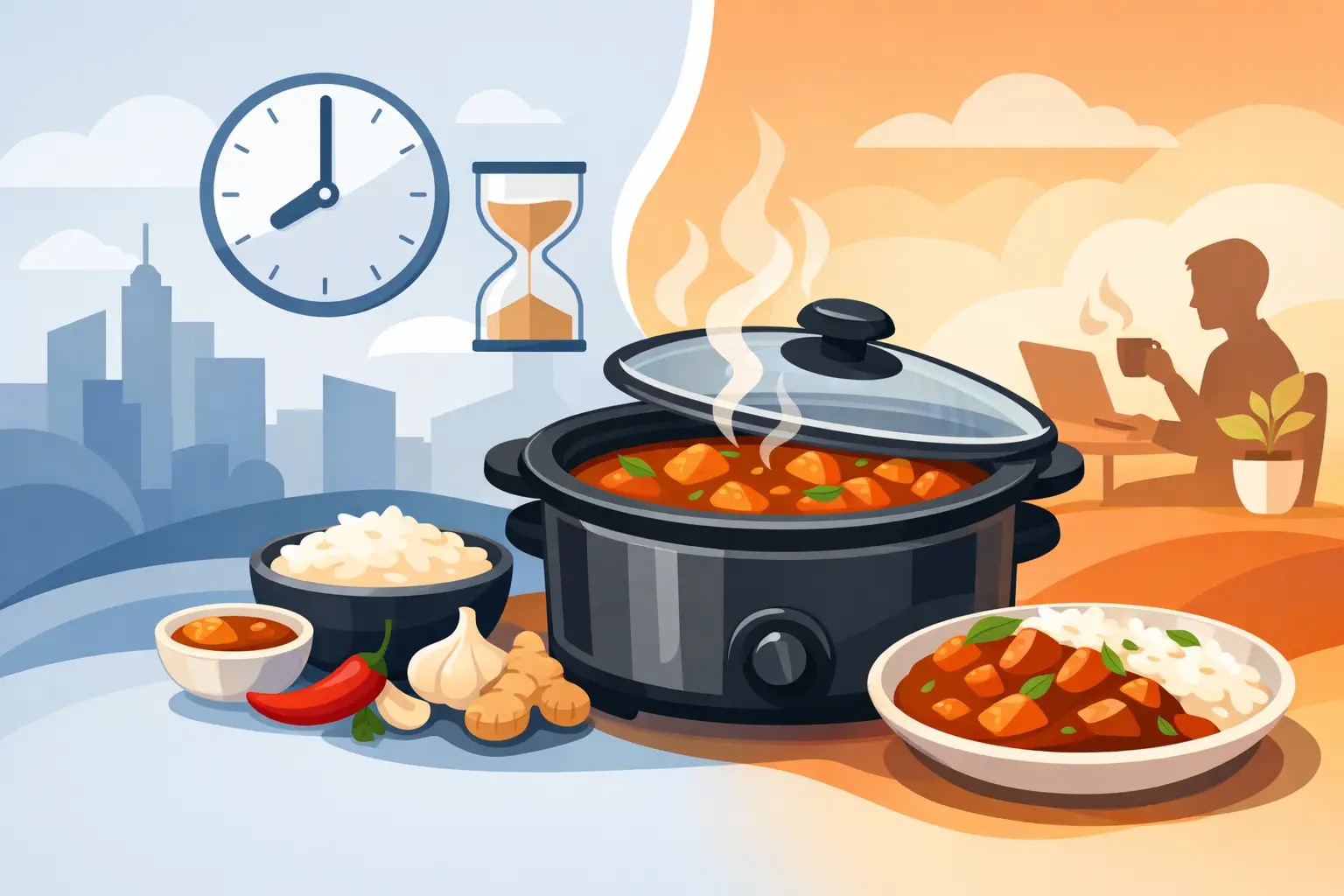
A good curry does not need to shout. You notice it in the aroma that builds slowly, the tender bite of the vegetables or meat, and a sauce where the spices taste rounded rather than sharp. The slow cooked curry benefits come from giving every ingredient time to do its job – a simple approach that has long been part of traditional Indian cooking.
For a family dinner, a relaxed meal with friends or a dependable takeaway after work, slow-cooked food offers more than warmth and convenience. It brings depth, balance and the familiar comfort people expect from a well-prepared curry.
Why slow cooking makes curry taste better
Many Indian curries begin with patient foundations: onions softened until sweet, ginger and garlic cooked until fragrant, and spices warmed in oil or ghee to release their character. Rushing these early stages can leave a sauce raw, thin or overly fiery. Slow cooking allows those separate flavours to settle together.
Tomatoes lose their harsh edge and become richer. Onions provide natural sweetness and body. Whole spices such as cardamom, cinnamon, cloves and bay leaves gradually share their perfume with the sauce, while ground spices become fuller and less powdery on the palate. The result is not simply a hotter curry. It is a curry with layers.
This is especially valuable in dishes with a tomato, yoghurt, cream or coconut base. These ingredients need gentle heat and enough time to combine without splitting or overwhelming the spices. A slow simmer creates the kind of smooth, well-balanced sauce that is satisfying from the first spoonful to the last.
Spices have time to find their balance
Indian food is sometimes reduced to heat, but heat is only one part of the picture. A carefully cooked curry may include earthy cumin, bright coriander, warm turmeric, sweet cinnamon and gentle chilli, each playing a different role. When a dish is given time, the spice blend tastes connected rather than competing for attention.
That balance also makes a curry easier to enjoy alongside rice, naan or roti. The sauce complements the rest of the meal instead of dominating it. For diners who prefer mild, medium or hot dishes, slow cooking can make each choice feel more rounded and approachable.
Slow cooked curry benefits for texture and comfort
Time and low heat transform texture. In meat curries, collagen in cuts such as lamb shoulder or goat gradually softens, helping create tender pieces that hold flavour well. The cooking liquid becomes fuller as those natural juices mingle with the spice base. This is why many slow-cooked curries have a generous, comforting consistency without relying on heavy additions.
Vegetable curries benefit too, although they require more attention to timing. Firm vegetables such as potato, chickpeas and lentils can simmer slowly and absorb the sauce beautifully. More delicate ingredients, including spinach, peas or paneer, are usually added later so they retain their colour, shape and character.
The aim is not for every ingredient to become soft. A good curry should have the right texture for the dish: yielding meat, creamy lentils, tender potatoes, or vegetables that still have a little bite. Slow cooking gives the kitchen more control over that result.
Lentils and pulses become beautifully satisfying
Dal, chickpeas and other pulses are a familiar part of Indian meals because they are filling, versatile and suited to long, gentle cooking. As they simmer, they take on the flavours of garlic, ginger, tomatoes and spices while naturally thickening the sauce.
For vegetarian and vegan diners, this makes slow-cooked dishes particularly rewarding. A lentil curry can feel hearty and complete, while a chickpea dish can carry enough flavour to sit proudly alongside breads, rice and vegetable sides. It is practical, comforting food for mixed tables where everyone should have a satisfying choice.
Does slow cooking make curry healthier?
It depends on the recipe and the portion, so it is best not to treat slow cooking as a health claim on its own. A curry’s nutritional profile still comes down to its ingredients, including the amount of oil, cream, coconut milk, salt and sugar used.
That said, slow cooking can support a thoughtful way of preparing food. A deeply flavoured base often needs less added richness to feel satisfying. Aromatics, spices, tomatoes, lentils and vegetables have time to build flavour naturally, which can reduce the need to rely on extra salt or fat for impact.
It can also make meals more inclusive and easier to tailor. A vegetable curry, dal or chickpea dish paired with plain rice and salad offers a different balance from a rich cream-based curry with naan. Neither is automatically the right choice for every occasion. The best option depends on appetite, dietary requirements and what you feel like eating.
Spices also bring variety without adding much bulk to a meal. Turmeric, cumin, coriander, ginger and garlic are valued for their flavour and long culinary history. Enjoy them as part of a varied diet, rather than expecting one dish to do everything.
The value of a curry that tastes even better later
One of the most appreciated slow cooked curry benefits is how well many curries hold their flavour. Once cooled and rested, spices continue to settle into the sauce. By the next day, a curry can taste even more unified and mellow.
This makes slow-cooked dishes a sensible choice for busy households, group meals and catering. They are well suited to preparing with care, holding correctly and serving when people are ready to eat. For hosts, that means less last-minute stress. For guests, it means a meal that feels generous rather than hurried.
There is a sensible limit, of course. Food must be cooled, stored and reheated safely, and dishes containing delicate ingredients should not be kept longer than recommended. But when handled properly, a well-made curry is one of those meals that continues to give after the first serving.
A better fit for shared meals
Curry is naturally made for the table. A slow-cooked main can be shared with basmati rice, breads, raita, pickles and vegetable sides, allowing each person to build a plate that suits them. This is useful when one group includes meat eaters, vegetarians, vegans and diners who enjoy different spice levels.
It is also why traditional curry cooking works so well for family dinners and celebrations. The food is prepared with care, but it is not precious. It is meant to be passed around, discussed and enjoyed at an easy pace.
At Indian Brothers, this patient approach sits behind the familiar dishes that customers return for. Whether you are dining in, collecting a takeaway or arranging food for a gathering, a properly cooked curry brings dependable flavour to the occasion.
Choosing a slow-cooked curry for your table
If you enjoy rich, savoury dishes, look for lamb, beef or goat curries that benefit from long, gentle cooking. If you prefer something lighter but still full of flavour, lentil, chickpea and vegetable curries are excellent choices. Paneer dishes offer another satisfying option, though paneer itself is generally added nearer the end to keep its texture.
Pair a richer curry with plain basmati rice, fresh salad or yoghurt-based raita for contrast. Choose naan or roti when you want to enjoy every part of the sauce. If you are ordering for a group, include a mix of mild and spicy options, plus at least one substantial vegetarian dish, so everyone can settle in comfortably.
The best curry is not always the hottest or the richest. Often, it is the one that has been given enough time for its ingredients to taste like they belong together. That quiet patience is what turns a simple meal into one people are happy to share.