
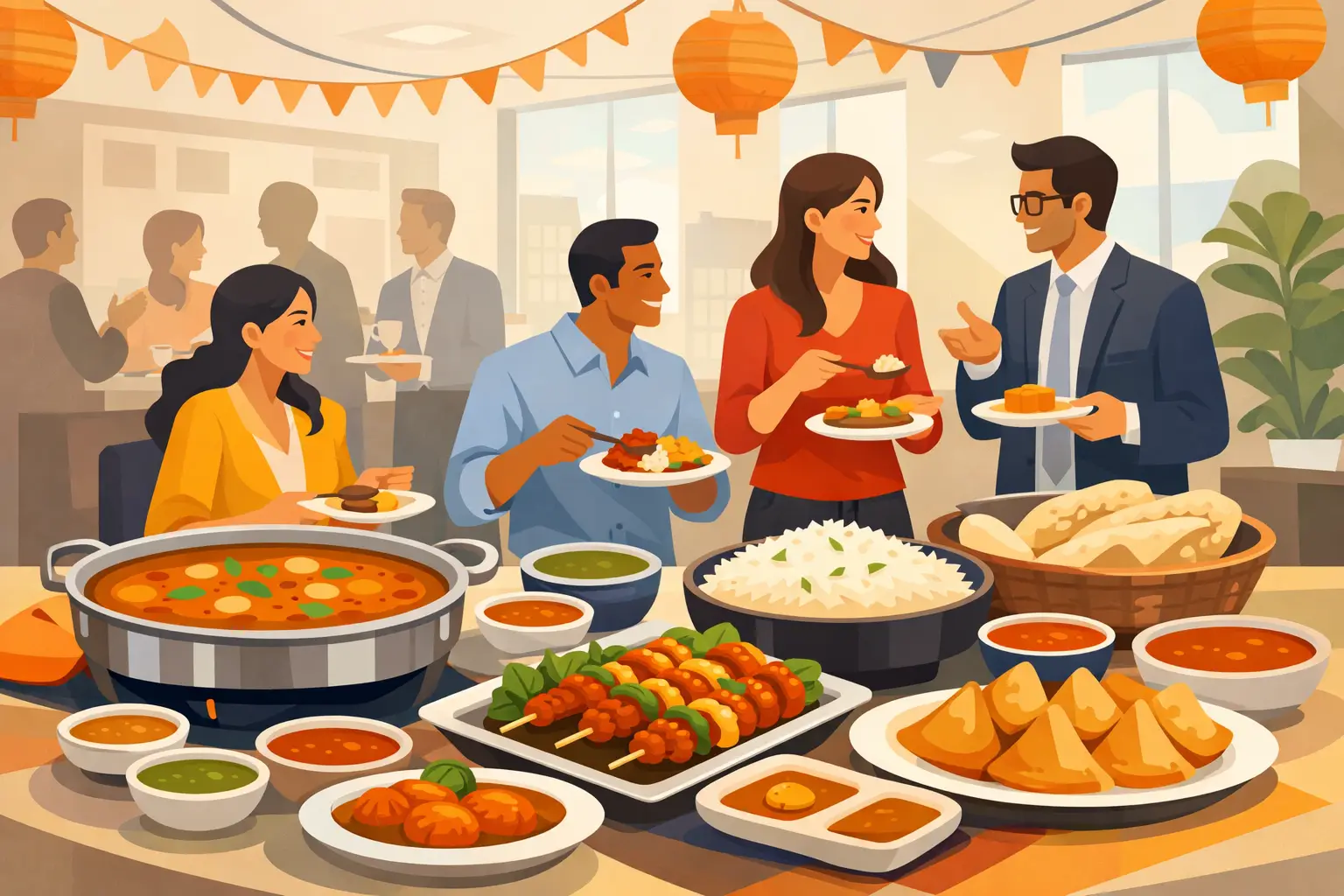
A good office party meal has a difficult job. It needs to feel more generous than a quick desk lunch, suit colleagues with different tastes, arrive when promised, and be easy to serve while people are talking. That is why Indian food for office parties is such a dependable choice: familiar favourites can sit alongside plenty of vegetarian and vegan dishes, with fragrant rice, breads and curries that turn a work gathering into a proper shared meal.
Whether you are arranging a Friday team lunch, welcoming new staff, marking the end of a project or hosting a larger corporate event, the best catering plan is one that gives everyone a satisfying plate without creating extra work for the organiser.
Why Indian food works for office parties
Office groups rarely have one clear preference. Some guests will want a hearty meat curry, others will be vegetarian, and a few may prefer a milder dish. A well-planned Indian spread handles those differences naturally. Rather than ordering separate meals for every person, you can provide a shared selection of curries, tandoori dishes, biryani, rice and breads.
This style of food is also made for sharing. Colleagues can take a little of several dishes, compare favourites and go back for another spoonful of a curry they enjoyed. It feels relaxed and welcoming, which is often exactly what an office celebration needs.
Indian food can be as mild or as lively as your group prefers. The key is balance. Include familiar, gently spiced choices such as butter chicken, korma or dal alongside one or two dishes with more heat for those who enjoy it. Spice should add flavour and warmth, not leave half the team searching for the nearest jug of water.
Planning Indian food for office parties
The most successful catering orders begin with a few practical details: your guest numbers, the time food will be served, dietary requirements and whether guests will be standing or seated. These points shape the menu more than any trend or elaborate theme.
Choose a menu with variety, not too much repetition
For a group lunch or dinner, aim for a mix of protein, vegetarian dishes, sides and accompaniments. Two chicken or lamb dishes with very similar sauces may look plentiful on paper, but they do not offer much choice. A better approach is to pair a creamy curry with a tomato-based or slow-cooked option, then add a substantial vegetarian dish such as chana masala, dal or mixed vegetables.
Biryani is particularly useful for office catering because it is filling, easy to portion and full of flavour on its own. It can sit at the centre of the meal with curries and raita alongside. Plain steamed rice is still worth including, especially for guests who prefer a lighter base for their curry.
Fresh naan and roti bring the meal together. They are ideal for sharing, though it is sensible to order enough rice as well. At a busy office function, some people will be happy with curry and rice, while others will immediately reach for warm bread.
Build dietary choices into the main order
Vegetarian and vegan dishes should be part of the spread, not an afterthought placed at the end of the table. Indian cooking offers real variety without relying on a token side dish. Lentils, chickpeas, vegetables and plant-based curries can be just as comforting and satisfying as meat dishes.
Ask guests about dietary needs when you send the invitation, particularly for vegan, gluten-free, dairy-free, nut-free or allergy-related requirements. It is far easier to confirm suitable dishes before ordering than to manage uncertainty once food is laid out. Keep dietary dishes clearly labelled at the table so everyone can choose with confidence.
If your group includes people unfamiliar with Indian food, clear labels help in another way too. A simple note such as “mild chicken curry”, “vegan lentil curry” or “medium-spiced lamb” makes the meal approachable without making a fuss.
Match portions to the occasion
A mid-morning office event may call for lighter portions than an evening celebration. For a working lunch, people usually appreciate a balanced meal that leaves them content rather than ready for an afternoon nap. For an end-of-year party or evening staff gathering, a more generous spread with starters and dessert may be the better fit.
It also depends on what else is being served. If there are drinks, snacks and dessert planned, focus the main catering order on a sensible selection of curries, rice and breads. If Indian food is the only meal, allow for extra variety and enough substantial dishes for guests who want a second serving.
A dependable office party menu
A practical menu does not need to be complicated. Start with two or three main curries, including at least one vegetarian or vegan option. Add a rice dish, plain rice, naan or roti, and a cooling side such as raita. For larger groups, starters such as samosas, onion bhaji or tandoori chicken can give people something to enjoy while everyone arrives.
A dependable combination might include butter chicken for a mild crowd-pleaser, lamb rogan josh or chicken vindaloo for those who enjoy deeper spice, and dal tadka or chana masala for vegetarian guests. Vegetable biryani or chicken biryani can add a centrepiece, while naan, rice, salad and raita provide the essential accompaniments.
For teams that prefer a lighter meal, choose more tandoori dishes and vegetable sides, with fewer rich curries. Tandoori chicken, fish or paneer offers chargrilled flavour and works well with salads, rice and breads. For a winter lunch or evening event, slow-cooked curries and biryani bring the comfort people tend to look for.
Make serving simple for everyone
The food may be excellent, but an office party can still feel disorganised if there is no clear plan for serving it. Set up the meal buffet-style where possible, leaving enough room for guests to move through without forming one long queue. Place plates, cutlery and napkins at the beginning, then mains, rice, breads and sides, with drinks and desserts away from the main serving area.
Keep serving spoons with each dish and provide clear labels. This is especially helpful for vegetarian, vegan and spicy dishes, and it reduces the chances of people guessing incorrectly. If your venue has limited table space, ask for advice on packaging and serving arrangements when placing the order.
Timing matters just as much. Confirm when the food should arrive and allow a little time to set it out before guests begin eating. For a lunchtime event, having food ready just before the scheduled break prevents colleagues from spending half their lunch waiting. For an evening party, starters can arrive first if your group will be gathering gradually.
Catering that feels considered, not complicated
The best corporate catering is reliable rather than showy. Your colleagues will remember that there was plenty to eat, the food was warm and flavourful, and everyone had an option they could enjoy. They are less likely to remember an overly ambitious menu that was difficult to serve or did not suit the room.
Indian Brothers has catered for shared occasions across Queensland since 2003, with traditional curries, biryanis, tandoori dishes and breads prepared for groups with varied tastes. When arranging your order, give your caterer accurate numbers, the serving time and any dietary details early. This allows the menu to be planned with care and helps the day run smoothly.
A workplace meal is one of the simplest ways to make people feel included. Choose food with genuine variety, allow enough for everyone, and give the team a moment to step away from their screens and share a satisfying meal together.