
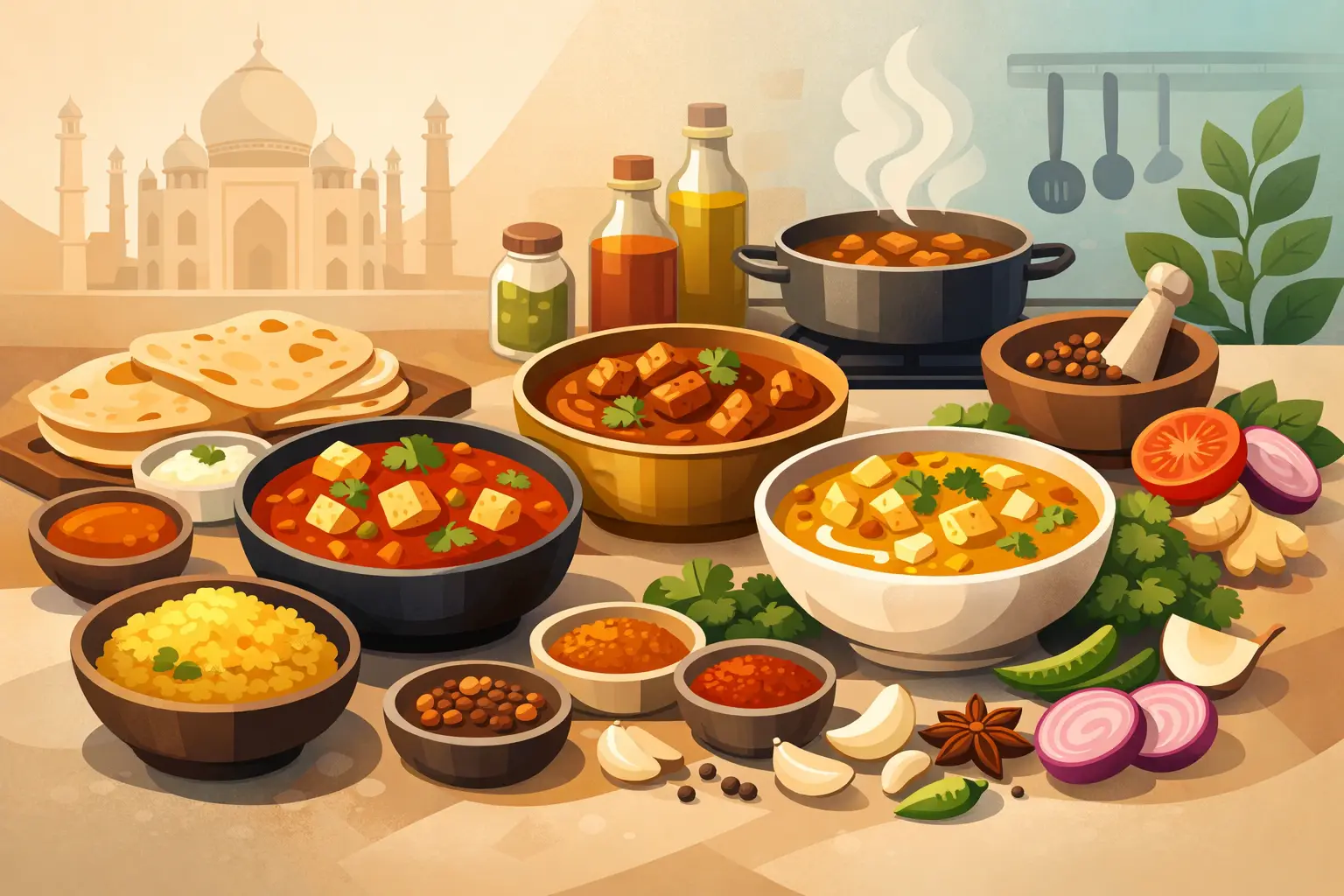
A good curry order should make everyone at the table happy: the person who wants gentle, creamy comfort, the friend chasing real heat, the vegetarian who wants more than a side dish, and the child who is unsure about spice. This guide to authentic Indian curries makes those choices easier by explaining what gives traditional curries their character, why they vary so much, and how to build a meal with satisfying balance.
Indian curry is not one recipe or one flavour. It is a broad family of dishes shaped by regional ingredients, family methods and generations of cooking. Some are rich with yoghurt, cream or ground nuts. Others are fragrant with coconut, sharp with tamarind, or bright with tomatoes and fresh herbs. The common thread is care: spices are chosen for their individual contribution, cooked in the right order, and allowed time to develop.
What makes an Indian curry authentic?
Authenticity is not about a curry being as hot as possible, nor does it mean every dish must look or taste the same. Traditional Indian cooking is wonderfully varied. A curry from Punjab in the north may be slow-cooked with tomatoes, onion and warming whole spices, while a southern dish may use curry leaves, mustard seeds, coconut and tamarind.
What matters is the foundation. Fresh aromatics such as onion, ginger and garlic are cooked carefully to create depth. Whole and ground spices are added at the appropriate stage, rather than simply stirred into a finished sauce. Ingredients are given time to come together, so the finished curry tastes rounded rather than harsh or overly salty.
At Indian Brothers, this respect for classic methods sits behind the familiar dishes guests return for. The aim is honest, home-style flavour that is consistent whether you are sharing a meal in the restaurant or taking dinner home.
Spice is flavour, not just heat
The word “spicy” can cause unnecessary confusion. Chilli brings heat, but Indian spice blends are about far more than chilli. Cumin can taste earthy and warm; coriander offers citrusy freshness; turmeric adds colour and gentle bitterness; cardamom can bring a sweet, aromatic lift. Garam masala is usually added later in cooking for fragrance, while whole spices may be tempered in oil first to release their oils.
A mild curry is not a lesser curry. Butter chicken, korma and many coconut-based dishes can be full of flavour while remaining gentle. Conversely, a hot vindaloo or chilli curry should still have acidity, savoury depth and spice character beneath the heat. If all you can taste is chilli, the balance is missing.
A guide to authentic Indian curries by style
Understanding a few broad curry styles helps when reading a menu. Names can differ between regions and restaurants, but the cooking ideas below provide a useful starting point.
Tomato and onion-based curries
This is one of the best-known foundations in north Indian cooking. Onion is slowly cooked until sweet and deeply coloured, then combined with ginger, garlic, tomatoes and spices. The sauce may be smooth or textured, depending on the dish.
Butter chicken is a popular example, usually offering a mellow tomato base enriched with butter and cream. Chicken tikka masala is often similarly approachable, though recipes vary. These curries work well for diners who want warmth and richness without a strong chilli hit. They are particularly good with naan, which is ideal for scooping up every last bit of sauce.
Creamy and nut-based curries
Korma-style dishes are often gentle, aromatic and luxurious rather than fiery. Ground cashews, almonds, coconut, yoghurt or cream can give the sauce body. Spices such as cardamom, cinnamon and cloves add perfume, while the savoury base keeps the dish from becoming sweet.
These curries are a practical choice for family meals or mixed groups, especially when ordered alongside one dish with a little more heat. They also pair well with pulao rice, whose delicate seasoning supports rather than overwhelms the sauce.
Yoghurt, spinach and earthy curries
Yoghurt can add gentle tang and a light creaminess, particularly in curries inspired by northern Indian traditions. Spinach-based dishes, often known as saag or palak preparations, offer a more earthy direction. They may be cooked with paneer, chicken or lamb, with garlic and warming spices providing contrast to the greens.
Paneer is especially worthwhile for vegetarian diners. It is firm enough to hold its shape in a curry, with a mild flavour that absorbs the sauce around it. A well-made paneer curry should feel like a complete main meal, not an afterthought.
Coconut, curry leaf and tamarind curries
Southern and coastal Indian flavours often bring a different kind of richness. Coconut milk or grated coconut can soften spice, while tamarind adds a fruity sourness and curry leaves provide a distinctive toasted aroma. Mustard seeds, dried chillies and lentils may be tempered in oil at the beginning or poured over the finished dish.
These curries can be creamy without being heavy. Fish, prawns and vegetables are natural partners, though chicken and lamb also work beautifully. Rice is often the better companion here, as it carries the sauce while letting the brighter flavours stand out.
Slow-cooked meat curries
Lamb and goat curries reward patience. Longer cooking allows the meat to become tender and gives spices, onions and stock time to form a full-bodied sauce. Rogan josh, for example, is known for its warming colour and aromatic spice profile, though its heat level can vary. A traditional slow-cooked meat curry should taste savoury and layered, never rushed.
If you are deciding between chicken and lamb, think about the occasion. Chicken is lighter and tends to suit a quick weeknight meal. Lamb is richer and makes a shared dinner feel more substantial, particularly with breads, rice and a vegetable dish on the table.
How to choose a curry for your taste
Start with the sauce, not only the protein. If you enjoy creamy comfort, choose a butter-style, korma or mild coconut curry. If you prefer a more savoury, tomato-led dish, look for a curry with onion, ginger, garlic and roasted spices at its heart. For a fresher finish, seek out dishes with tamarind, lemon, coriander or yoghurt.
Then consider heat honestly. Asking for mild, medium or hot is useful, but it is also worth saying what you usually enjoy. A medium curry can feel very different when it is rich and creamy compared with one built around fresh green chilli and pepper. It depends on your tolerance and on the dish itself.
For a group, avoid choosing four curries that are all similar. A balanced table might include one creamy chicken dish, one robust lamb curry, one vegetable or paneer option, and one brighter coconut or tomato-based curry. Add rice for sauces, naan or roti for sharing, and a cooling raita if anyone prefers a little relief from the heat.
The side dishes matter
Curries are designed to be eaten with accompaniments, not in isolation. Steamed basmati rice is reliable for almost any sauce. Pulao rice adds gentle fragrance and is especially good with milder dishes. Naan is soft and filling, while roti is lighter and has a more direct wheat flavour.
Pickles and chutneys add sharpness, sweetness or heat in small amounts. Raita, made with yoghurt and often cucumber or herbs, cools the palate and brings a useful contrast to richer curries. These additions are not merely extras – they help make a shared Indian meal feel complete.
Enjoying curry at home or around the table
For takeaway, choosing dishes with different textures and sauce styles keeps the meal interesting after the journey home. Keep breads wrapped until serving, transfer curries into bowls if you can, and place rice in the centre for easy sharing. If you are ordering for guests, it is sensible to include at least one mild dish and one vegetarian or vegan-friendly choice.
For a relaxed dine-in meal, do not feel pressured to order everything at once. Begin with a couple of familiar favourites, then try one curry outside your usual choice. The best way to understand Indian food is through comparison: notice how a tomato sauce differs from a coconut curry, or how paneer changes the feel of a dish compared with chicken.
Authentic Indian curries offer comfort, variety and plenty of room for personal taste. Choose with curiosity, share generously, and let the aromas on the table guide the next dish you try.