
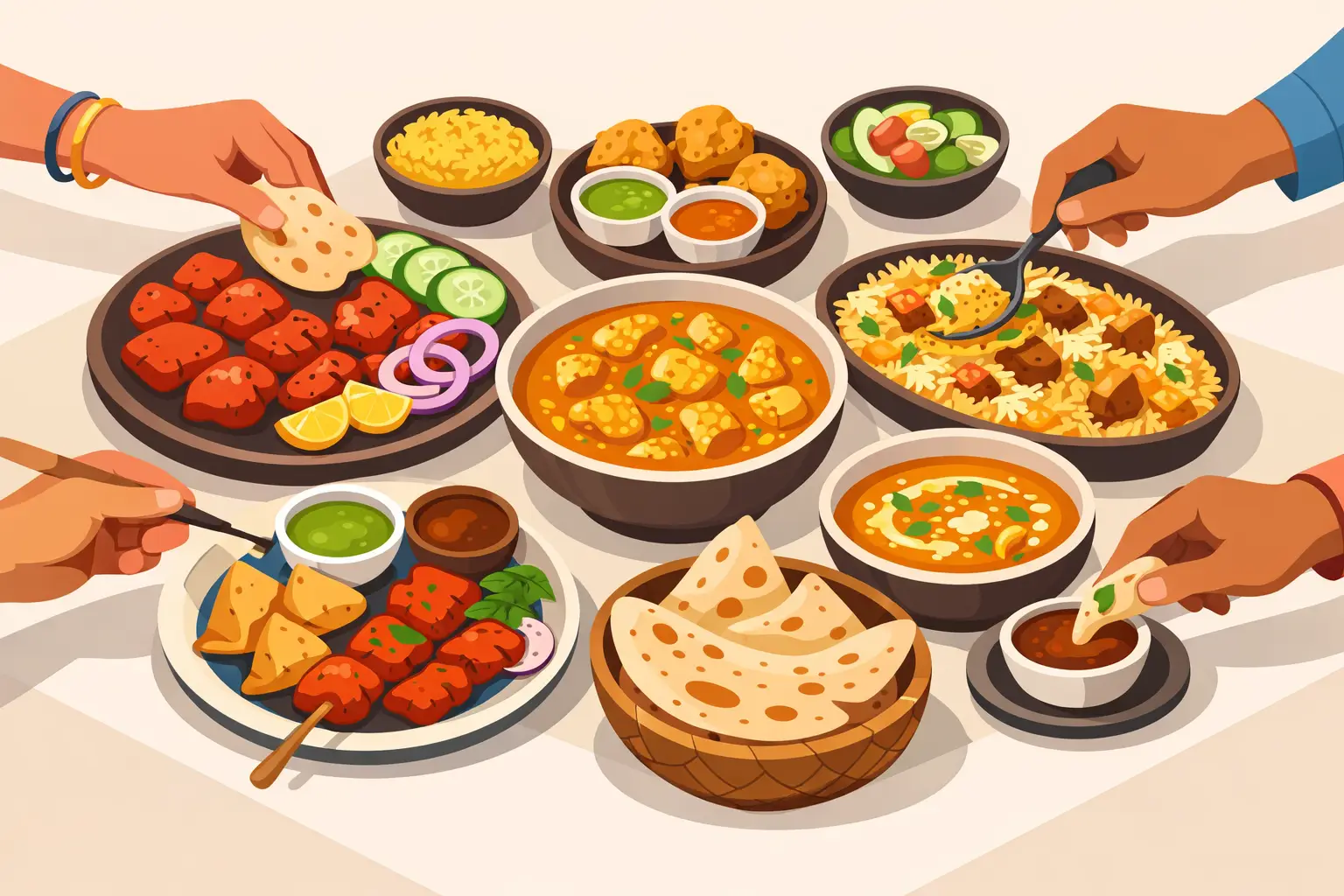
A shared Indian meal works best when the table has a little contrast: something smoky from the tandoor, a comforting curry, fragrant rice, warm breads and a few sides for freshness. The best Indian dishes for sharing are not necessarily the hottest or richest options. They are the dishes that let everyone take a spoonful, try a new flavour and build a plate that suits them.
For family dinners, catch-ups with friends and larger celebrations, ordering several dishes creates a more relaxed meal than choosing one main each. It also makes it much easier to include vegetarian, vegan and meat-eating guests without anyone feeling like an afterthought.
How to choose the best Indian dishes for sharing
Start by thinking in categories rather than choosing several dishes that are very similar. Two creamy curries can be delicious, but a better shared spread usually pairs one rich dish with one tomato-based or lighter curry, a dry tandoori option, rice, breads and a cooling accompaniment.
Spice matters, too. If the group includes different heat preferences, make most of the order mild to medium and add one fuller-flavoured dish for those who enjoy chilli. A hotter curry can be shared in smaller portions, while a mild butter chicken, korma or dhal gives everyone a dependable starting point.
Portion needs depend on the occasion. For a casual dinner, plan for each person to enjoy a share of two mains, plus rice and bread. For a larger table, add more variety before ordering very large quantities of one dish. People tend to eat more when there are tandoori starters and fresh naan on the table, so balance is more useful than excess.
12 Indian dishes made for the middle of the table
1. Butter chicken
Butter chicken is one of the most reliable choices for a mixed group. Tender chicken in a gently spiced, tomato and cream-based sauce has familiar warmth without demanding too much heat tolerance. It is especially useful when children or guests new to Indian food are joining the table.
Serve it with plain rice and naan, which are ideal for making sure none of the sauce goes to waste. If your group prefers a less creamy spread, balance it with a tandoori dish or a vegetable curry with a brighter flavour.
2. Chicken tikka masala
Chicken tikka masala brings together chargrilled chicken and a rich, spiced sauce. Its tandoor-cooked flavour makes it feel slightly different from a slow-cooked curry, even when both are served with rice. It is a comfortable shared choice for weeknight meals and celebrations alike.
Because it is satisfying and saucy, it pairs well with a drier vegetable side such as aloo gobi or a tandoori platter. This keeps the table varied rather than overly rich.
3. Lamb rogan josh
For guests who enjoy deeper, more savoury flavours, lamb rogan josh is a strong centrepiece. Slow-cooked lamb and aromatic spices create a curry with warmth and depth, without needing to be fiercely hot. It is a good option when you want the meal to feel a little more special.
Lamb curries are usually best shared alongside a milder chicken or vegetarian main. That gives guests a choice between rich, slow-cooked flavour and something gentler.
4. Beef vindaloo or a hotter curry
A vindaloo can bring welcome heat to a shared meal, but it should be chosen with the group in mind. Its chilli and tangy flavour are memorable, yet it can overwhelm diners who prefer mild food. Treat it as the bold dish on the table, not the only main.
A practical approach is to pair it with butter chicken or dhal makhani, along with plenty of rice and naan. Guests who love spice can enjoy a full serving, while everyone else still has comfortable choices.
5. Vegetable korma
Vegetable korma proves that a vegetarian dish can be one of the most generous dishes on the table. Mixed vegetables in a mild, creamy, gently spiced sauce offer comfort and colour, and the flavour works well with both rice and breads.
It is a particularly sensible addition when dietary needs are mixed. Even diners ordering meat often appreciate a spoonful of korma alongside a tandoori dish or a more robust curry.
6. Dhal makhani or a lentil curry
Lentils are a quiet essential of a good shared Indian meal. Dhal makhani is slow-cooked and comforting, with a smooth, rich texture that makes it ideal for scooping up with naan. Other lentil curries may be lighter or more tomato-led, but they offer the same practical advantage: a filling vegetarian option that helps make the spread feel complete.
For groups, dhal is excellent value because it stretches the meal without feeling like a compromise. It also provides a dependable choice for vegetarian guests and anyone looking for a less meat-heavy plate.
7. Palak paneer
Palak paneer combines soft paneer with a warmly spiced spinach sauce. It adds a different colour and texture to a table of red and golden curries, while still being comforting enough for a family meal. The paneer makes it substantial, not merely a side dish.
It is best enjoyed with naan or roti, which suit its thick sauce. If some guests are vegan, check the menu carefully and add a separate plant-based main, as paneer is a dairy cheese.
8. Aloo gobi
Aloo gobi, made with potatoes and cauliflower, is one of the most useful dry-style dishes for sharing. It brings texture to the table and gives everyone a break from sauces. Its simple combination of vegetables and spices is especially welcome alongside creamy curries.
This is also a practical choice for guests who prefer familiar vegetables or want to build a lighter plate. Add it to a meal with dhal, rice and breads, and vegetarian diners have a satisfying spread rather than a single option.
9. Tandoori chicken
Tandoori chicken is made for passing around. The charred edges, aromatic marinade and smoky finish offer a contrast to saucy curries, while pieces can be shared easily between guests. It works well as a starter for a larger dinner or as one of the main dishes for a smaller group.
A squeeze of lemon, fresh salad and yoghurt-based raita can lift the flavours further. Tandoori dishes also suit guests who want something flavourful but not too heavy.
10. Chicken tikka
Chicken tikka has many of the same qualities as tandoori chicken, but in smaller boneless pieces that are easy to share. It is a strong choice for casual gatherings, particularly when people are chatting and serving themselves from the middle of the table.
Order it with mint sauce or raita if available, then add a curry for sauce, rice for substance and naan for scooping. It is this combination of textures that makes a shared order feel generous.
11. Biryani
A fragrant biryani can be a meal in its own right, yet it also earns a place in a shared spread. Long-grain rice, spices and your chosen protein or vegetables provide aroma and substance, making it particularly helpful for larger appetites.
Biryani is best paired with raita and one or two curries rather than several rice dishes. If the table already has plenty of saucy mains, a biryani provides a welcome, lightly layered alternative to plain rice.
12. Naan, roti, rice and raita
The supporting dishes are what turn good mains into a proper shared meal. Plain basmati rice gives curries a neutral base, while naan is ideal for rich sauces and roti provides a lighter bread option. A yoghurt raita cools spice and refreshes the palate between different dishes.
Do not leave these until last when placing an order. A generous selection of rice and breads lets guests enjoy every sauce and makes it easier to accommodate appetites around the table.
A simple shared order for four people
For four adults, a balanced order could include two meat mains, one vegetarian main, one tandoori dish, a biryani or plain rice, several naan or roti, and raita. For example, butter chicken, lamb rogan josh, dhal makhani and chicken tikka cover creamy, savoury, vegetarian and smoky flavours without making every dish taste alike.
If the group includes vegan diners, choose clearly suitable plant-based curries and check whether breads, sauces and accompaniments contain dairy. If you are ordering for children or guests with a low spice tolerance, keep the main dishes mild and offer chilli separately where possible.
For bigger occasions, the same principle applies: add another contrasting curry and more breads before simply doubling one dish. This is why Indian Brothers is a dependable choice for family meals, workplace gatherings and celebrations – a broad menu lets the whole table eat well together.
The best shared meal is not about trying everything at once. It is about putting familiar, carefully prepared dishes in the centre of the table, passing the naan, and giving every guest something they will genuinely enjoy.